Store-bought dressings are convenient, but making your own takes only a few minutes and gives you full control over flavor, sugar, and salt. This guide covers six easy homemade salad dressings, from creamy classics like Ranch and Thousand Island to bright, tangy options like Greek and Balsamic Vinaigrette. Each one uses pantry staples and comes together in a bowl or jar.
Why You’ll Love These Homemade Salad Dressings
- Simple ingredients: Most of these dressings use mayonnaise, mustard, vinegar, olive oil, or spices you may already have.
- Fast preparation: Each recipe takes about 5 to 10 minutes to whisk together.
- Customizable: Adjust the salt, acidity, sweetness, or herbs to match your taste.
- Fresher flavor: Homemade dressings taste bright and fresh, especially when used within a few days.
- Easy cleanup: A bowl, a whisk, and a jar are usually all you need.
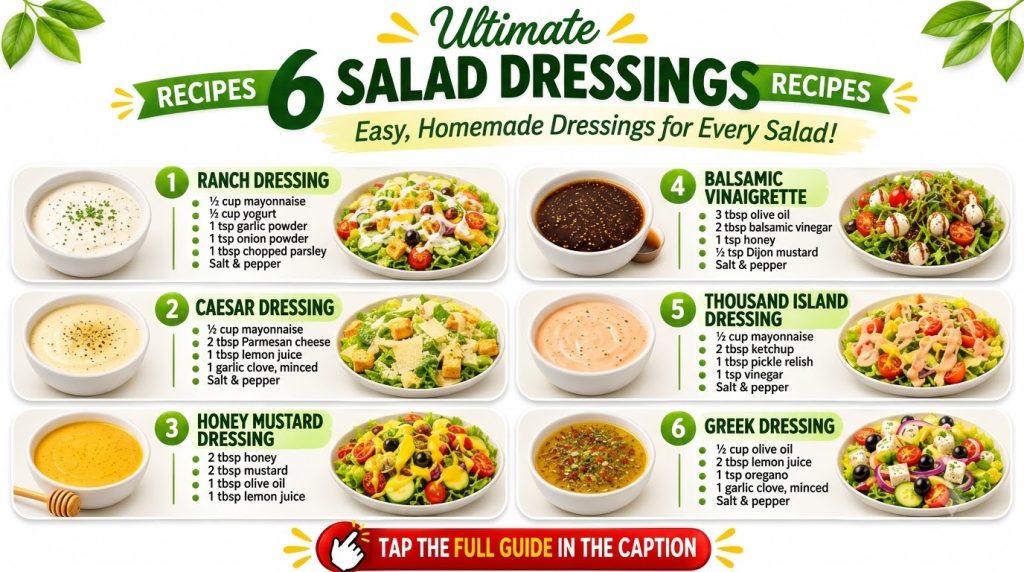
Ingredients for Six Homemade Salad Dressings
1. Classic Ranch Dressing
- 1/2 cup (120 g) mayonnaise
- 1/2 cup (120 g) sour cream
- 1/2 cup (120 ml) buttermilk, or milk plus 1 tsp lemon juice
- 1 tsp dried dill
- 1/2 tsp dried parsley
- 1/2 tsp garlic powder
- 1/2 tsp onion powder
- 1/4 tsp salt
- 1/4 tsp black pepper
2. Creamy Caesar Dressing
- 1/3 cup (80 g) mayonnaise
- 1 tbsp (15 ml) lemon juice
- 1 tsp Dijon mustard
- 1 small garlic clove, minced
- 1/2 tsp Worcestershire sauce
- 2 tbsp (10 g) finely grated Parmesan cheese
- 2 tbsp (30 ml) olive oil
- Pinch of salt and black pepper
3. Honey Mustard Dressing
- 1/4 cup (60 g) Dijon mustard
- 2 tbsp (40 g) honey
- 2 tbsp (30 ml) apple cider vinegar
- 1/4 cup (60 ml) olive oil
- Pinch of salt
4. Balsamic Vinaigrette
- 3 tbsp (45 ml) balsamic vinegar
- 1 tsp Dijon mustard
- 1 small garlic clove, minced
- 1/2 tsp honey, optional
- 1/2 cup (120 ml) olive oil
- Salt and black pepper to taste
5. Thousand Island Dressing
- 1/2 cup (120 g) mayonnaise
- 2 tbsp (30 g) ketchup
- 1 tbsp (15 g) sweet pickle relish
- 1 tsp lemon juice
- 1 tsp finely minced onion
- Pinch of paprika
6. Greek Dressing
- 1/3 cup (80 ml) olive oil
- 3 tbsp (45 ml) red wine vinegar
- 1 tsp dried oregano
- 1 small garlic clove, minced
- 1/2 tsp Dijon mustard, optional
- Salt and black pepper to taste
Ingredient Notes
Mayonnaise and sour cream give the creamy dressings body and richness. For a lighter ranch, you can replace some of the sour cream with plain Greek yogurt.
Dijon mustard helps emulsify oil and vinegar, so the dressing stays smooth instead of separating right away. Fresh lemon juice adds brightness that bottled juice can lack.
Use a good-quality balsamic vinegar for the vinaigrette. Because it has only a few ingredients, its flavor is easy to notice.
Equipment You’ll Need
- Small mixing bowl or jar with a lid
- Whisk or fork
- Measuring spoons and cups
- Microplane or fine grater, for garlic and Parmesan
How to Make Homemade Salad Dressings
- Choose your base. Creamy dressings start with mayonnaise, while vinaigrettes start with oil and vinegar.
- Mince the aromatics. Mince the garlic and onion as finely as you can so they blend evenly and do not leave sharp bites.
- Whisk creamy dressings until smooth. Mix the mayonnaise, sour cream or ketchup, and seasonings until the texture is uniform with no lumps. This usually takes about 1 minute.
- Build vinaigrettes slowly. Whisk the vinegar, mustard, honey, and garlic first. Then drizzle in the olive oil while whisking constantly until the mixture looks slightly thickened and cloudy.
- Taste and adjust. Add more salt, lemon juice, or vinegar if the flavor seems flat. Add a little honey if it tastes too sharp.
- Chill before serving. Refrigerate creamy dressings for at least 30 minutes so the flavors blend. Vinaigrettes can be served right away but taste better after a short rest.
Pro Tips for Better Dressings
- Taste the dressing on a lettuce leaf rather than on a spoon, since salad greens dilute the flavor.
- Shake vinaigrettes in a sealed jar for about 20 seconds to re-emulsify them before serving.
- Add salt in small amounts and taste often, especially when using cheese or anchovy-style ingredients.
- Let dried herbs sit in the liquid for a few minutes so they soften and release more flavor.
- Dress salad leaves just before serving to keep them crisp.
Common Mistakes to Avoid
Using too much dressing. Start with 2 to 3 tablespoons for a single large salad and add more as needed.
Skipping the emulsifier. Without mustard or honey, oil and vinegar separate quickly. Whisk well and shake before each use.
Overpowering the salad. Strong dressings such as Greek or Caesar work best with sturdy greens and simple add-ins.
Variations and Substitutions
- Make a spicy Ranch by adding a pinch of cayenne or a teaspoon of hot sauce.
- Swap the Parmesan in Caesar dressing for a finely grated Pecorino for a sharper flavor.
- Use maple syrup instead of honey in the honey mustard or balsamic vinaigrette.
- Stir fresh chopped herbs such as basil or chives into the Greek dressing.
Serving Suggestions
Ranch and Thousand Island pair well with crunchy iceberg or romaine salads, chicken wraps, and fried vegetables. Caesar goes well with romaine and croutons. Honey mustard works with chicken salads and roasted vegetables. Balsamic vinaigrette and Greek dressing are excellent on tomato, cucumber, and feta salads.
Storage and Reheating
Store creamy dressings such as Ranch, Caesar, and Thousand Island in a sealed container in the refrigerator. Keep them for up to 5 days and discard any dressing that smells off or looks separated in an unusual way. Oil-based vinaigrettes can be refrigerated for about a week, though the olive oil may turn solid when chilled. Let it sit at room temperature for 10 to 15 minutes and shake well before using. Dressings are not meant to be reheated.
Frequently Asked Questions
How long do homemade salad dressings last?
Creamy dressings are best within about 5 days when refrigerated in a sealed container. Vinaigrettes usually last about a week.
Can I make salad dressing ahead of time?
Yes. Most dressings taste better after resting for at least 30 minutes, so making them a day ahead is a practical option.
Why did my vinaigrette separate?
Oil and vinegar naturally separate. Add mustard or honey to help them blend, and shake or whisk the dressing again before serving.
Can I freeze homemade salad dressing?
Freezing is not recommended for creamy dressings, since mayonnaise and sour cream can separate when thawed. Vinaigrettes may keep their texture better, but refrigerated storage is the simpler choice.
Which dressing should I try first?
Start with Balsamic Vinaigrette or Greek dressing because they take only a few minutes and use common pantry ingredients.
Recipe Card
Recipe Name: Six Easy Homemade Salad Dressings
Short Description: Six simple homemade salad dressings, including Ranch, Caesar, Honey Mustard, Balsamic Vinaigrette, Thousand Island, and Greek.
Prep Time: 10 minutes per dressing
Cook Time: None
Total Time: About 10 minutes, plus 30 minutes of chilling for creamy dressings
Servings: About 1 cup per recipe
Course: Salad, Side Dish
Cuisine: American
Cooking Method: No-cook, whisking
Notes: Quantities are approximate and can be adjusted to taste.
Storage: Refrigerate in a sealed container. Creamy dressings keep for up to 5 days, and vinaigrettes keep for about a week.
Nutrition: Nutrition information is an estimate and may vary depending on the ingredients and brands used.
Related Recipe Ideas
- Classic Caesar Salad with Homemade Croutons
- Greek Salad with Cucumber and Feta
- Honey Mustard Chicken Bites
- Crunchy Ranch Chickpea Wraps
Which dressing will you try first? Let us know in the comments!