Most people associate oranges studded with cloves purely with holiday decorations, a pleasant aroma that signals festive cheer. But what if this fragrant tradition held a deeper secret? What if the simple act of pushing cloves into a citrus fruit was once considered a powerful household remedy, a form of protection, and even a statement of status? The truth about orange-clove pomanders goes far beyond their decorative appeal, revealing a fascinating history of practical use that’s often overlooked today.
Forget the vague notions of ‘ancient wisdom’; this guide will peel back the layers to reveal the practical purposes and detailed methods behind this aromatic craft. You’re about to discover how this humble combination transformed into a centuries-old solution for everything from purifying stale air to warding off unwanted pests, long before modern air fresheners and insecticides.

What is an Orange-Clove Pomander?
At its core, an orange-clove pomander is a fragrant ball made by studding an orange (or other citrus fruit) with whole dried cloves. The term “pomander” comes from the French “pomme d’ambre,” meaning “apple of amber,” originally referring to a ball of ambergris or other scented substances carried for fragrance or protection against infection. Over time, citrus fruits like oranges, lemons, and limes became popular bases due to their natural oils and robust form, perfect for holding countless cloves.
Historically, pomanders served several vital functions. In eras without modern sanitation, they were used to mask unpleasant odors and were even believed to purify the air, acting as a natural disinfectant. They also served as a natural insect repellent, keeping moths and other pests away from linens and clothing. Beyond their practical utility, they became symbols of wealth and status, often beautifully adorned and gifted.
Ingredients for a Traditional Pomander
Making an effective and long-lasting orange-clove pomander requires just a few key components, chosen for their quality and aromatic properties.
- Fresh Oranges: Choose firm, unblemished oranges with thick skins. Navel or Valencia oranges work well. Avoid fruits that are too soft or have thin skins, as they can spoil quickly or be difficult to stud.
- Whole Cloves: Opt for high-quality, fragrant whole cloves. The fresher they are, the more potent their scent will be. You’ll need a substantial amount—often hundreds for a single orange, depending on the desired density.
- Optional Spices (Powdered): For preserving and enhancing the scent, a blend of powdered cinnamon, nutmeg, allspice, or orris root powder can be used to coat the finished pomander. Orris root is particularly good as a fixative, helping the scent last longer.
- Tools: A skewer, toothpick, or awl for piercing the orange skin, and a bowl for holding cloves. Ribbons or string are optional for hanging.
Approximate Measurements
While “measurements” are flexible, here’s a general guideline to ensure a successful pomander:
- Oranges: 1 medium-sized orange per pomander.
- Whole Cloves: Approximately 1/2 to 1 cup (120-240ml) of whole cloves per medium orange. This allows for dense coverage, which is key for both aroma and preservation.
- Powdered Spices (Optional): 2 tablespoons each of cinnamon and nutmeg, and 1 tablespoon of orris root powder for coating.
Quick Tip: Selecting Your Oranges
For the best results, select oranges that are firm to the touch and have a smooth, blemish-free skin. A thicker skin is generally easier to work with, as it holds the cloves more securely and is less prone to tearing during the piercing process. Citrus fruits that are too ripe will soften faster and may rot before drying properly.
Formula / Recipe: Crafting Your Aromatic Pomander
This “formula” focuses on dense clove coverage for maximum scent and longevity.
- Prepare your workspace with all ingredients and tools.
- If using, create a pattern on the orange skin.
- Pierce holes into the orange, following your pattern or creating a dense, even distribution.
- Insert cloves into each pre-pierced hole.
- (Optional) Cure the pomander with powdered spices.
Step-by-Step Method
Step 1: Prepare Your Orange
Gently wash and dry your orange. If you wish to create a decorative pattern (like stripes or spirals), you can mark the orange skin with a pen or by lightly scoring it with a knife. Some prefer to leave bands of orange exposed, while others aim for a completely clove-covered surface.
Step 2: Pierce the Skin
Using a skewer, toothpick, or awl, carefully pierce holes into the orange skin. The holes should be deep enough to allow the clove stem to fully enter, but not so deep as to puncture the flesh completely. Space the holes closely together (about 1/8 to 1/4 inch apart) for a dense, long-lasting aroma. This step is crucial; attempting to push cloves directly into the skin can cause them to break or the orange to split.
Step 3: Insert the Cloves
Take individual whole cloves and insert their stems into the pre-pierced holes. Continue this process until the desired surface area is covered. For optimal preservation and fragrance, aim for as dense a coverage as possible. The more cloves, the better the scent and the longer the orange will dry and preserve.
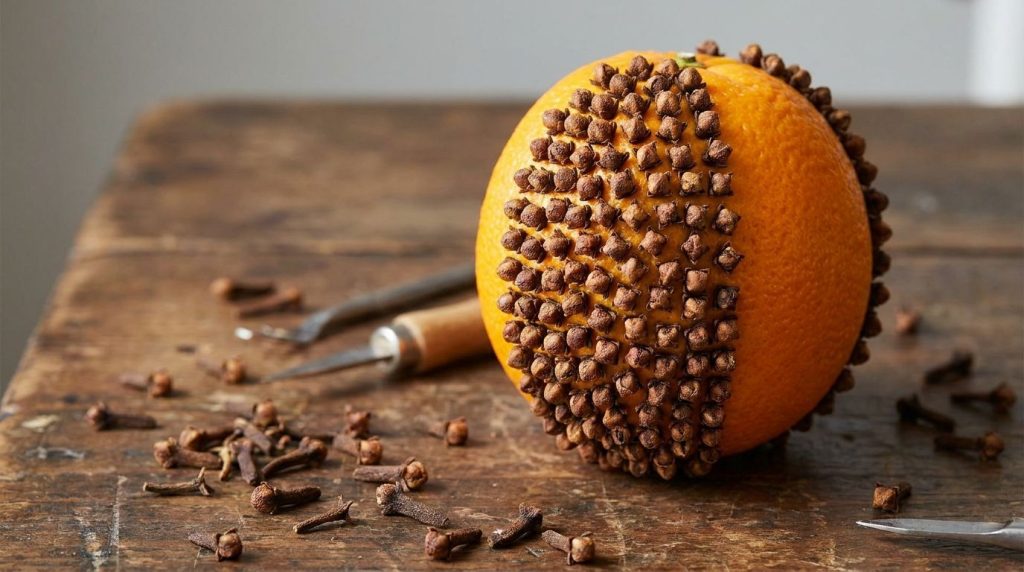
Step 4: Cure with Spices (Optional but Recommended)
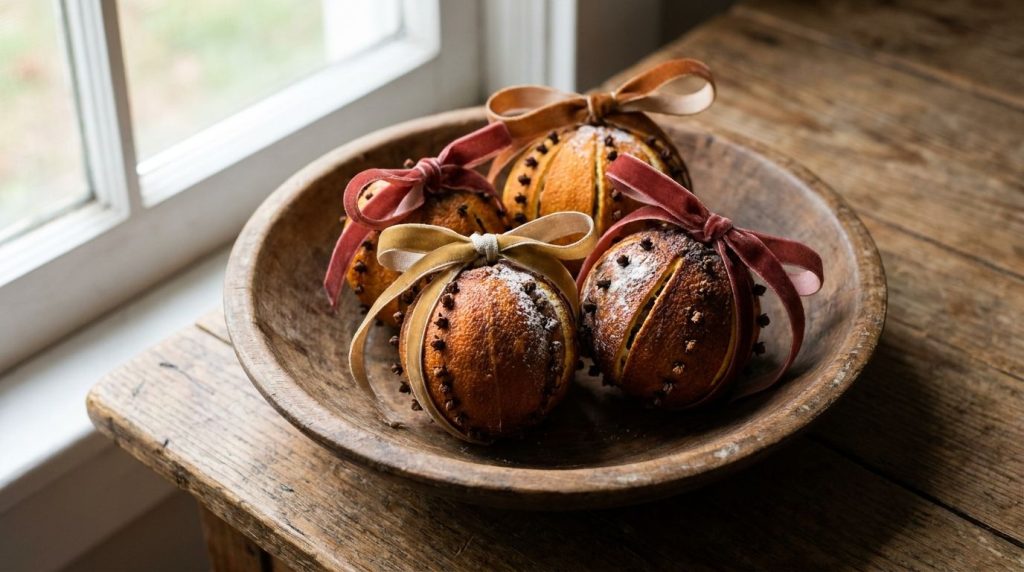
Once your orange is fully studded, roll it in a mixture of powdered cinnamon, nutmeg, and orris root powder. Orris root acts as a natural fixative, helping to “set” the fragrance and absorb moisture. Place the coated pomander in a paper bag or on a drying rack in a cool, dry, well-ventilated area for 2-4 weeks. During this time, the orange will shrink and harden, preserving its shape and locking in the scent.
How to Use Your Pomander
Once dried, your orange-clove pomander can be used in several ways:
- Natural Air Freshener: Place them in bowls in living spaces, bathrooms, or entryways to infuse the air with a warm, spicy scent.
- Closet & Drawer Freshener: Hang them in closets or place them in drawers to scent clothing and deter moths.
- Holiday Decoration: Incorporate them into festive displays, garlands, or hang them on a Christmas tree.
- Potpourri Element: Break up older pomanders and add them to potpourri mixtures for a continued burst of fragrance.
How Often to Use
Pomanders are a “set it and forget it” type of remedy, lasting for months or even years if properly dried and stored. The scent will gradually diminish over time, but you can usually expect a noticeable aroma for at least 3-6 months. To refresh a fading scent, you can sometimes gently scrape the surface to release more oils or lightly mist with a clove or orange essential oil spray (diluted).
How to Buy / How to Choose Ingredients
For the best results, always prioritize quality:
- Oranges: Look for organic, unwaxed oranges if possible, especially if you plan to fully dry them. Waxes can sometimes interfere with the drying process or trap moisture.
- Cloves: Purchase whole cloves from a reputable spice vendor. Check for a strong, pungent aroma — this indicates freshness. Avoid pre-ground cloves for this project, as they lack the structure needed for studding.
Did You Know? Historical “Remedy”
In medieval and Renaissance Europe, pomanders were carried not just for fragrance, but also for their perceived medicinal properties. The strong scent of cloves and citrus was believed to ward off “bad air” or miasma, which was thought to be the cause of disease. This made them a popular accessory during times of plague, functioning as a rudimentary form of personal protective equipment.
Storage
Proper storage is crucial for extending the life of your pomander:
- Drying: Ensure your pomanders are completely dry and hardened before storage. Any residual moisture can lead to mold.
- Ventilation: Store dried pomanders in a cool, dry, well-ventilated area. Avoid airtight containers, which can trap moisture and encourage mold growth.
- Aromatherapy Refresh: If the scent fades, you can “refresh” them by gently rubbing the surface or placing them near a heat source for a short period to release more oils.
Practical Tips
- Pre-Pierce Thoroughly: Don’t skip or rush the piercing step. It prevents the orange from splitting and makes clove insertion much easier.
- Dense Coverage is Key: The more cloves you use, the better the scent and the more effectively the orange will dry and preserve. Exposed orange skin is more likely to rot.
- Ribbon & Hanging: If you plan to hang your pomander, create channels for a ribbon before studding. Use a knife to cut two parallel slits across the top, through which you can thread a ribbon once the pomander is dry.
- Accelerated Drying: Some modern methods suggest baking pomanders at a very low temperature (around 150°F / 65°C) for several hours to speed up drying. However, traditional air-drying often yields a more intensely fragrant and longer-lasting result.
Common Mistakes
- Not Piercing the Orange: Trying to push cloves directly into the orange skin will often result in broken cloves, split oranges, and frustration.
- Insufficient Clove Coverage: Leaving too much orange skin exposed can lead to the fruit rotting before it has a chance to fully dry and preserve.
- Storing in Humid Conditions: After drying, if stored in a humid environment, pomanders can reabsorb moisture and develop mold.
- Using Waxy Oranges: The wax on commercially grown oranges can sometimes hinder the drying process. A quick wash with warm, soapy water can help remove some of it.
Cautions / Who Should Avoid It
Generally, orange-clove pomanders are safe for household use. However, consider the following:
- Allergies: Individuals with sensitivities to citrus or cloves may experience irritation if they come into direct contact with the oils or inhale concentrated aromas.
- Pets: While not inherently toxic in this form, the strong scent might be irritating to some pets, and ingestion of cloves in large quantities could be harmful. Keep out of reach of curious animals.
- Children: Small children might try to ingest the cloves, posing a choking hazard. Supervise if crafting with kids.
You may also like: Read our full guide on homemade natural air fresheners.
Quick Summary
Orange-clove pomanders offer a fragrant, natural solution for scenting your home and deterring pests, rooted in centuries of tradition. Best made with fresh, firm oranges and abundant whole cloves, they are preserved through air-drying or optional spice coatings. They offer a long-lasting, warm, spicy aroma for months, serving as both decoration and a historical “remedy” for unwanted odors. Avoid common mistakes like insufficient clove coverage or skipping pre-piercing to ensure success.
| Feature | Orange-Clove Pomander | Modern Air Freshener |
|---|---|---|
| Primary Function | Natural fragrance, pest deterrent, decoration | Chemical fragrance, odor masking |
| Ingredients | Natural fruit, whole cloves, optional spices | Synthetic chemicals, aerosols, propellants |
| Longevity of Scent | Months to years (slow release) | Hours to weeks (rapid dissipation) |
| Environmental Impact | Biodegradable, low waste | Plastic packaging, chemical disposal |
| Health Considerations | Generally safe, natural aroma | Potential for allergens, synthetic irritants |
FAQ
- Can I use fresh or dried oranges? You start with fresh oranges, and the process of studding them with cloves helps to dry and preserve the fruit naturally over time.
- How long does an orange-clove pomander last? If properly dried and cured, a pomander can retain its scent for several months to a year, and sometimes even longer as a decorative item.
- Can I refrigerate it? No, refrigeration is not recommended as it can introduce moisture and prevent proper drying, leading to mold. Store in a cool, dry, open space.
- How often should I use it? Once made, it provides continuous aroma passively. No active “use” is required beyond occasional dusting or repositioning.
- What part of the clove is best? You must use whole cloves, specifically inserting the stem end into the orange. The “head” of the clove provides the main aromatic impact.
- Can I reuse the cloves? No, once embedded and dried with the orange, the cloves are part of the pomander and not typically reused.
- When should I avoid it? Avoid if you have strong allergies to citrus or cloves, or if you have very sensitive pets or small children who might try to eat the components.
- What if my pomander gets moldy? Mold usually indicates incomplete drying or storage in a humid environment. If mold appears, it’s best to discard the pomander and try again, ensuring denser clove coverage and better ventilation during the drying process.
Conclusion
The orange-clove pomander is far more than a simple holiday craft; it’s a testament to historical ingenuity and the timeless appeal of natural remedies. By understanding its practical origins and following clear steps, you can create a beautiful, fragrant, and functional item that adds warmth and character to your home. It’s a delightful way to connect with a tradition that once served as a vital part of household management and personal wellness, proving that sometimes, the simplest solutions are the most enduring.
Related remedy: Discover how to make a natural lavender sachet for linen freshness.
