Sun spots and age spots can make the skin look uneven and tired, even when the rest of your routine feels good. The good news is that many people look for gentle, everyday ways to support a brighter complexion, and a simple DIY skincare mix is one popular option. This guide explains how homemade brightening mixes work, what to look for in natural ingredients, and how to use them safely.
What Causes Sun Spots and Age Spots?
Sun spots, also called solar lentigines, are flat, tan or brown patches that usually show up on areas exposed to the sun, such as the face, hands, and shoulders. Age spots are similar and often appear as the skin matures. Both happen when the skin produces extra melanin in certain areas. Sun exposure is the most common trigger, which is why daily protection matters so much.
Why Brightening Ingredients Matter
Brightening routines usually focus on gently encouraging an even tone rather than erasing spots overnight. Ingredients that are often used in natural skincare include:
- Moisturizing bases that help keep skin comfortable and supple
- Antioxidant-rich ingredients that support the skin’s natural defenses
- Gentle exfoliating ingredients used in small amounts for a smoother look
Consistency is more important than strength. Mild, regular care is generally kinder to the skin than harsh treatments that cause irritation, which can make discoloration look worse.
About the Nivea Mix Trend
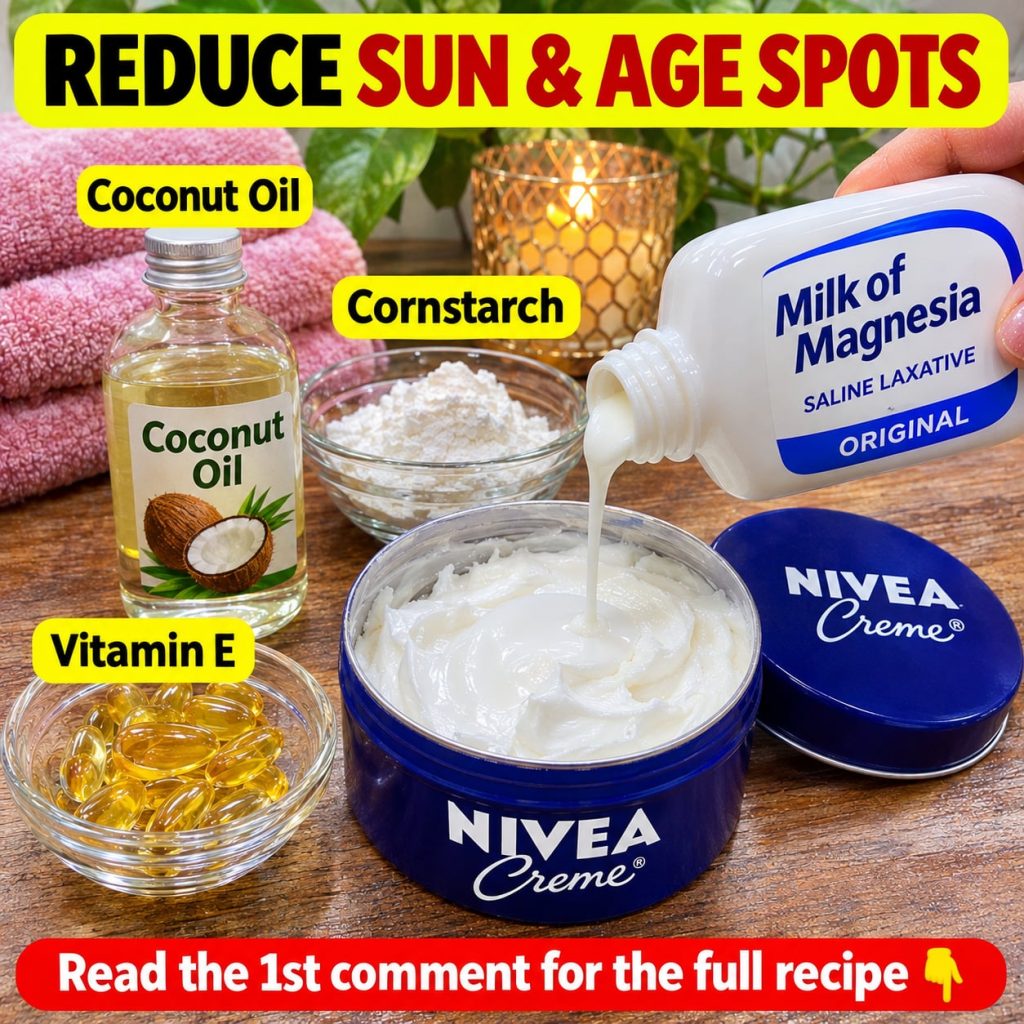
Many people have seen social media posts sharing a homemade mix that uses a familiar moisturizing cream as its base. The appeal is easy to understand: it feels affordable, uses ingredients you may already have at home, and fits into a simple self-care routine. However, the exact formula shared online can vary widely, and the full recipe is often shared in comments or captions rather than in a reliable, tested guide. Always check that any ingredient list you follow is complete, clearly measured, and suitable for your skin type.
How to Patch Test Any Homemade Skincare Mix
Before applying any homemade mix to your face, patch testing is an important step. It helps you spot allergic reactions or sensitivity before a larger area is affected.
- Apply a small amount to the inner forearm or behind the ear.
- Leave it on for 24 to 48 hours without washing it off.
- Watch for redness, itching, swelling, burning, or bumps.
- If nothing happens, you can try a small area of the face, such as along the jawline.
Stop using the mix right away if irritation appears, and rinse the area with lukewarm water.
Tips for Using Brightening Skincare Safely
- Wear broad-spectrum sunscreen every day, even on cloudy days, because new sun spots can develop without protection.
- Use fresh ingredients and clean containers, and store homemade products in the refrigerator when recommended.
- Apply at night if your mix contains ingredients that may increase sun sensitivity.
- Be patient. Visible changes in tone often take several weeks of consistent care.
When to See a Dermatologist
Natural remedies can support a simple routine, but they are not a substitute for professional advice. If a spot changes in size, shape, or color, bleeds, itches persistently, or looks different from the rest of your skin, speak with a dermatologist promptly. A professional can confirm what the spot is and recommend treatments that are appropriate for you.
Final Thoughts
A homemade brightening mix can be a pleasant part of a natural self-care routine, especially when combined with daily sun protection, gentle cleansing, and realistic expectations. Focus on safety, patch testing, and consistency, and enjoy the process of caring for your skin with simple, everyday ingredients.