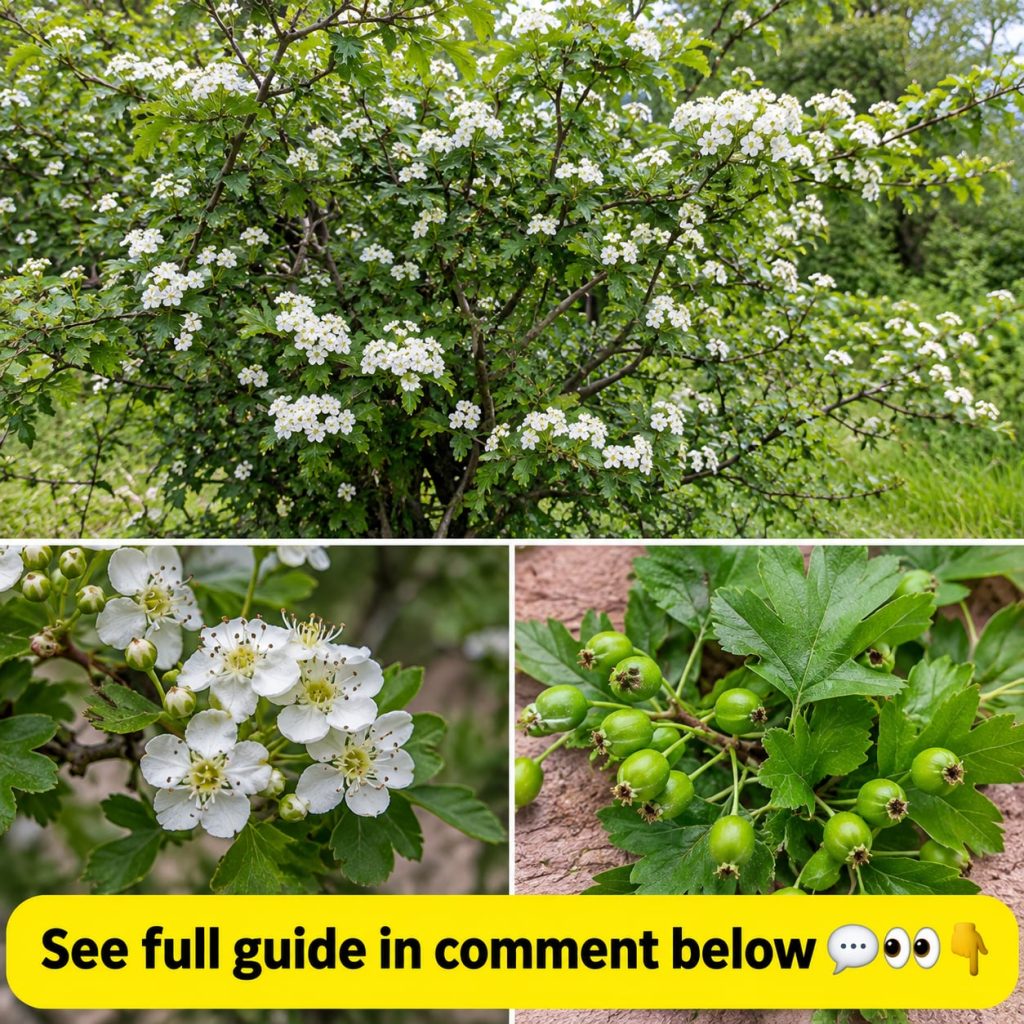
Most people walk past hawthorn bushes in spring for the blossoms, but in autumn the small red berries, called haws, are what home herbalists save. The fruit is the part that gets used most often in traditional preparations, and it is surprisingly easy to turn into a simple tea at home.
What Is Hawthorn Berry Tea?
Hawthorn berry tea is a simple herbal infusion made from dried haws, the small red fruits of the Crataegus genus. It has a mildly tart, fruity flavor and is often served plain or lightly sweetened with honey. Home herbalists also use the flowers and leaves, but the berries are the most common choice for a daily cup.
Ingredients
- 2 to 3 teaspoons dried hawthorn berries (about 3 to 4 grams)
- 1 cup (240 ml) freshly boiled water
- Optional: 1 teaspoon raw honey or a thin lemon slice
Approximate Measurements
For a standard mug, use about 1 heaping teaspoon of crushed dried berries per 240 ml of water. For a stronger brew, double the amount but keep the steep time the same. Whole berries need a longer steep than crushed ones.
Formula and Recipe
The basic formula is one part dried haws to roughly 80 parts water by weight. Crushing the berries lightly before brewing releases more flavor, and a small batch of 20 to 30 grams can be stored for several weeks.
Step-by-Step Method
- Lightly crush 2 to 3 teaspoons of dried haws with the back of a spoon.
- Place them in a warmed mug or teapot.
- Pour 240 ml of water just off the boil, around 95 degrees Celsius.
- Cover and steep for 10 to 15 minutes.
- Strain through a fine mesh and add honey or lemon if you like.
How to Use It
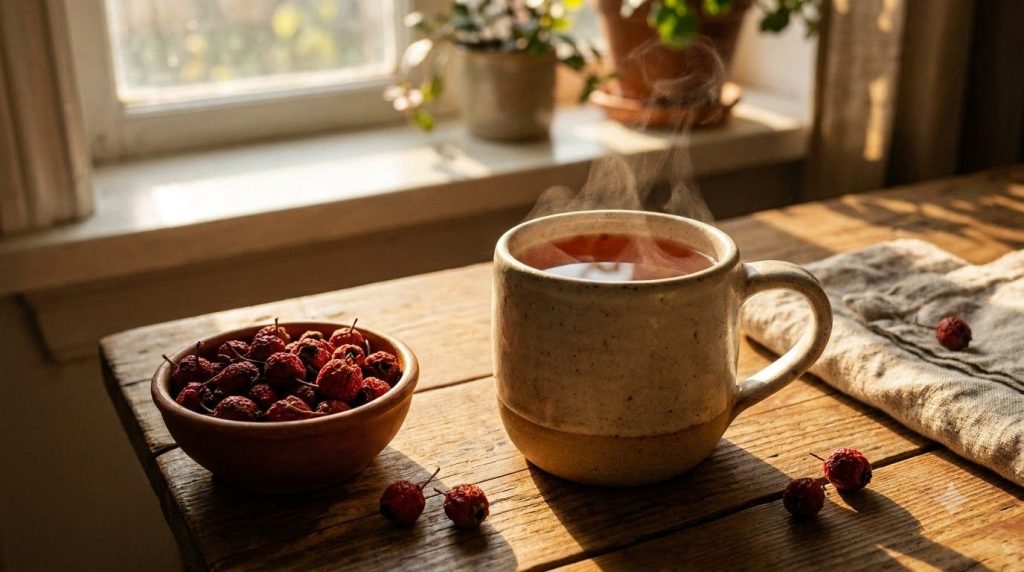
Drink the tea warm or at room temperature. Many people prefer it after a meal, since the mild tartness pairs well with heavier food. Keep the flavor simple at first so you can judge how the berries taste to you.
How Often to Use It
Most home users keep it to one or two cups a day for a few weeks, then take a break. Avoid building up large amounts quickly. If you are new to herbal teas, start with one cup and see how you feel over several days.
Fresh vs Dried Hawthorn Berries
| Form | Best Use | Shelf Life | Notes |
|---|---|---|---|
| Fresh haws | Syrups, jams, infused vinegar | About 1 week in the fridge | Must be washed and seeds removed |
| Dried haws | Tea and simple infusions | 6 to 12 months in a sealed jar | Easier to measure and store |
| Crushed dried haws | Quick daily cup | 3 to 6 months | Brews faster but loses aroma sooner |
How to Choose Good Hawthorn Berries
Buy dried haws from a reputable herb supplier that lists the origin and harvest date. Look for berries that are deep red or brownish-red, not dull, moldy, or pale. Avoid any product that smells musty or dusty.
Storage
Keep dried berries in an airtight glass jar away from light, heat, and moisture. Never store them in a damp kitchen cabinet near the stove. Label the jar with the date so you can rotate your stock.
Practical Tips
Quick Tip: Adding a small piece of cinnamon stick gives the tea a warm finish without extra sugar. Did You Know? The berries contain natural fruit sugars, so the tea tastes sweeter after a longer steep. Best Time to Use It: many people choose the afternoon instead of late evening if they are sensitive to caffeine-free but still stimulating herbs.
Common Mistakes
- Using boiling water, which can make the tea taste bitter. Let the kettle rest for a minute first.
- Leaving the seeds in whole berries, which is not recommended for home preparations.
- Using berries that were sprayed with chemicals or collected from roadside plants.
- Storing the jar in a wet or warm place, which causes mold.
- Overusing the tea in the hope of faster results.
Cautions and Who Should Avoid It
Hawthorn can interact with certain medicines, especially those for heart rhythm, blood pressure, or blood thinning. People who are pregnant or breastfeeding, have heart conditions, or take prescription medication should speak with a qualified healthcare provider before drinking it. Stop use and seek medical advice if you notice dizziness, chest discomfort, or an unusual heartbeat.
Quick Summary
| Question | Quick Answer |
|---|---|
| Best preparation | Lightly crushed dried berries, steeped 10 to 15 minutes |
| Best use case | A mild daily herbal cup |
| Storage | Sealed glass jar, cool and dark |
| When to use | One or two cups daily, with breaks |
| What to avoid | Seeds, sprayed plants, damp storage, and use alongside heart medication without advice |
FAQ
Can I use fresh or dried hawthorn berries for tea?
Dried berries are the easier and more common choice for tea. Fresh berries are better suited to syrups or jams.
How long does dried hawthorn last?
Stored in a sealed jar away from light, whole dried berries usually stay good for 6 to 12 months.
Can I refrigerate the tea?
Yes, brewed tea can be kept in a sealed container in the fridge for up to 24 hours. Fresh brewing is always better.
Can I freeze hawthorn berries?
Fresh berries can be frozen in a sealed bag, but dried berries do not need freezing and may lose aroma in the freezer.
Can I reuse the berries?
A second, lighter infusion is possible, but the flavor will be weaker and it is not necessary for daily use.
Which part of the plant is best?
The berries are the most common part used for tea, while flowers and leaves are used in other traditional preparations.
When should I avoid it?
Avoid it if you are pregnant, breastfeeding, or taking heart or blood pressure medication unless a healthcare provider has approved it.
Conclusion
Hawthorn berry tea is a simple, practical preparation that rewards careful sourcing and gentle brewing. Start with a small batch, store it well, and keep your routine modest.
Read more: Herbal Tea Basics for Beginners
See the full guide: How to Dry Garden Herbs at Home
Related remedy: Simple Homemade Herbal Infusions