Most people rake fallen pine needles into a pile and never give them a second look. Yet the same needles that litter the ground under a pine tree are the core material for sturdy, coiled baskets, and the process is far more approachable than it looks.
What a Pine Needle Basket Is
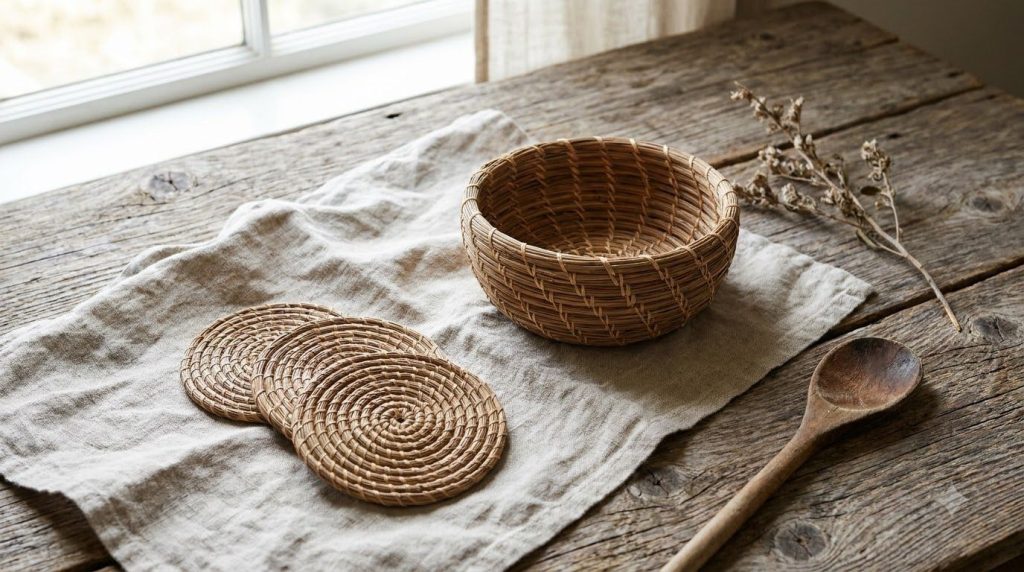
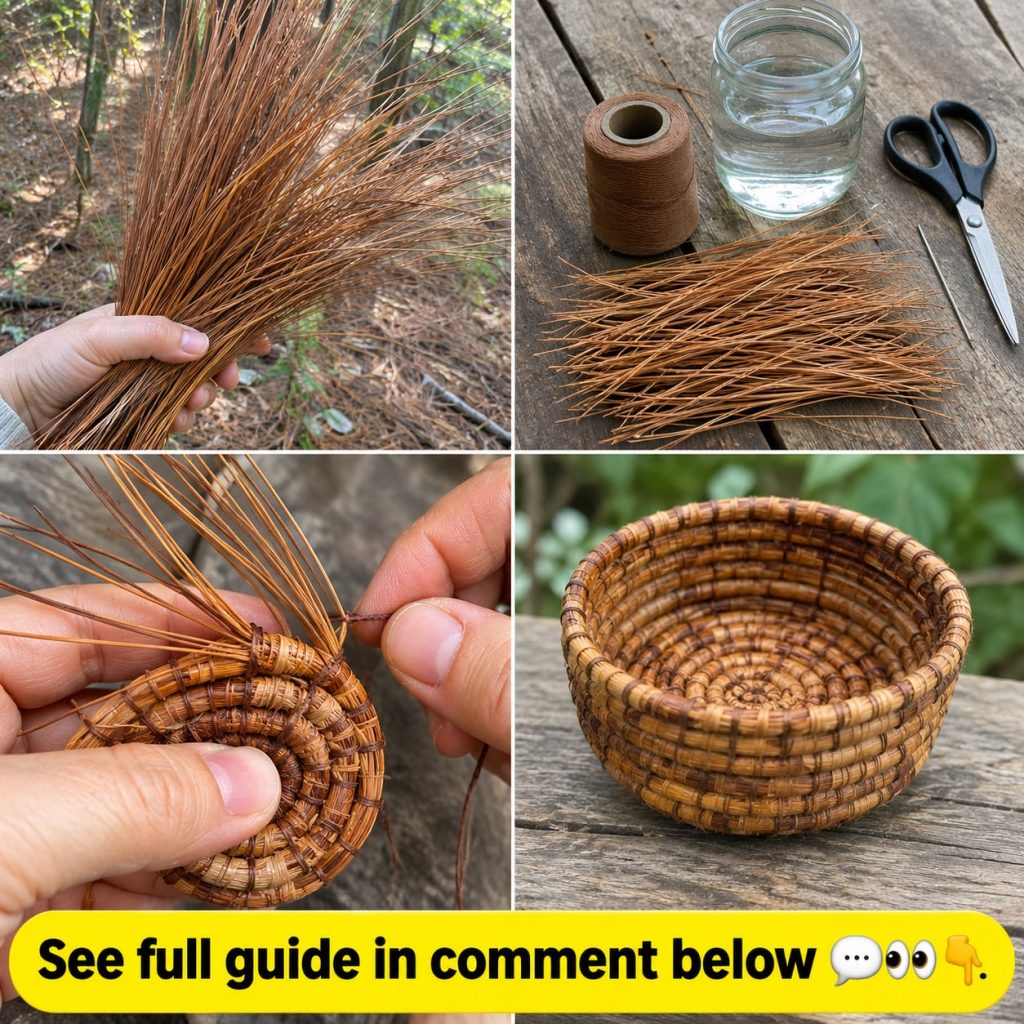
A pine needle basket is a coiled basket. Dried needles are bundled into a rope-like coil, then stitched together with waxed thread, dental floss, or raffia. The result is a bowl or tray that is lightweight, breathable, and surprisingly firm. Long-leaf pine needles are the most popular choice because they are long and flexible, but shorter needles work well for small coasters.
Ingredients and Materials
- Fallen pine needles, dry and intact (about 2 to 3 handfuls for a small basket)
- Waxed linen thread or strong dental floss for stitching
- Raffia or natural jute for wrapping the bundles
- A large needle with an eye wide enough for your thread
- Clothespins or painter’s tape to hold the start of the coil
- A small bowl of water for lightly dampening the needles
Approximate Measurements
A coaster-sized piece uses roughly 20 to 30 bundles of 10 to 12 needles each. A bowl about 15 cm across usually needs 3 to 4 handfuls of needles and about 5 to 6 meters of thread. These numbers are estimates, since the amount depends on how tightly you coil.
Step-by-Step Method
- Collect fallen needles from clean ground, then spread them on a sheet and air-dry them for 3 to 7 days out of direct sun.
- Sort the needles and remove any brown, brittle, or damaged ones.
- Gather 10 to 12 needles into a small bundle and tie them near the base with thread.
- Wrap the bundle with raffia, then coil it into a tight spiral.
- Stitch each new coil to the previous one using a figure-eight stitch through the wrapped section.
- Keep adding bundles, feeding them in as you go, until the base reaches your target width.
- Shape the sides by gently curving upward and adding a few extra stitches to hold the form.
- Finish by tucking the thread ends into the coil and trimming any loose needles.
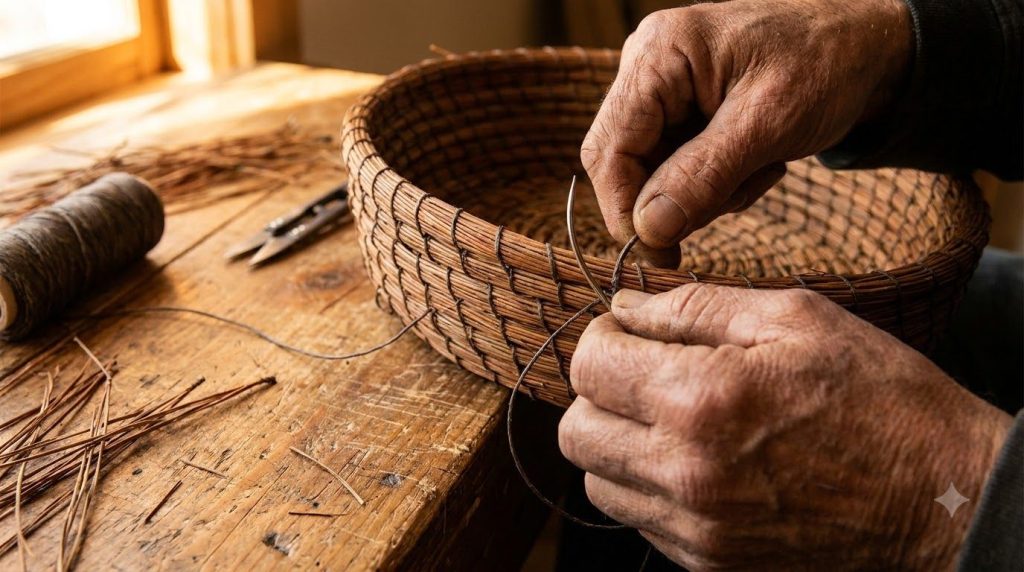
Quick Tip: Lightly dampen the needles before coiling so they bend more easily, then let the finished piece dry fully before final trimming.
How to Use Your Basket
Pine needle baskets work well as bread baskets, key catch-alls, plant covers, or decorative trays. They suit dry items best. Avoid filling them with wet food or leaving them in standing water, since moisture weakens the coil over time.
How Often to Make One
A basket is a one-time project, but many crafters plan a batch. A bowl-sized piece usually takes several hours of stitching, so most people work on one piece over a few evenings.
How to Choose Good Needles
Look for needles that are straight, flexible, and warm golden in color. Skip brittle, moldy, or stained needles. Collect from clean areas away from roads and fields that may have been treated with chemicals.
Storage
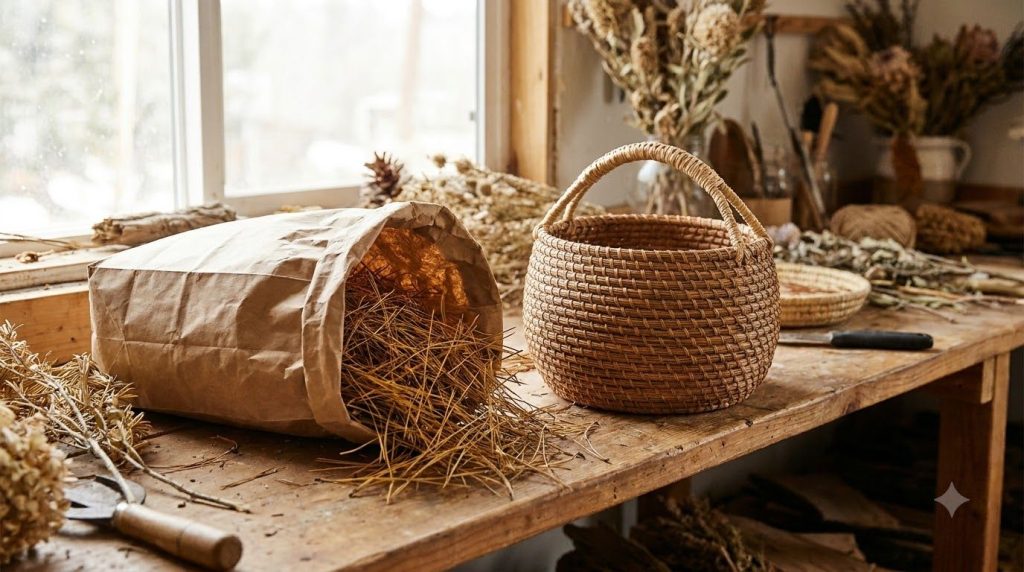
Keep dried needles in a paper bag or open box in a dry room. Sealed plastic traps moisture and can cause mold. Finished baskets last longest indoors, away from humidity and direct sun.
Fresh vs Dried Needles
| Option | Best For | Handling Notes |
|---|---|---|
| Fresh fallen needles | Not recommended | Too moist, shrink and crack as they dry |
| Air-dried needles | Coiling and stitching | Dry 3 to 7 days, flat, out of direct sun |
| Long-leaf pine needles | Larger bowls | Flexible and easy to coil |
| Short pine needles | Small coasters | Requires more bundles and tighter stitches |
Practical Tips
- Keep each bundle the same size for an even coil.
- Use a clothespin to hold the start of the coil while you build the base.
- Test your stitch on a small sample before starting a large basket.
Common Mistakes
- Using damp or freshly fallen needles, which shrink and crack as they dry.
- Pulling stitches too tight, which warps the basket out of shape.
- Gathering needles from sprayed trees or busy roadsides.
- Skipping the drying step, which invites mold.
Cautions and Who Should Avoid This Project
Wear gloves if pine pitch is sticky, and avoid the project if you react to resin or sap. Be careful not to confuse pine needles with yew, which is toxic. Pine needles grow in bundles of two to five, while yew needles attach individually. Keep finished baskets away from small children who may chew on the material.
Quick Summary
- Best preparation: air-dried, intact, long-leaf pine needles coiled with waxed thread.
- Best use: dry decor, bread baskets, key trays, and plant covers.
- Storage: dry paper bag for needles, indoor shelf for finished pieces.
- When to use: after needles have fully dried for several days.
- What to avoid: damp needles, sprayed trees, wet food, and yew confusion.
Frequently Asked Questions
Can I use fresh pine needles?
Fresh needles are not ideal because they shrink and crack as they dry. Air-dry them flat for 3 to 7 days first.
How long do pine needle baskets last?
With dry indoor storage, a well-made basket can last for years. Humidity and direct sun shorten its life.
Can I refrigerate or freeze the needles?
Refrigerating or freezing is unnecessary and can introduce moisture. Dry paper storage works better.
Can I reuse the needles from an old basket?
Usually not. Once stitched and bent, the needles are often brittle, so start with fresh, dried material.
Which needles are best for beginners?
Long-leaf pine needles are easiest to coil because they are flexible and generous in length.
Can I wash a pine needle basket?
Spot-clean with a dry or lightly damp cloth. Avoid soaking, since water weakens the coil and can cause warping.
Related Reading
Read more: how to dry garden herbs at home for crafting and storage.
See the full guide: simple woven baskets from natural twine and raffia.
Related guide: DIY natural decor projects that use what you already have outdoors.
Conclusion
Fallen pine needles are one of the easiest natural materials to turn into a practical, handmade basket. With proper drying, even tight coils, and dry storage, you can create a durable piece that adds texture to your home. Start with a small coaster, then build toward a larger bowl once your stitch feels steady.