Protein is one of the most important nutrients in your daily diet, yet many people are unsure which protein sources actually support their goals. Whether you are working to build lean muscle or trying to lose body fat, the proteins you choose can make a real difference in how you feel, how you recover, and how satisfied you stay between meals.
Why Protein Matters for Your Goals
Protein provides amino acids, the building blocks your body uses to repair and build muscle tissue. It also helps you feel full for longer, which can make it easier to manage your overall calorie intake. Because protein requires more energy to digest than carbohydrates or fats, it has a modest thermic effect that supports a healthy metabolism.
Choosing Proteins for Muscle Gain
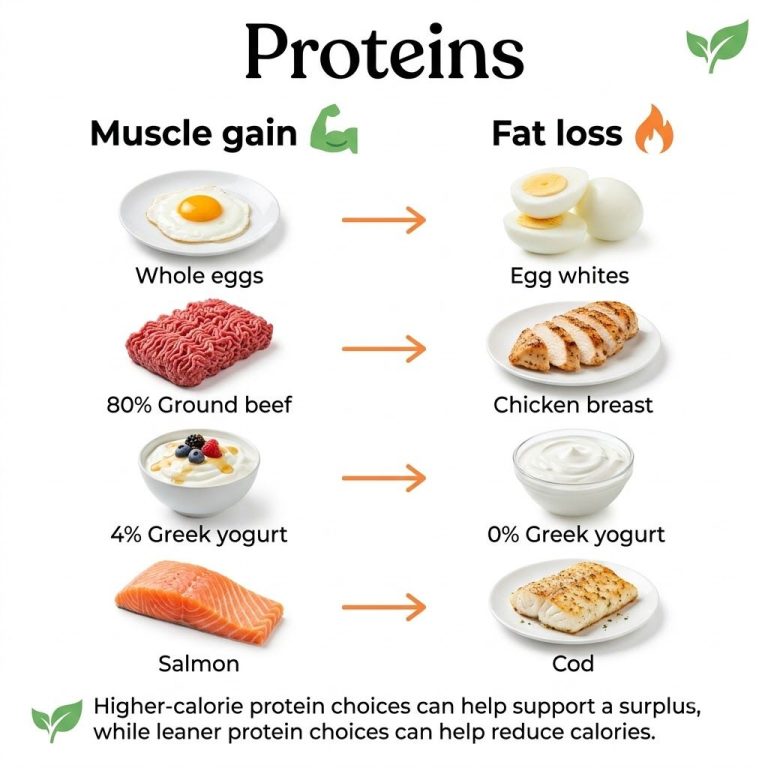
If your priority is building muscle, you need enough total protein along with a steady supply throughout the day. Focus on high-quality complete proteins that contain all essential amino acids.
- Eggs and egg whites: complete protein with leucine, an amino acid that signals muscle protein synthesis.
- Greek yogurt and cottage cheese: rich in casein, a slow-digesting protein that supports recovery overnight.
- Chicken breast, turkey and lean beef: dense in protein with relatively few calories per serving.
- Whey or plant protein powders: convenient options to close protein gaps after training.
Choosing Proteins for Fat Loss
When your goal is fat loss, protein helps preserve lean muscle while you eat in a moderate calorie deficit. Choosing lower-calorie, high-protein foods helps you stay full and reduces the urge to snack.
- White fish and shellfish: very lean options that deliver high protein for few calories.
- Skinless poultry: a versatile choice for salads, bowls and meal prep.
- Legumes such as lentils and chickpeas: protein combined with fiber to support digestion and fullness.
- Tofu and tempeh: plant-based options that are naturally low in saturated fat.
Balancing Protein With Healthy Fats and Fiber
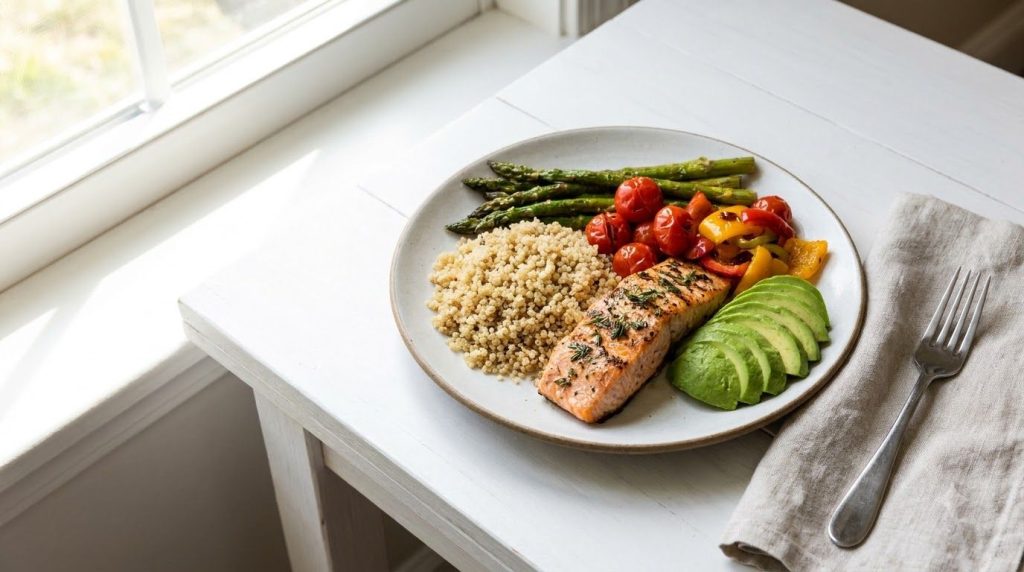
Protein works best as part of a balanced plate. Pair your protein with vegetables, whole grains and healthy fats such as olive oil, avocado or nuts. This combination supports steady energy, better digestion and long-lasting satiety.
Practical Tips for Smarter Protein Choices
- Aim to include a palm-sized portion of protein at every meal.
- Choose fresh or minimally processed proteins when possible.
- Rotate between animal and plant sources to diversify nutrients.
- Prepare proteins in batches, such as baked chicken or roasted chickpeas, to simplify weekday meals.
- Read labels on protein bars and powders to watch for added sugars.
Final Thoughts
Choosing the right protein sources is a simple, science-informed way to support muscle growth or fat loss. Start by adding one high-quality protein to each meal, build your plate around vegetables and whole foods, and adjust portions based on your goals and activity level. Consistency over time will matter more than perfection.