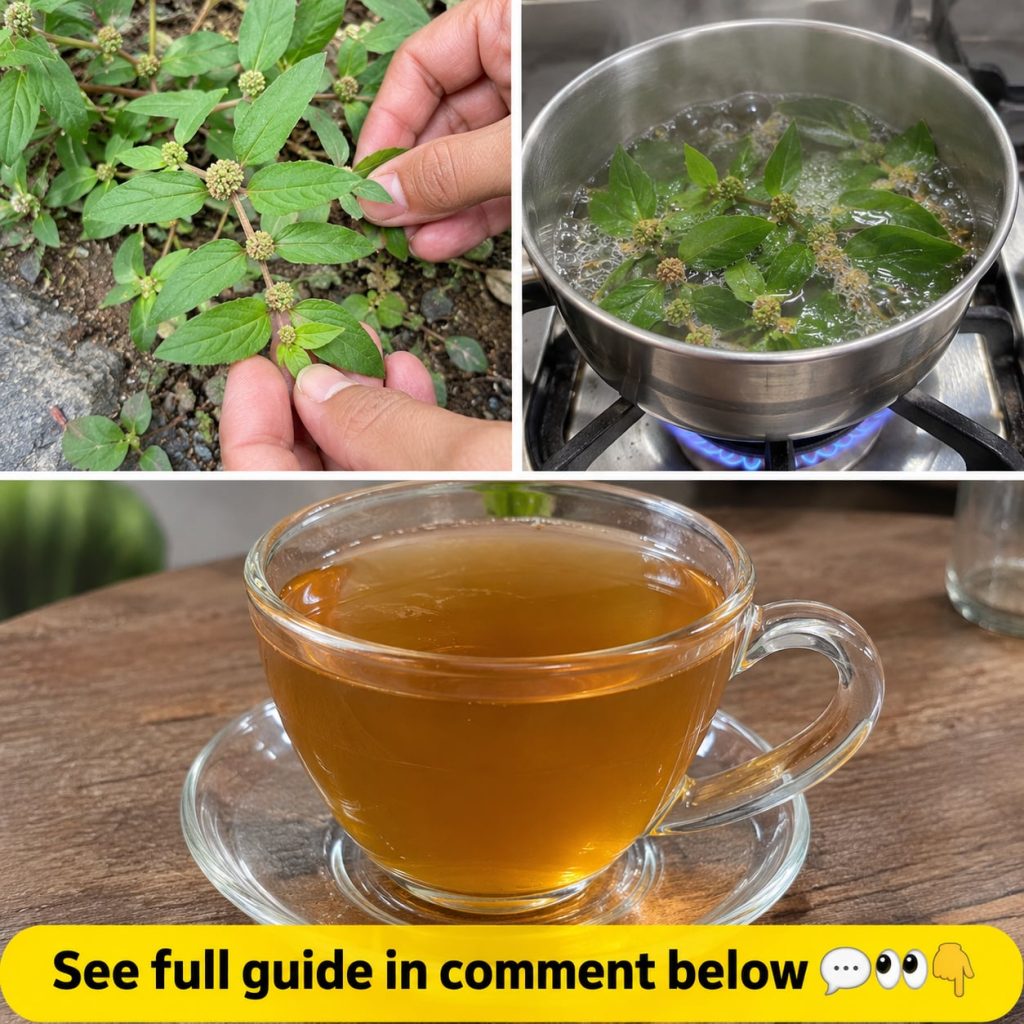
Most people walk past it every day without a second look. Broadleaf plantain pushes up through lawns, gravel paths, and garden edges, and it is often pulled out as a weed. The leaves are the part most home herbalists keep, and they are the key ingredient in one of the simplest homemade preparations you can make.
What It Is
Broadleaf plantain (Plantago major) forms a flat rosette of wide, oval leaves with prominent parallel veins. It is not the same as the plantain banana, which is a cooking fruit. This guide covers the leaves only, which are typically used to make infused oil, salve, or a simple compress.
Ingredients
- Fresh broadleaf plantain leaves, clean and dry
- Carrier oil such as olive oil or sunflower oil
- Beeswax pellets
Approximate Measurements
The table below gives a small batch of about 120 ml (4 oz) of finished salve.
| Ingredient | Small Batch Amount |
|---|---|
| Fresh plantain leaves | 1 cup loosely packed |
| Dried plantain leaves (alternative) | 1/2 cup loosely packed |
| Carrier oil | 1 cup (240 ml) |
| Beeswax pellets | 2 tablespoons (about 25 g) for a soft balm, up to 3 tablespoons for a firmer salve |
Formula and Recipe
The basic ratio is about 1 part beeswax to 4 parts infused oil by weight. Adjust the wax up for a firmer texture or down for a softer one.
Step-by-Step Method
- Wash the leaves gently in cool water and pat them completely dry. Let them air-dry for several hours on a towel. Any moisture left on the leaves can spoil the oil.
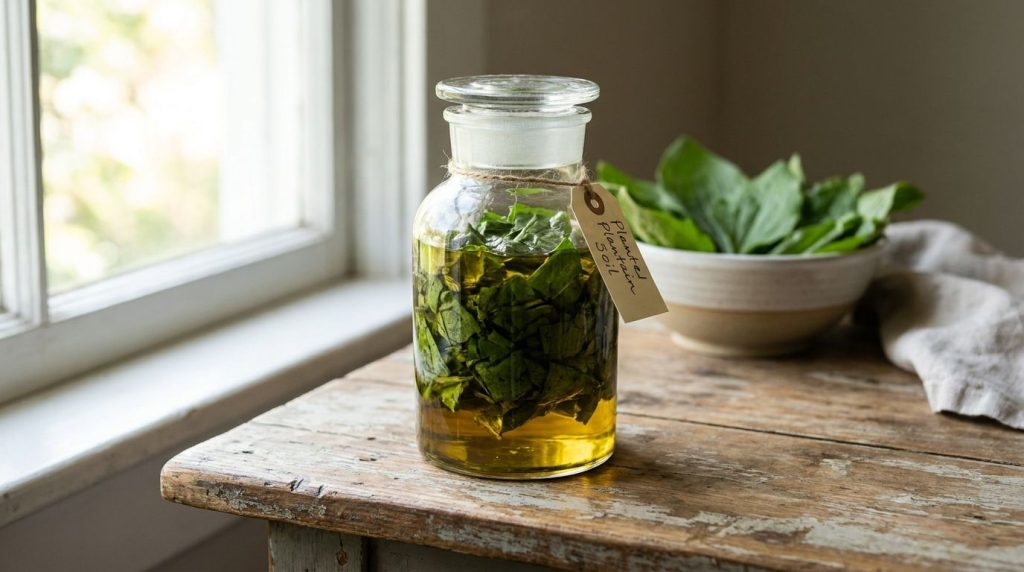
- Chop the leaves roughly and place them in a clean, dry glass jar.
- Cover the leaves with oil so they are fully submerged by about 2 cm (1 inch).
- Place the jar in a warm spot away from direct sun for 2 to 4 weeks. Shake it gently every few days.
- Strain the oil through a fine mesh sieve or cheesecloth into a clean bowl, squeezing out the leaves.
- Gently melt the beeswax in a double boiler, then stir in the infused oil.
- Pour the mixture into small clean tins or jars and let it cool and set for several hours.
Quick Tip: Test the texture by placing a spoonful of the warm mixture on a cold plate. If it sets too soft, add a little more wax next time.
How to Use It
Apply a thin layer to clean, dry skin on small areas such as minor scrapes, dry patches, or insect bites. Store-bought tins are not needed. Wash your hands before and after use, and avoid the eye area.
How Often to Use It
Most people apply a thin layer one to three times a day while the skin is dry or irritated. Stop using it if the area worsens or does not improve after a few days.
How to Choose Your Ingredients
Pick leaves from a clean area away from roads, dog walks, and lawns treated with herbicides or pesticides. Choose a cold-pressed, food-grade carrier oil, and buy beeswax from a reputable source. Fresh leaves should look bright and unbruised.
Fresh vs Dried vs Other Forms
| Version | Best Use | Shelf Life |
|---|---|---|
| Fresh leaf infusion | Strong color and scent, short batches | Use within 1 to 2 weeks, refrigerated |
| Dried leaf infusion | Easier to store and more consistent | Up to 6 months in a sealed jar, away from light |
| Salve | Targeted use on small dry areas | Several months if kept cool and dry |
| Tea | Occasional drinking preparation | Best made fresh and used the same day |
Storage
Keep finished salve in clean, airtight tins in a cool, dark cupboard. Do not store it in a hot car or on a sunny windowsill. Label each batch with the date.
Practical Tips
- Use a dry jar. Water in the jar is the most common cause of spoilage.
- Infuse in small batches so you can use the product before it loses quality.
- Dried leaves are a good option when fresh plantain is not in season.
Common Mistake: Using leaves that were not fully dried. Moisture can cause mold or rancid oil within days.
Common Mistakes
- Harvesting from sprayed or polluted areas.
- Skipping the drying step after washing.
- Storing the oil in a wet or warm jar.
- Overheating the wax, which can make the salve grainy.
- Using the salve on deep, bleeding, or infected wounds.
Cautions and Who Should Avoid It
Do a patch test on a small area of skin 24 hours before wider use. Stop using the salve if you notice redness, itching, or swelling. People with known allergies to plantain, ragweed family plants, or beeswax should avoid it. Consult a healthcare professional before use if you are pregnant, nursing, or managing a medical condition. This guide does not replace medical advice.
Quick Summary
- Best preparation: Infused oil turned into a beeswax salve.
- Best use case: Small areas of dry or irritated skin.
- Storage: Cool, dark, airtight, and dry.
- When to use: One to three times daily on clean skin.
- What to avoid: Wet leaves, sprayed plants, deep wounds, and eye contact.
FAQ
Can I use fresh or dried leaves?
Both work. Fresh leaves give a stronger color, but dried leaves are easier to store and reduce the risk of moisture problems.
How long does the infused oil last?
When fully dried and stored in a clean, dry jar away from light, it usually lasts several months. Discard it if it smells sour or rancid.
Can I refrigerate the infused oil?
Yes, refrigeration can help extend freshness, especially for fresh-leaf batches. Bring it to room temperature before use so it is easier to work with.
Can I freeze the salve?
Freezing is not necessary and can cause condensation when thawed. Store the salve in a cool place instead.
Which part of the plant is best?
The leaves are used in most home preparations. Avoid using roots or seed heads unless you have a trusted, specific guide.
Can I reuse the leaves?
It is best to use fresh leaves for each batch. Reused leaves have less material and may spoil faster.
When should I avoid it?
Avoid it on deep wounds, infected skin, and the eye area. Stop using it if irritation develops.
Conclusion
Broadleaf plantain is easy to identify once you know what to look for, and a simple infused oil salve is a practical way to make use of it. Start with a small batch, keep everything dry, and test on a small patch of skin first.
You may also like: Read more about herbs for beginners.
Related remedy: See the full guide to making herbal infused oils at home.
Continue with: Learn how to make it in our guide to beeswax balm recipes.