Stubborn soap scum, dull tile grout, and a bathtub ring that won’t budge can make any cleaning day feel longer than it should. This homemade purple cleaner is a simple, low-fume option for lifting everyday grime and giving neglected bathroom and kitchen surfaces a fresh start. It’s easy to mix in a few minutes, and it uses basic pantry and household items.
What You’ll Need
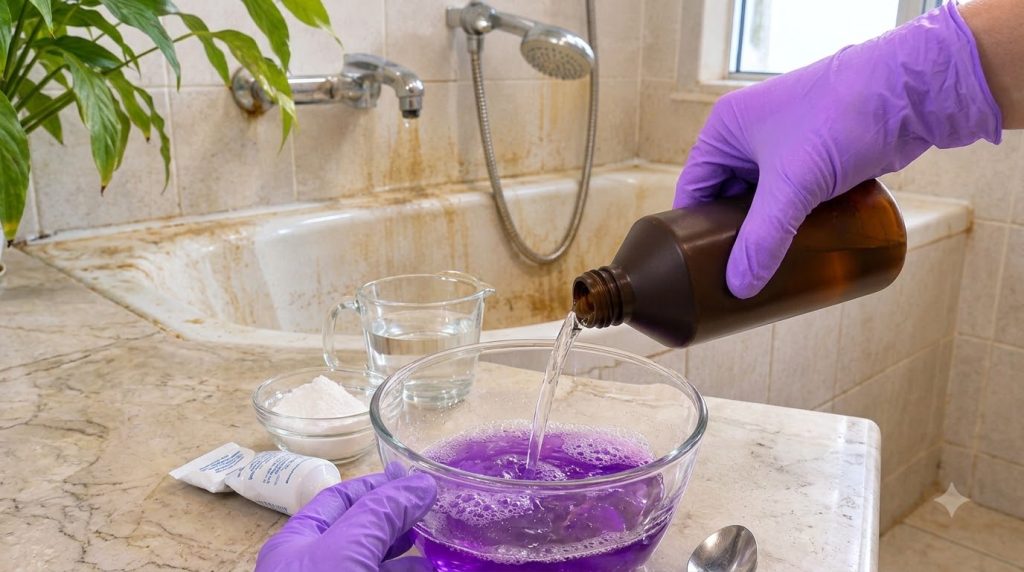
Cleaning Solution Ingredients
- 2 cups warm water
- 1/2 cup white distilled vinegar (clear liquid)
- 1 tablespoon liquid dish soap
- A few drops of purple food coloring or purple liquid dish soap, optional
Scrubbing Paste Ingredients
- 1/4 cup baking soda (the white powder)
- 1 to 2 teaspoons water, added slowly until spreadable
Tools
- Glass or plastic mixing bowl
- Measuring cup and measuring spoons
- Spray bottle, labeled clearly
- Non-scratch sponge or soft scrub brush
- Microfiber cloths
- Rubber or nitrile gloves
Why This DIY Can Be Useful
Each ingredient has a clear job. Vinegar is mildly acidic, which helps loosen mineral residue and hard water film on many glazed and sealed surfaces. Dish soap breaks down oils and everyday grease so the solution can lift dirt off more easily. Baking soda is a gentle abrasive, so it adds scrubbing power for stubborn spots without the harshness of strong chemicals. Keeping the cleaner and the scrubbing paste separate gives you more control over where each one is used.
How to Make It
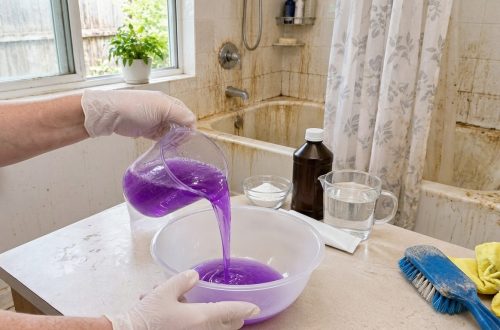
- Pour the warm water into your mixing bowl or a large measuring cup.
- Add the white vinegar and stir gently.
- Add the dish soap slowly, stirring just enough to combine. Avoid over-stirring, which can create excess foam.
- If you want the signature purple color, add a few drops of purple food coloring or use purple dish soap and stir until evenly tinted.
- Pour the mixture into a clean, labeled spray bottle and close the cap tightly.
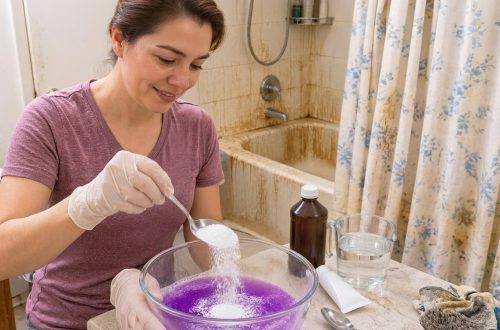
- For the scrubbing paste, place the baking soda in a small separate bowl and add water a little at a time until it forms a thick, spreadable paste. Do not pour baking soda directly into the vinegar mixture, because it will fizz and waste the cleaning power of both.
How to Use It
- Put on gloves and open a window or turn on the bathroom fan.
- Spray the purple solution onto the surface, such as a shower wall, sink, or tub, until lightly coated.
- Let it sit for 5 to 10 minutes so it can loosen grime and soap residue.
- For heavier buildup, apply a thin layer of the baking soda paste with a sponge or brush and gently scrub in small circles.
- Rinse thoroughly with warm water.
- Wipe dry with a microfiber cloth to reduce water spots and streaks.
What to Expect
This cleaner works best on light to moderate buildup, such as everyday soap scum, grease on kitchen surfaces, and minor water marks. Heavy, long-term staining may need several passes or more scrubbing, and some marks may not disappear completely in one session. Consistent use on a regular schedule usually keeps surfaces looking cleaner for longer than occasional deep cleaning alone.
Helpful Tips
- Work from top to bottom so drips do not re-soil areas you have already cleaned.
- Clean a small hidden spot first to see how the surface responds.
- Use a soft sponge on glossy finishes to avoid scratching.
- If you prefer a milder scent, use unscented dish soap. Vinegar’s smell fades as the surface dries.
- Lemon juice can replace vinegar on many surfaces if you prefer a fresher scent, but use it with the same caution as vinegar.
- Castile soap is a suitable alternative to dish soap for a plant-based option, though it may leave a slightly thicker film.
Important Notes and Safety
- Never mix this cleaner with bleach, ammonia, or hydrogen peroxide. Combining these products can create dangerous fumes.
- Do not use vinegar-based cleaners on natural stone such as marble, travertine, or granite, because acid can etch the surface. Use a stone-safe cleaner instead.
- Avoid using acidic cleaners on unsealed grout or natural stone tiles for long periods.
- Patch test on an inconspicuous area before cleaning larger surfaces, especially painted, waxed, or specialty finishes.
- Keep the solution away from eyes and children, and always wear gloves.
- Label the spray bottle clearly and store it out of reach. Mixed solutions without preservatives are best used within one to two weeks, so make smaller batches if you clean less often.