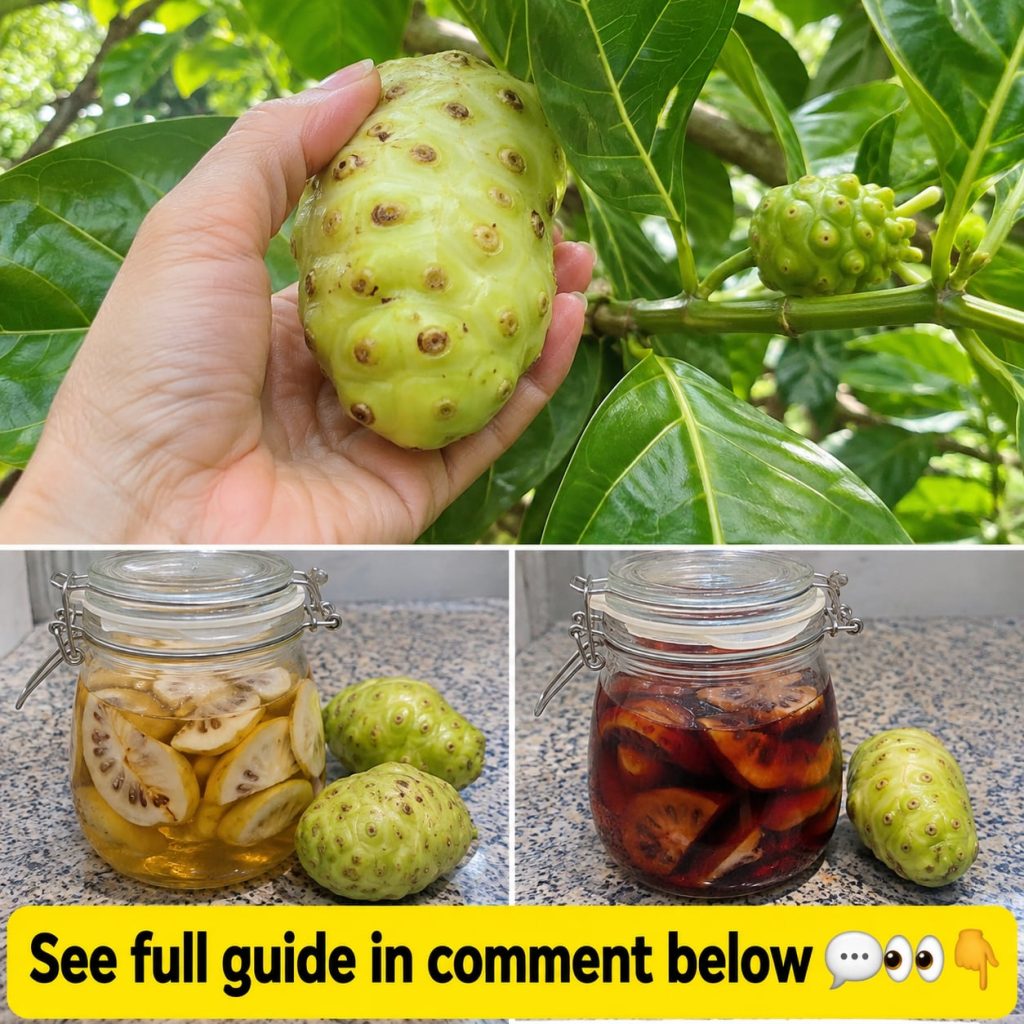
Most people walk right past noni without a second look, and that is exactly why it remains a hidden treasure. The fruit is lumpy, pungent, and easy to dismiss, but home preparers who know how to pick it and handle it properly often keep it on hand for simple remedy routines. Here is what to know before you try it.
What Noni Is
Noni (Morinda citrifolia) is a tropical evergreen shrub or small tree grown across Southeast Asia, the Pacific islands, and parts of Australia. Its fruit is the part most often used in home preparations. Noni is strongly aromatic, and many people describe the smell as cheese-like. That smell is the main reason first-time users stop early, so the preparation methods below focus on dilution and balance.
Ingredients
- 1 to 2 fully ripe noni fruits (soft, yellowish-white, slightly translucent)
- 1 cup filtered water
- 1 teaspoon raw honey (optional, for taste)
- 1 small slice fresh ginger (optional, about 1 cm)
Approximate Measurements
A practical home batch uses about 1 part ripe noni flesh to 2 parts filtered water. For one jar, that means roughly 150 ml of mashed fruit and 300 ml of water. This yields a drinkable blend that is far easier to start with than undiluted juice.
Simple Noni Blend Recipe
This recipe makes about 400 ml, enough for two to three days of small servings if refrigerated.
Step-by-Step Method
- Wash the fruit under cool running water and dry it thoroughly.
- Cut the fruit in half and scoop out the soft flesh, discarding seeds and any dark or moldy spots.
- Place the flesh in a clean glass bowl and mash it with a fork until smooth.
- Add the filtered water gradually and stir well.
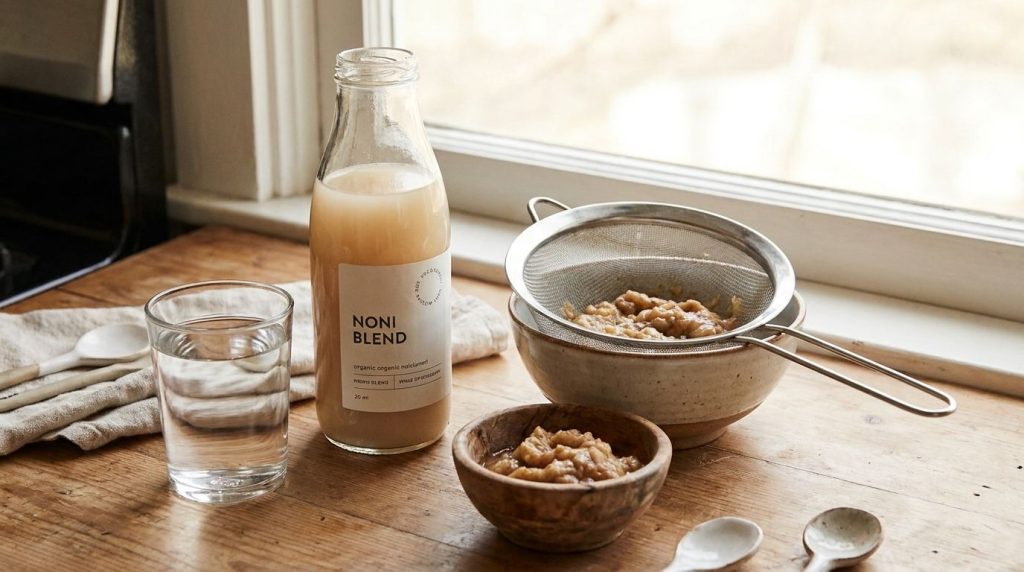
- Strain through a fine mesh sieve or clean cloth to remove pulp and fibers.
- Add honey or grated ginger if desired, stir, and pour into a clean glass bottle.
- Refrigerate immediately and label the bottle with the date.
Quick Tip: Use a glass or food-safe stainless steel tool. Metal containers that react with acidic fruit can change the taste and may degrade quality over time.
How to Use It
Start with 15 to 30 ml (one to two tablespoons) mixed into a glass of water. Drink it with a meal rather than on an empty stomach if you are sensitive to strong flavors. Give your body a few days to adjust before increasing the amount, and never use it as a replacement for medical treatment.
How Often to Use It
Most home users keep to a small serving once daily for a short trial period, such as one to two weeks, then pause and reassess. Using it occasionally is more practical than making it a constant daily habit, especially if you are new to the fruit.
How to Buy and Choose Noni
Fresh noni is not always easy to find outside tropical regions. Look for fruit that is mostly yellowish-white, slightly soft to the touch, and free of cracks or heavy bruising. Fruit that is hard and deep green is underripe and tends to taste far more bitter. Frozen noni puree and bottled noni juice are common alternatives. Check the ingredient list for added sugar and extra fillers.
Fresh vs Frozen vs Bottled
| Option | Best Use | How Long It Lasts |
|---|---|---|
| Fresh ripe fruit | Making homemade blend the same day | 2 to 3 days at room temperature, longer only if refrigerated after cutting |
| Homemade blend | Small daily servings | Up to 5 days refrigerated |
| Frozen puree | Preserving a seasonal harvest | Up to 3 months frozen |
| Bottled juice | Convenience and consistent flavor | Follow label, usually after opening: refrigerate and use within 2 weeks |
Storage
Store the finished blend in a sealed glass bottle in the refrigerator. Keep it away from the door, where temperature shifts are greatest. Freeze extra puree in ice cube trays, then move the cubes to a labeled freezer bag. Discard any blend that smells sour beyond the usual strong aroma, develops mold, or becomes fizzy.
Practical Tips
Did You Know? The fruit is often softer when it is closer to fully ripe, which makes it easier to mash and strain. Surprisingly, a small amount of ginger can help balance the strong flavor for many people.
Before You Brew: Taste a very small amount of the diluted blend first. Adjust the water ratio rather than adding more fruit if it tastes too strong.
Common Mistakes
- Using underripe, hard fruit, which tastes harsher and is harder to strain.
- Drinking undiluted juice, which is far more intense than most people expect.
- Storing the blend in a warm place or leaving it out for hours.
- Skipping the straining step, which leaves gritty pulp in the bottle.
- Using fruit with soft brown or black spots, which can spoil the entire batch.
- Increasing the serving size quickly instead of testing tolerance first.
Cautions and Who Should Avoid It
Noni is not suitable for everyone. Avoid it if you are pregnant, breastfeeding, or planning surgery. Speak with a healthcare professional before use if you have liver or kidney conditions, high potassium levels, or take blood thinners, diabetes medication, or other prescription drugs. Stop using it and seek medical advice if you notice unusual tiredness, stomach pain, yellowing of the skin or eyes, or any allergic reaction. Children should not use it without professional guidance.
Quick Summary
- Best preparation: ripe fruit, mashed, diluted 1:2 with filtered water, then strained.
- Best use case: small diluted servings for short trial periods.
- Storage: refrigerate up to 5 days, or freeze puree up to 3 months.
- When to use: with a meal, after checking tolerance, and only if no medication or health condition conflicts.
- What to avoid: undiluted juice, underripe fruit, warm storage, and use during pregnancy.
FAQ
Can I use fresh or dried noni?
Fresh ripe fruit makes the most flavorful homemade blend. Dried forms are sold in some markets, but preparation and strength vary, so follow the product label carefully.
How long does homemade noni blend last?
Keep it refrigerated and use it within about five days. Discard it sooner if it smells off or shows any mold.
Can I refrigerate noni juice?
Yes. Refrigeration is the safest option for homemade blends and for opened bottled juice.
Can I freeze noni?
Yes. Freeze the strained puree in small portions for up to three months, then thaw in the refrigerator before diluting.
How often should I use it?
Start with a small daily serving for a short trial period, then pause. Avoid building it into a long daily routine without professional advice.
What part of the fruit is used?
The soft flesh is used in most home preparations. Seeds are discarded and are not typically part of simple blends.
Can I reuse the leftover pulp?
It is best to discard the pulp after straining. Reusing it can increase bitterness and reduce freshness.
When should I avoid it?
Avoid noni during pregnancy, breastfeeding, before surgery, and if you have liver or kidney concerns or take regular medication unless a professional approves it.
Conclusion
Noni rewards careful preparation. Choose ripe fruit, dilute it well, store it cold, and start with small servings. With those basics in place, it becomes a practical part of a home remedy routine rather than an intimidating experiment.
Read more: how to store homemade herbal tea safely
You may also like: natural remedies for digestive comfort
See the full guide: tropical fruits for home remedies