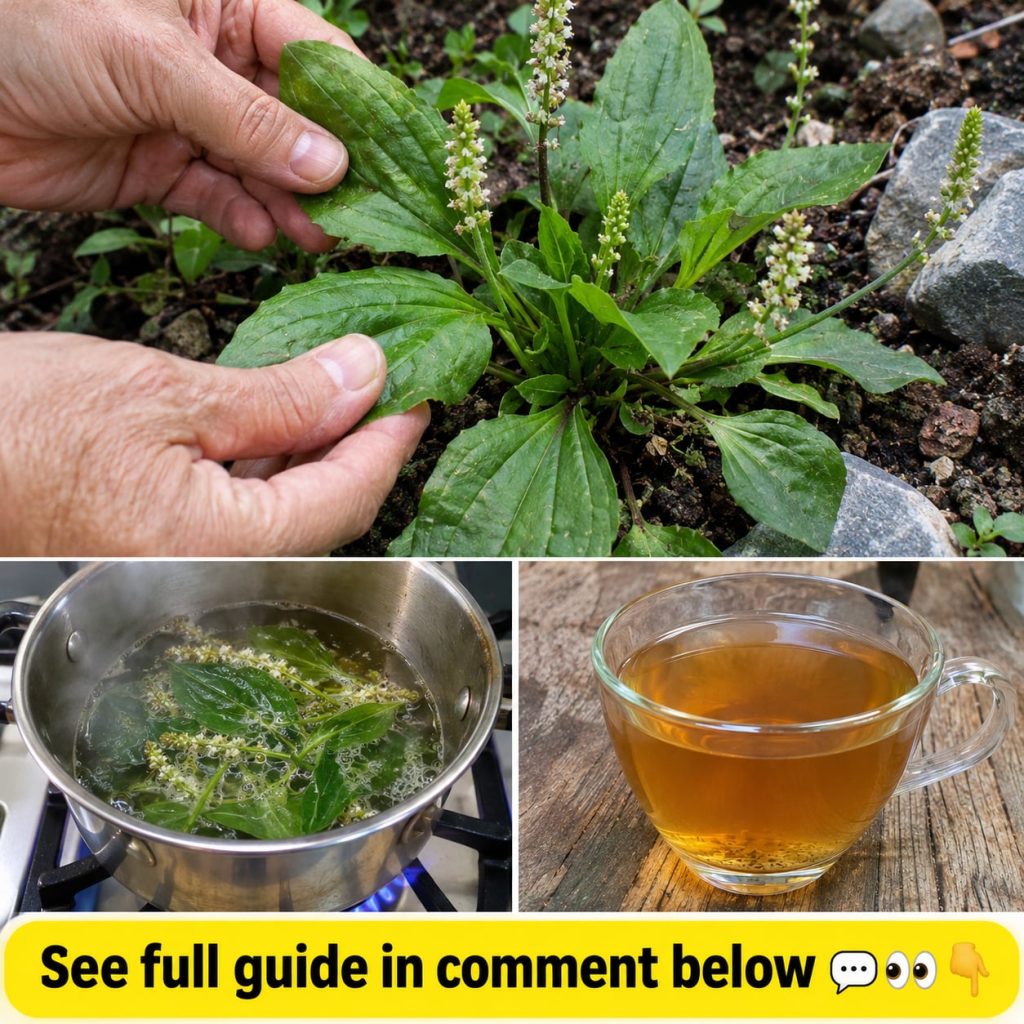
Most people pull this plant out of the lawn without a second thought. The leaves are sturdy, the seed heads look unremarkable, and it grows almost anywhere the soil has been walked on. Yet broadleaf plantain has a long record of home use, especially as an infused oil and a simple salve for dry, irritated skin.
This guide walks through what the plant is, what you need, and how to make a basic plantain-infused oil and salve at home, step by step.
What Is Broadleaf Plantain?
Broadleaf plantain (Plantago major) is a low-growing perennial with a rosette of broad, veined leaves and thin flower spikes. It is not the same as the banana-like plantain fruit used in cooking. In home remedy traditions, the leaves are the part most often used, usually fresh or dried and then infused into oil.
Ingredients and Approximate Measurements
- 1 cup loosely packed fresh plantain leaves, or 1/2 cup dried leaves
- 1 cup carrier oil such as olive oil or sweet almond oil
- 1 tablespoon beeswax per 1/4 cup infused oil, for a firmer salve
- Optional: 5 to 8 drops vitamin E oil as a natural preservative
Formula for a Basic Plantain Salve
The ratio that works well for most home batches is 1 part dried plantain to 4 parts oil by volume, then about 1 tablespoon of beeswax for every 1/4 cup of infused oil. This gives a soft, spreadable salve. Adjust the wax up or down depending on how firm you want the final texture.
Step-by-Step Method
- Wilt fresh leaves on a towel for 12 to 24 hours to reduce moisture, or use leaves dried in a warm, airy space.
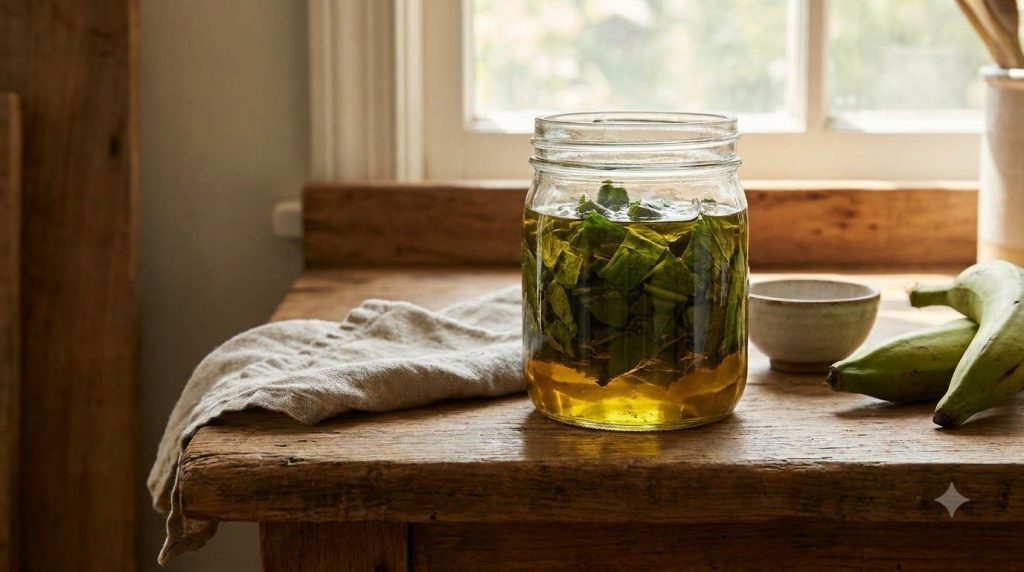
- Chop the leaves roughly and pack them into a clean, completely dry glass jar.
- Pour oil over the leaves until they are fully covered by about one inch.
- Seal the jar and place it in a warm, dark spot for 2 to 4 weeks, shaking it gently every day or two.
- Strain the oil through cheesecloth into a clean bottle, squeezing out the leaves.
- Gently melt the beeswax with the infused oil in a double boiler, then pour into small tins and let it set.
How to Use It
Apply a small amount of salve to clean, dry skin, usually on a small area first. Because this is a home preparation, patch testing is important. Apply a thin layer to the inner forearm, wait 24 hours, and check for redness or itching before using it more widely.
How Often to Use It
Many people use a thin layer once or twice a day on a limited area of dry skin. Stop using it if irritation develops, and do not use it on open or deep wounds without guidance from a qualified professional.
Before You Harvest or Buy
Only harvest from areas you know have not been sprayed with herbicides or pesticides. Roadsides and lawns treated with chemicals are a poor source. Choose leaves that are green, firm and free of yellow spots or slime. If you buy dried plantain, look for a sweet, grassy smell and no musty odor.
Fresh vs Dried Plantain
| Feature | Fresh Leaves | Dried Leaves |
|---|---|---|
| Moisture content | High, must be wilted first | Low, ready to use |
| Infusion risk | Higher, water can cause mold | Lower if fully dry |
| Batch shelf life | Use oil within 1 to 2 months | Use oil within 6 to 12 months |
| Best for | Quick small batches | Larger, longer-storing batches |
Storage
Store finished salve in small airtight tins or jars, away from heat and direct sun. A well-made salve usually keeps for several months. Label each batch with the date. If the salve smells rancid, changes color or develops visible growth, discard it.
Quick Tip
Keep the infusion jar in a warm but not hot spot. Temperatures above roughly 40 C can speed up oil breakdown.
Common Mistakes
- Using damp or wet leaves, which increases the risk of mold in the oil.
- Skipping the straining step, leaving plant bits that spoil faster.
- Overheating the oil while melting the beeswax.
- Harvesting from sprayed lawns or busy roadsides.
- Applying a large amount on the first try without a patch test.
Did You Know?
Plantain has been used in many home traditions around the world as a simple soothing preparation. Its leaves are often infused rather than boiled, because gentle oil infusion keeps the preparation stable and easy to apply.
Cautions and Who Should Avoid It
Do not use plantain preparations if you have a known allergy to plants in the Plantaginaceae family. Avoid use on deep, bleeding, infected or heavily swollen skin. Pregnant or breastfeeding people, children and anyone with a chronic skin condition should speak with a healthcare professional before trying a new home preparation. Keep all salves away from eyes and out of reach of children.
Quick Summary
- Best preparation: infused oil turned into a simple salve.
- Best use: small, dry, irritated skin areas after patch testing.
- Storage: airtight tins, cool and dark, labeled with dates.
- When to use: once or twice daily in thin layers.
- What to avoid: sprayed plants, wet leaves, open wounds and untested use.
FAQ
Can I use fresh or dried plantain?
Both work. Fresh leaves need wilting first, while dried leaves are easier to handle and reduce the risk of mold.
How long does the infused oil last?
Stored cool and dark, it generally lasts several months. Fresh-leaf batches should be used sooner.
Can I refrigerate the salve?
Refrigeration is fine if you want a firmer texture, but bring it to room temperature before applying.
Can I freeze the infused oil?
Freezing is not necessary. Keep it in a cool place instead, since freezing and thawing can cause condensation in the jar.
Which part of the plant is best?
The leaves are the part most commonly used in home preparations. Seeds and roots are not usually part of basic salve recipes.
Can I reuse the leaves?
It is best not to reuse strained leaves for a second oil batch, since they have already released most of their plant material and moisture can build up.
When should I avoid it?
Avoid it on open wounds, deep cuts, infected skin and if you have a known plant allergy. Stop immediately if you notice burning, swelling or spreading redness.
Continue Reading
Read more: how to make a basic herbal infused oil at home
You may also like: choosing carrier oils for homemade salves
See the full guide: beginner guide to natural skin balms
Short Conclusion
Broadleaf plantain is easy to overlook, but with clean leaves, careful drying and a patient infusion, it can become a practical part of a home skin-care routine. Start with a small batch, patch test every time, and keep your notes so you can refine the recipe.