Autumn evenings call for food that simmers quietly while you get on with your day. Slow cooker comfort meals are a practical way to get a warm, filling dinner on the table with very little hands-on work. This guide covers how to approach dump-and-go slow cooker cooking, from choosing ingredients to avoiding the problems that catch beginners off guard.
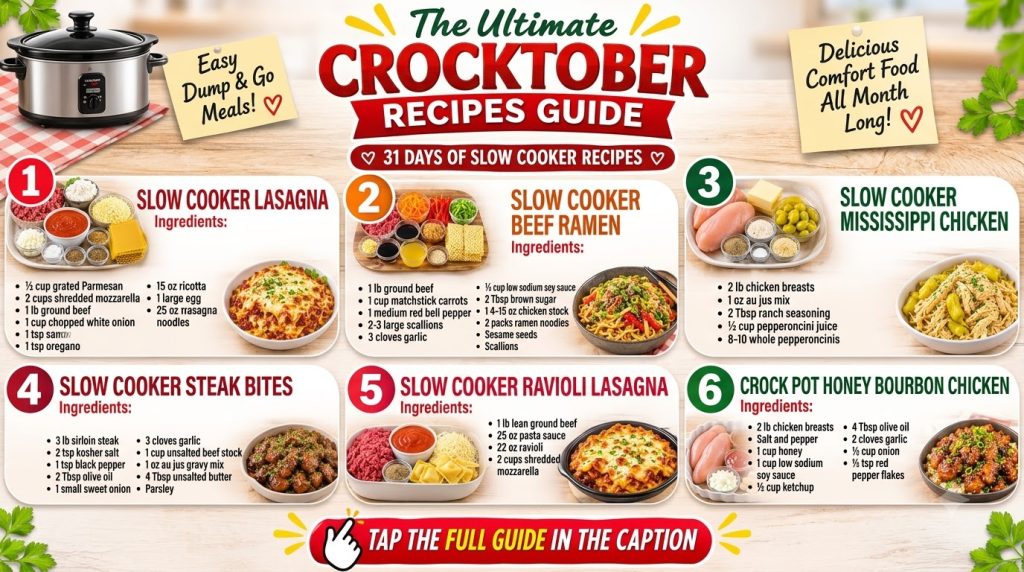
Why Slow Cooker Meals Suit Cozy Autumn Nights
Slow cookers fit naturally into busy weeknights and relaxed weekends alike. Cooler weather also makes long, gentle cooking feel especially welcome.
- Most dump-and-go meals need only a short prep session before the lid goes on.
- The house fills with warm aromas while dinner cooks unattended.
- Tougher cuts of meat and hearty vegetables become tender over time.
- One pot often makes enough for leftovers the next day.
How to Build a Successful Dump-and-Go Slow Cooker Meal
Dump-and-go recipes work best when the ingredients are sized and layered with the cooking process in mind. Follow these general guidelines when you adapt or test a recipe from the guide.
- Cut ingredients into similar sizes. Pieces of roughly 1 to 2 inches (2.5 to 5 cm) cook at a more even rate.
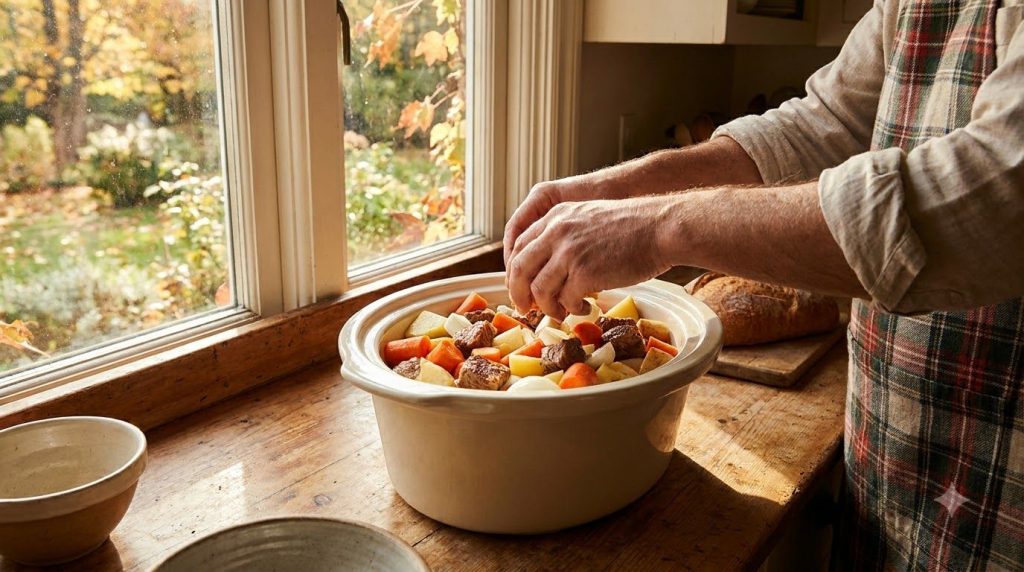
- Place root vegetables at the bottom. Potatoes, carrots, and onions sit closest to the heat and need the longest time to soften.
- Add meat on top of the vegetables. Season it well before it goes in, since slow cooking mellows flavors over time.
- Pour in just enough liquid. Broth or stock should come partway up the ingredients, not cover them completely, because the lid traps moisture.
- Cook on low or high. A common range is 6 to 8 hours on low or 3 to 4 hours on high, but timing varies by appliance and recipe, so check for doneness with a fork or thermometer.
- Add delicate ingredients near the end. Fresh herbs, dairy, and leafy greens should go in during the last 15 to 30 minutes.
Common Mistakes to Avoid
- Lifting the lid repeatedly. Each time you open it, heat escapes and the cooking time gets longer.
- Overfilling the pot. A slow cooker works best when it is about half to two-thirds full.
- Adding dairy too early. Milk, cream, and cheese can separate during long cooking, so stir them in near the end.
- Using frozen meat without thawing. Thaw meat in the refrigerator first to keep it at safe temperatures throughout cooking.
Storing and Reheating Leftovers
Refrigerate leftovers within two hours of cooking and store them in shallow, airtight containers so they cool faster. Cooked slow cooker meals are generally good in the refrigerator for three to four days. Reheat leftovers until they are steaming hot throughout, and add a splash of broth if the dish has thickened.
Frequently Asked Questions
Can I put frozen meat directly into a slow cooker?
It is better to thaw meat first. Frozen meat can stay at unsafe temperatures for too long, so thawing it in the refrigerator is the safer choice.
Do I need to stir the food while it cooks?
Stirring is usually not necessary. Opening the lid releases heat, so only lift it when the recipe asks you to add ingredients or check doneness.
Why is my slow cooker meal watery?
Most slow cooker recipes release liquid as they cook. Reduce the starting liquid slightly, or remove the lid for the last 30 minutes on high to let the sauce thicken.
How do I know when the meal is finished?
Meat should be fork-tender and vegetables should be soft when pierced with a knife. For poultry and pork, use a food thermometer to confirm the meat has reached a safe internal temperature.
Choose one recipe from the guide and try it this week. Once you have one successful dish, the rest of the autumn lineup becomes much easier to tackle.