Who doesn’t want skin that looks smooth, fresh, and full of life? If you have been searching for a simple way to pamper your face at home, a DIY collagen cream sounds like a fun and affordable project. In this guide, we will explain what this kind of cream can realistically do, what to keep in mind before you start, and how to make a gentle homemade version.
What Is a DIY Collagen Cream?
A DIY collagen cream is a homemade moisturizer that combines a nourishing base, such as aloe vera gel or shea butter, with ingredients marketed for skin support, such as vitamin E or cosmetic-grade hydrolyzed collagen. The goal is to create a rich, comforting cream that softens the skin, helps it hold moisture, and leaves it looking more plump and radiant.
What Collagen Can and Cannot Do for Your Skin
It helps to set realistic expectations. Collagen molecules in topical products are usually too large to penetrate deeply into the skin, so a cream works mainly on the surface. Its biggest benefit is hydration, which can make fine lines look softer and skin look smoother. Long-term results also depend on sun protection, a consistent routine, healthy sleep, and a balanced diet. Think of your homemade cream as a supportive step rather than a miracle fix.
A Simple Gentle Base Recipe
This recipe keeps things simple and uses ingredients that are easy to find. Always use clean tools and containers.
- 3 tablespoons pure, unscented aloe vera gel
- 1 tablespoon plain unscented shea butter, gently melted
- 1 teaspoon vitamin E oil
- 1 teaspoon cosmetic-grade hydrolyzed collagen powder (optional)
- Gently warm the shea butter in a clean bowl set over warm water until it just melts.
- Let it cool slightly, then whisk in the aloe vera gel until smooth.
- Add the vitamin E oil and collagen powder, if using, and mix until fully combined.
- Pour into a clean, airtight jar and store it in the refrigerator.
- Use within about two weeks for the freshest results.
Tips for Safe and Effective Use
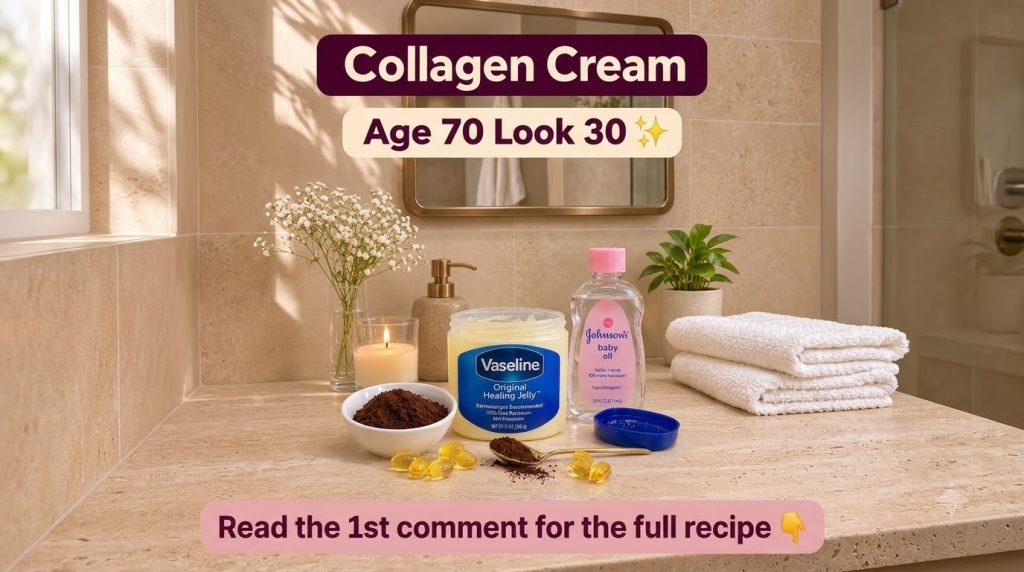
Before applying your cream to your whole face, do a patch test on a small area of skin, such as the inner forearm, and wait 24 hours. Stop using it if you notice redness, itching, or irritation. Avoid putting ground coffee or other rough particles on your face, since they can scratch delicate skin. Petroleum jelly and baby oil are very occlusive, so they may feel heavy or clog pores for people with oily or acne-prone skin. If you prefer a lighter feel, use them only on dry areas or at night.
Final Thoughts
A homemade collagen-style cream can be a pleasant, budget-friendly addition to your self-care routine. It is best used for hydration and comfort, paired with sunscreen, gentle cleansing, and patience. If you have sensitive skin, a medical condition, or ongoing concerns such as deep wrinkles or dark spots, consider speaking with a dermatologist for personalized advice. Have you tried a homemade cream before? Share your experience in the comments below!