Dreaming of firmer, younger-looking skin? Many of us are searching for simple, affordable ways to care for our skin at home, and a homemade collagen-style oil has become one of the most talked-about DIY beauty ideas. Let’s look at what this kind of blend is, what it can realistically do, and how to use it safely.
What Is a DIY Collagen Oil?
A DIY collagen oil is usually a simple facial or body oil infused with ingredients that many people associate with a healthy-looking glow. The name can be misleading, though. Collagen is a large protein molecule that does not easily penetrate the skin when applied topically, so no homemade oil can add collagen to your skin in the way a supplement might support it from within. What a well-made oil can do is moisturize, soften the look of dryness, and create a pleasant nightly ritual that supports a consistent skincare routine.
Common Ingredients in the Blend
Most homemade versions in this style rely on a few basic ingredients that are easy to find:
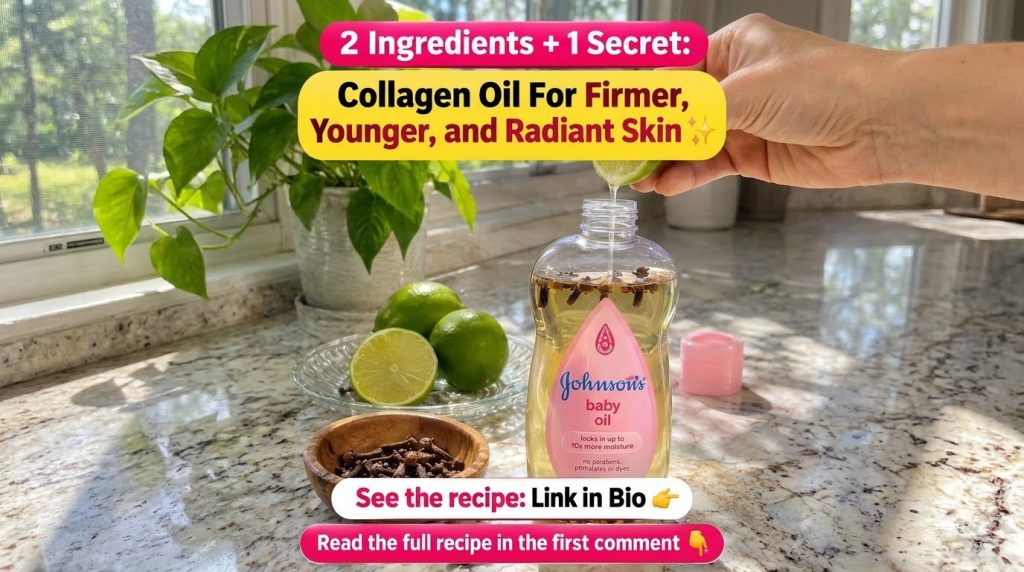
- Baby oil: A light, inexpensive mineral oil that creates a smooth barrier on the skin and helps lock in moisture.
- Whole cloves: Traditionally used for their warm, spicy aroma. They are very potent, so only a small number is needed.
- Fresh lime: Popular for its bright scent, but it needs careful handling, as explained below.
A Simple Method to Try
Here is a gentle approach that keeps the process easy and safe:
- Choose a clean, dry glass bottle with a tight lid. Dark glass is ideal for protecting the oil from light.
- Add 4 to 6 whole cloves to about one cup of baby oil. Start with fewer cloves if you have sensitive skin.
- Seal the bottle and let it rest in a cool, dark cabinet for 3 to 5 days, gently shaking it once a day.
- Strain out the cloves through a fine mesh sieve or clean cheesecloth, then pour the oil back into a clean bottle.
- Label the bottle with the date and store it away from heat and direct sunlight.
You may notice that the lime is left out of this method. Lime juice is water-based and will not blend into oil, and citrus juice on the skin can increase sun sensitivity. If you love the fresh scent, consider using a different citrus-scented product in your routine instead.
What the Oil Can and Cannot Do
Keep your expectations realistic. A homemade oil can help leave skin feeling soft, hydrated, and smooth, especially in dry weather or as part of a nighttime routine. It will not erase wrinkles, fade dark spots on its own, or replace proven treatments. For visible concerns such as fine lines, hyperpigmentation, or hair thinning, a dermatologist can recommend options that have been studied in depth.
Safety Tips Before You Start
- Patch test first: Apply a small amount to your inner arm and wait 24 to 48 hours before using it on your face.
- Use clove sparingly: Clove is strong and can irritate sensitive skin. More is not better.
- Avoid broken or irritated skin: Do not apply the oil to cuts, sunburn, or active breakouts.
- Keep it away from the eyes: If it gets into your eyes, rinse thoroughly with water.
- Protect your skin from the sun: Use sunscreen during the day, especially if you have used any citrus on your skin.
- Replace it regularly: Discard homemade oils after a few weeks or if they develop an odd smell or color.
Final Thoughts
A DIY clove-infused oil can be a relaxing, budget-friendly addition to your self-care routine, and many people enjoy the ritual of making it at home. Just remember that the best results come from consistency, gentle products, and sun protection rather than from any single ingredient. If you try this recipe, start small, take notes on how your skin responds, and check with a healthcare professional if you have sensitivities or existing skin conditions.