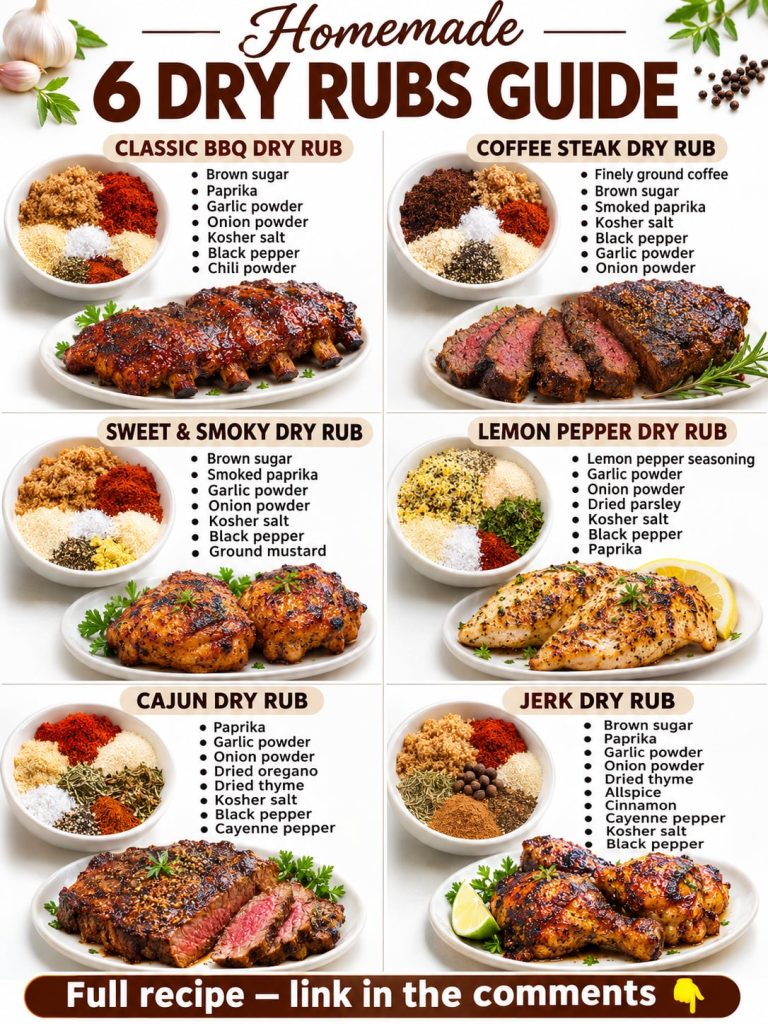
Few things change a meal faster than a well-balanced dry rub. Made from pantry spices, a dry rub adds a flavorful crust, depth, and aroma to beef, pork, chicken, and fish without marinating or extra equipment. This guide covers six essential homemade dry rubs you can mix in one bowl and keep on hand for weeknight dinners and weekend cookouts.
How to Use a Dry Rub Well
Good results start with simple preparation. Pat the meat dry with paper towels so the rub sticks, then coat it evenly. As a starting point, use about 1 tablespoon of rub per pound of meat, adjusting to taste. For deeper flavor, let the seasoned meat rest in the refrigerator for 30 minutes, or up to overnight, before cooking.
- Pat meat dry before seasoning for better adhesion.
- Season all sides, including the edges.
- Let the meat rest so the spices can penetrate the surface.
- Store leftover rub in an airtight jar away from heat and light.
6 Essential Homemade Dry Rubs
1. Classic BBQ Rub
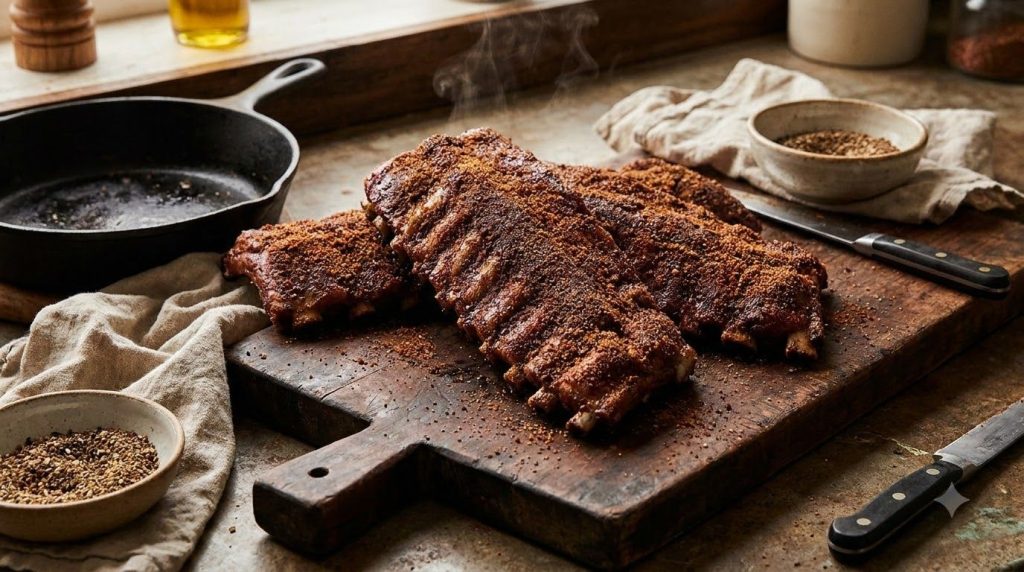
This all-purpose blend suits pork ribs, pork shoulder, and beef brisket. Makes about 1/2 cup.
- 3 tablespoons brown sugar
- 2 tablespoons smoked paprika
- 1 tablespoon kosher salt
- 1 tablespoon coarse black pepper
- 1 teaspoon garlic powder
- 1 teaspoon onion powder
- 1 teaspoon chili powder
Whisk all ingredients together until no clumps remain. Store in an airtight container for up to 6 months.
2. Smoky Paprika Garlic Rub
A mild, savory option that works well on chicken thighs, turkey breast, and salmon. Makes about 1/3 cup.
- 2 tablespoons sweet paprika
- 1 tablespoon garlic powder
- 1 teaspoon smoked paprika
- 1 teaspoon dried oregano
- 1 teaspoon kosher salt
- 1/2 teaspoon black pepper
Combine in a small bowl and stir well. This blend is gentle enough for everyday cooking.
3. Brown Sugar Chili Rub
Sweet and mildly spicy, this rub pairs well with pork chops and ribs. The sugar helps build a caramelized crust, so watch the heat on the grill to avoid burning.
- 2 tablespoons brown sugar
- 1 tablespoon chili powder
- 1 teaspoon ground cumin
- 1 teaspoon kosher salt
- 1/2 teaspoon cayenne pepper, optional
- 1/2 teaspoon black pepper
Mix thoroughly. Use the lower end of the cayenne amount if you prefer a milder profile.
4. Lemon Pepper Rub
Bright and fresh, this rub suits chicken breasts, white fish, and shrimp. Makes about 1/4 cup.
- 2 tablespoons coarse black pepper
- 1 tablespoon lemon zest, dried or finely grated and dried
- 1 teaspoon garlic powder
- 1 teaspoon kosher salt
- 1/2 teaspoon dried thyme
Stir everything together. Because citrus zest is delicate, use the rub within 3 months for the best aroma.
5. Italian Herb Rub
This herb-forward blend complements chicken, pork loin, and lamb. Makes about 1/3 cup.
- 1 tablespoon dried basil
- 1 tablespoon dried oregano
- 1 tablespoon garlic powder
- 1 teaspoon dried rosemary, crushed
- 1 teaspoon dried thyme
- 1 teaspoon kosher salt
- 1/2 teaspoon black pepper
- 1/2 teaspoon red pepper flakes, optional
Crush the rosemary between your fingers before mixing so it blends evenly.
6. Spicy Cajun Rub
Bold and aromatic, this rub is a good match for steak, shrimp, and sausage. Makes about 1/2 cup.
- 2 tablespoons paprika
- 1 tablespoon garlic powder
- 1 tablespoon onion powder
- 1 tablespoon dried thyme
- 1 teaspoon cayenne pepper
- 1 teaspoon black pepper
- 1 teaspoon dried oregano
- 2 teaspoons kosher salt
Combine well. Start with less cayenne if you are cooking for people who prefer mild food.
Storage and Safety Tips
Homemade rubs keep best in a cool, dry cupboard. Label each jar with the date so you can rotate your spices. Always use clean utensils, and never return used rub to the original container. Keep raw meat separate from ready-to-eat foods, and cook poultry and ground meats to the temperatures recommended by food safety authorities.
Who Should Watch Salt Levels
Most dry rubs rely on salt for flavor. If you are monitoring your sodium intake, reduce the salt in each recipe by half and add more herbs, citrus zest, or pepper to build flavor. Anyone following a medically restricted diet should check with a qualified healthcare professional before adjusting seasonings.
Final Thoughts on Homemade Dry Rubs
Homemade dry rubs are simple to mix, inexpensive to keep on hand, and easy to adapt to your favorite proteins. Start with one or two blends, then experiment with small changes to sweetness, heat, and herbs. Once you find your favorites, you will have a reliable set of dry rubs for every meal on the grill or in the oven.