Grass clippings are one of the most accessible materials a gardener can use for mulching. When they are applied correctly, they help soil hold moisture, slow weed growth, and gradually add organic matter as they break down. This guide explains how to use clippings safely and which plants often respond well to them.
Why Grass Clippings Can Help Your Garden
Mulch protects the soil surface from drying out in the sun and from heavy rain. Grass clippings are easy to collect after mowing, which makes them a practical choice for a sustainable garden routine. As they decompose, they feed soil organisms and contribute nutrients that support steady plant growth.
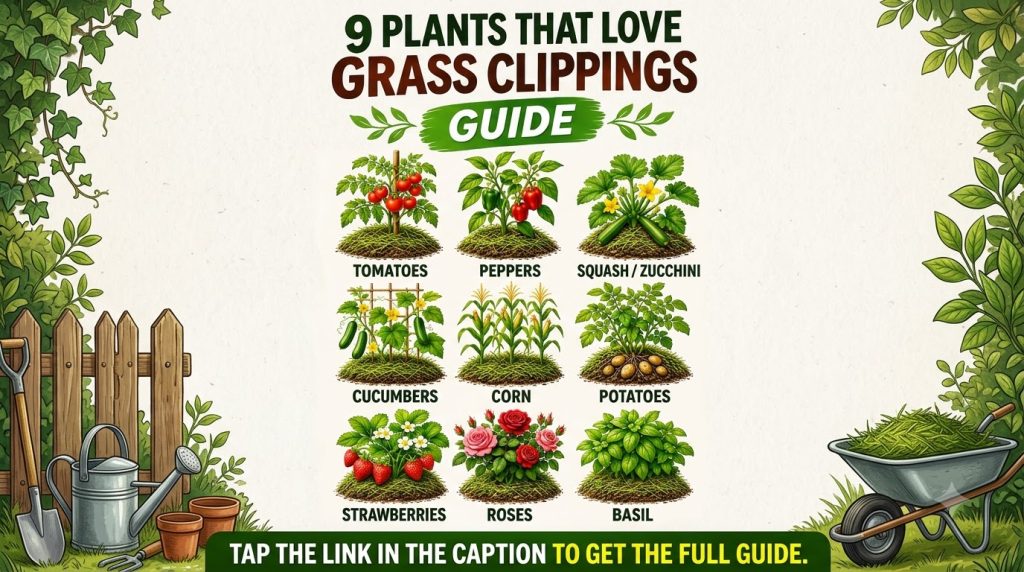
Plants That Often Benefit From Clippings Mulch
The infographic highlights nine popular plants commonly grown in clippings-based mulch beds: tomatoes, peppers, squash, cucumbers, corn, potatoes, strawberries, roses, and basil. Results depend on soil type, climate, and watering habits, so observe your plants closely and adjust your approach as needed.
How to Apply Grass Clippings Step by Step
- Let freshly cut clippings dry for a day or two so they do not clump or heat up.
- Spread a thin layer, roughly one to two inches deep, around the base of your plants.
- Keep the mulch a few inches away from stems and plant crowns to prevent rot.
- Add small amounts over time as the layer breaks down, rather than piling it on all at once.
Important Safety Tips
- Use clippings only from lawns that have not been treated with herbicides, since some residues can harm vegetables and flowers.
- Avoid clippings from weeds that have gone to seed, so you do not spread them through your beds.
- Do not pile wet clippings thickly, because they can mat down, smell, and limit airflow to the soil.
- Choose clippings from lawns that show no visible signs of disease or pest damage.
Tips for Better Results
Combine grass clippings with other organic materials such as dry leaves or compost for a more balanced mulch. Water the soil deeply before applying mulch so moisture stays locked in beneath the layer. Check the soil regularly by lifting the mulch gently to confirm that it is breaking down evenly and that the soil remains moist but not soggy.
Final Thoughts
Grass clippings offer a practical, low-cost way to support healthier garden plants while reducing waste. With a thin layer, careful placement, and attention to lawn treatment history, you can enjoy a greener approach to mulching throughout the growing season.