Are you getting enough protein from plants? Many people wonder whether a meatless diet can meet their needs. The good news is that plant foods offer plenty of protein, and many of them bring fiber, vitamins, and minerals along for the ride.
Why Plant Protein Is Worth Knowing About
Protein helps build and repair tissues, and it keeps you feeling full between meals. Plant proteins can fit well into a balanced eating pattern. Research suggests that eating more plant foods is associated with better overall diet quality.
Plant proteins are often paired with fiber, which may support digestion and help keep blood sugar steady. Choosing a variety of sources across the day is a simple way to cover your bases.
Everyday Plant-Based Protein Sources
Tofu and Tempeh
Tofu is made from soybeans and takes on the flavor of whatever you cook it with. Tempeh is also soy-based, with a firmer, nutty texture. Both are versatile in stir-fries, bowls, and sandwiches.
Beans, Lentils, and Chickpeas
These pantry staples are affordable and filling. Lentils cook quickly, while chickpeas work well roasted or blended into hummus.
Nuts, Seeds, and Grains
Hemp seeds, pumpkin seeds, and peanuts add crunch and protein to salads and oatmeal. Quinoa and farro are grains that provide more protein than many other grains.
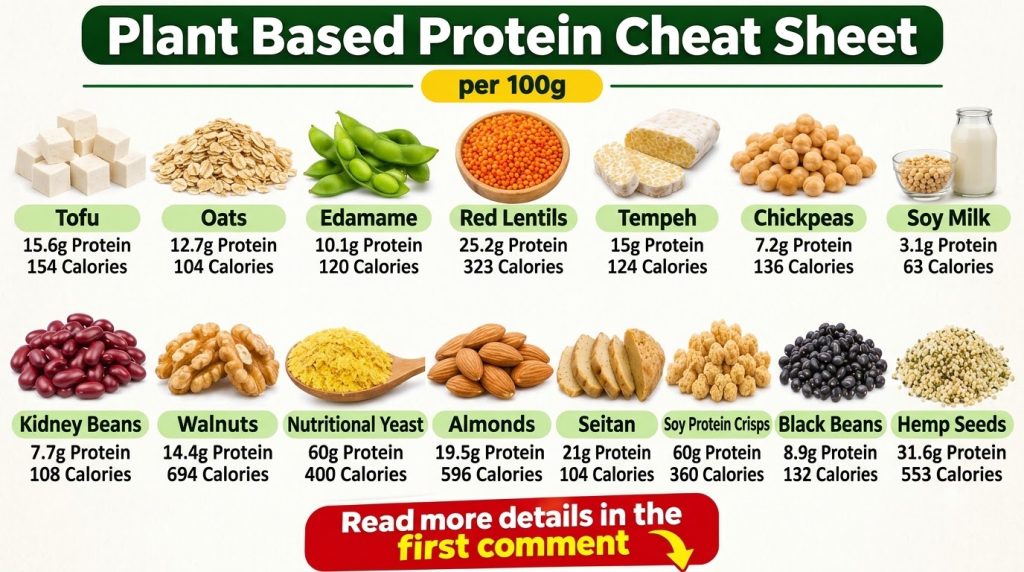
Approximate Protein and Calories Per 100g
The values below are rough estimates for cooked or prepared forms. Exact numbers vary by brand and preparation.
| Food | Calories | Protein | Main Benefit |
|---|---|---|---|
| Firm tofu | About 145 | About 17g | Easy to season and cook |
| Tempeh | About 190 | About 20g | Firm texture and fermented flavor |
| Lentils (cooked) | About 115 | About 9g | Fiber and iron |
| Chickpeas (cooked) | About 165 | About 9g | Fiber and versatility |
| Black beans (cooked) | About 130 | About 9g | Fiber and folate |
| Edamame | About 120 | About 11g | Quick, satisfying snack |
Practical Tips for Adding More Plant Protein
- Start with one plant protein at lunch or dinner each day.
- Keep canned beans or lentils on hand for quick meals.
- Add edamame or roasted chickpeas to snacks.
- Sprinkle seeds on yogurt, salads, or soups.
- Pair grains with beans for a complete mix of amino acids across the day.
Common Mistakes to Avoid
- Relying on only one protein source every day.
- Adding heavy sauces or fried coatings that raise calories quickly.
- Forgetting portion sizes, since nuts and seeds are calorie-dense.
Frequently Asked Questions
Can I get enough protein without eating meat?
Yes, many people do. Including a range of beans, soy foods, grains, and seeds can help you meet daily protein needs.
Is tofu a complete protein?
Yes, tofu contains all the essential amino acids. Still, eating a variety of plant foods is a good habit.
Are plant proteins less healthy than animal proteins?
Plant proteins often come with fiber and fewer saturated fats. Research suggests they are associated with heart-friendly eating patterns.
How much protein do I need?
Needs vary by age, size, and activity level. A registered dietitian or healthcare professional can help you find your target.
Do beans cause bloating?
Beans can cause gas for some people. Soaking, rinsing canned beans, and increasing portions slowly may help.
Are plant-based protein powders necessary?
No. Whole foods offer protein along with other nutrients, so powders are optional.
Conclusion
Plant-based protein is easy to enjoy when you mix tofu, beans, grains, and seeds into your regular meals. Start small, try a new source each week, and see what you like. For more ideas, explore our guides on high protein breakfasts, bean-based dinners, and healthy snack swaps.
This content is for educational purposes only and should not be considered medical advice. Consult a qualified healthcare professional for personalized dietary recommendations.