Meta description: Learn how to sprout your own superfoods at home with just a jar and a few common seeds. Simple steps, safety tips, and ideas for using fresh sprouts in everyday meals.
Why Sprout Your Own Food at Home?
Have you ever watched a tiny seed turn into a crisp, fresh sprout in just a few days? It feels a little like magic. Homegrown sprouts are one of the easiest ways to add fresh, crunchy greens to your kitchen, even if you have no garden and no green thumb.
This guide is for anyone who wants to eat more whole, plant-based foods, enjoy simple cooking projects, or add a bit of fun to daily meals. You will learn what sprouts are, which seeds work well, how to grow them safely, and how to use them in your favorite dishes.
What Are Sprouts?
Sprouts are young plants that grow from seeds, beans, or legumes. They are harvested only a few days after soaking begins, while they are still small and tender. Because they are so young, sprouts have a mild, fresh flavor and a satisfying crunch.
Many people enjoy sprouts because they are compact and easy to add to salads, sandwiches, and bowls. Research suggests that sprouted and whole plant foods can be a useful part of a balanced diet, though the exact nutrient content depends on the seed and how it is grown.
Easy Seeds to Start With
Some seeds are more beginner-friendly than others. Here are a few popular choices:
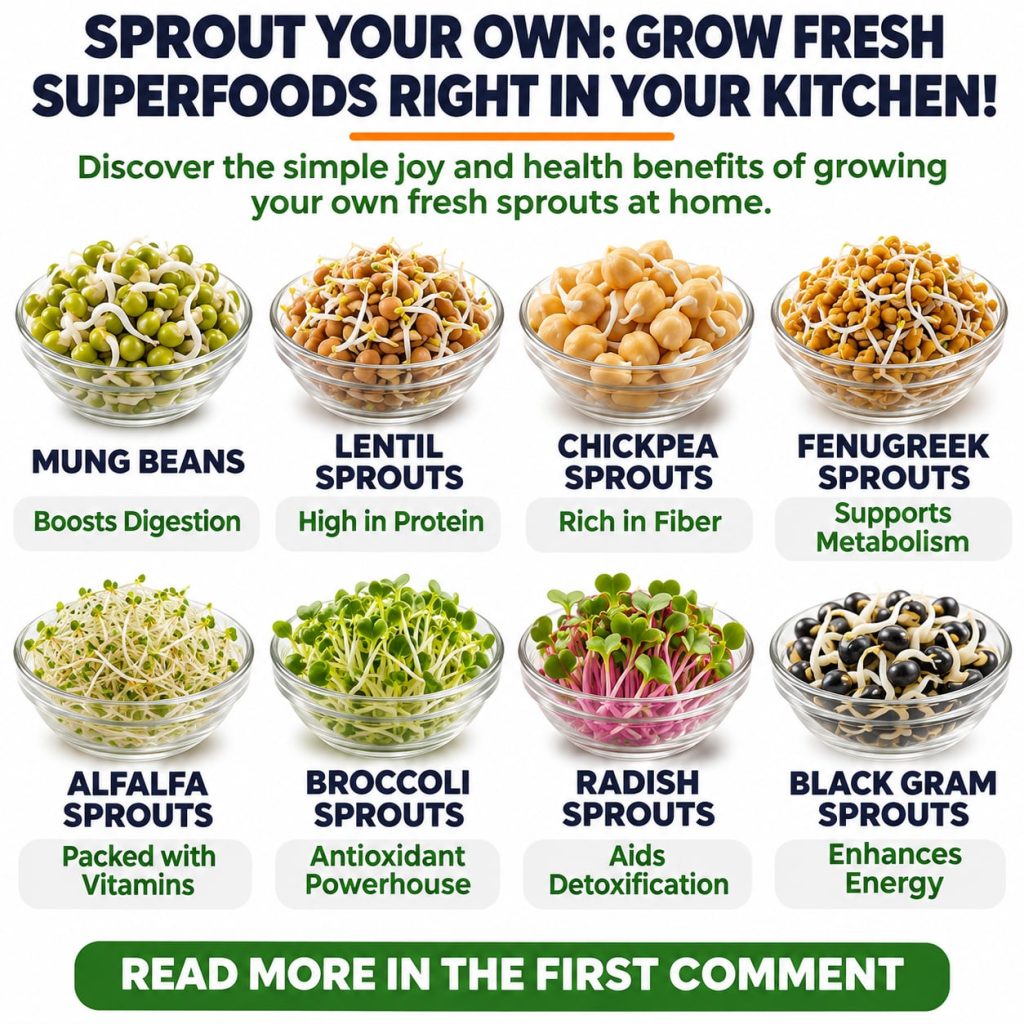
- Alfalfa seeds: Very mild and delicate, great for sandwiches.
- Mung beans: Crunchy and slightly sweet, perfect for stir-fries and salads.
- Lentils: Fast-growing with a hearty, nutty taste.
- Radish seeds: Spicy and peppery, ideal for adding a little kick.
- Broccoli seeds: Mildly bitter and fresh, a fun addition to wraps.
Always buy seeds labeled specifically for sprouting. Garden seeds may be treated with chemicals that are not meant for eating.
Simple Steps to Grow Sprouts in a Jar
You do not need fancy equipment. A wide-mouth glass jar, a piece of cheesecloth or a sprouting lid, and a rubber band are enough to get started.
- Rinse the seeds. Place 2 to 3 tablespoons of seeds in the jar and rinse them well with cool water.
- Soak them. Cover the seeds with water and let them soak for 8 to 12 hours, depending on the type of seed.
- Drain well. Pour off the water and rinse again. Tilt the jar at an angle so extra water can drain out.
- Rest in a dark spot. Keep the jar out of direct sunlight, such as in a cupboard, at room temperature.
- Rinse two to three times a day. Fill the jar with water, swirl, and drain completely each time. This keeps the sprouts fresh and clean.
- Harvest in 3 to 6 days. Once the sprouts reach your preferred size, rinse them one final time and move them to the fridge.
Sprouts can take a few days to show their first tails, so be patient. Most varieties are ready within a week.
Quick Comparison of Popular Sprouts
| Sprout Type | Typical Growing Time | Flavor | Best Way to Eat |
|---|---|---|---|
| Alfalfa | 5 to 6 days | Mild and fresh | Sandwiches and wraps |
| Mung bean | 3 to 5 days | Crisp and slightly sweet | Stir-fries and salads |
| Lentil | 3 to 4 days | Nutty and hearty | Grain bowls and soups |
| Radish | 4 to 5 days | Spicy and peppery | Tacos and salads |
| Broccoli | 4 to 6 days | Mildly bitter | Wraps and smoothie bowls |
Food Safety Matters
Sprouts need warm, moist conditions to grow, and those same conditions can allow bacteria to multiply. Raw sprouts have been linked to foodborne illness in the past, so careful handling is important.
- Buy seeds from a reputable source that sells them for sprouting.
- Rinse your jar and tools with hot, soapy water before each batch.
- Rinse sprouts thoroughly two to three times a day while growing.
- Store finished sprouts in the fridge and use them within a few days.
- Discard any sprouts that smell sour, slimy, or off.
Young children, older adults, pregnant people, and anyone with a weakened immune system may want to cook sprouts thoroughly or avoid them. A healthcare professional can offer advice that fits your situation.
Ways to Enjoy Your Homegrown Sprouts
Fresh sprouts are versatile. Try a few of these ideas to get started:
- Pile them onto avocado toast or a turkey sandwich for extra crunch.
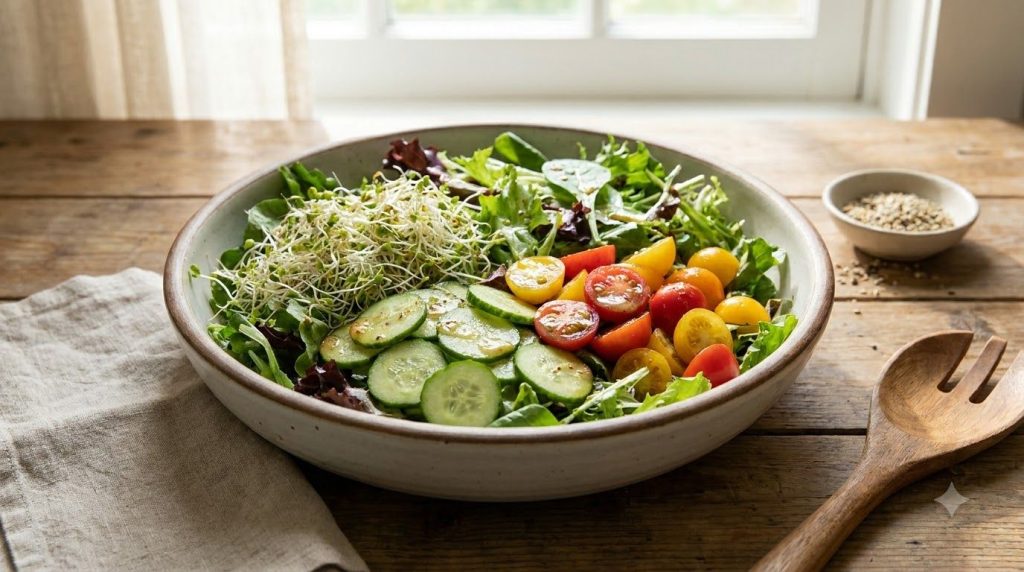
- Toss them into a rainbow salad with cucumbers, carrots, and a lemon vinaigrette.
- Stir them into a quick vegetable stir-fry at the very end of cooking.
- Blend a handful into a green smoothie for a fresh, mild flavor.
- Use them as a garnish on soups, tacos, or grain bowls.
Practical Tips for Success
- Start with one jar and one type of seed before trying several at once.
- Keep a small notebook to record soaking times and results.
- Use a tray or a bowl under the jar to catch drips.
- Grow small batches often so you always have fresh sprouts on hand.
- Eat sprouts within a few days of harvest for the best taste and texture.
Frequently Asked Questions
Do I need soil to grow sprouts?
No. Sprouts grow in water and air, so you only need a jar, seeds, and a little patience.
How long do homegrown sprouts last in the fridge?
Most sprouts stay fresh for about three to five days when stored in a clean, dry container in the refrigerator.
Are sprouts good for weight management?
Sprouts are low in calories and add fiber and texture to meals. They can be a helpful addition to a balanced eating plan, but they are not a magic solution on their own.
Can I grow sprouts in the winter?
Yes. Because sprouts grow indoors, they are a great option for cold months when fresh produce can be expensive or hard to find.
Why do my sprouts smell bad?
A sour or unpleasant smell can signal bacterial growth. Throw the batch away, clean your jar thoroughly, and rinse more often next time.
Can I eat sprouts raw?
Many people enjoy raw sprouts, but they carry a small risk of contamination. Cooking them lightly, such as in a stir-fry, is one way to reduce that risk.
Conclusion
Growing sprouts at home is a simple, affordable way to bring fresh, plant-based foods into your kitchen. With a clean jar, a few seeds, and a little daily rinsing, you can enjoy crisp greens all week long. Start with one easy variety, follow good food safety habits, and enjoy the process. If you want more ideas, explore our other articles on healthy breakfast ideas, colorful salad recipes, and smart ways to add more vegetables to your meals.
This content is for educational purposes only and should not be considered medical advice. Consult a qualified healthcare professional for personalized dietary recommendations.