Tiny Seeds, Big Benefits: Easy Ways to Boost Your Meals
Small ingredients can make a big difference on your plate. Chia, hemp, flax, and pumpkin seeds are easy to find, store well, and fit into meals you already cook. You do not need a major diet overhaul to enjoy them. This guide explains what each seed offers and how to use it in everyday eating.
Why Seeds Are Worth Adding to Your Diet
Seeds pack fiber, healthy fats, plant protein, and minerals into a very small serving. Research suggests that diets rich in fiber and unsaturated fats are associated with good heart and digestive health. A sprinkle here and there adds up over time.
Meet the Everyday Seed Lineup
Chia Seeds
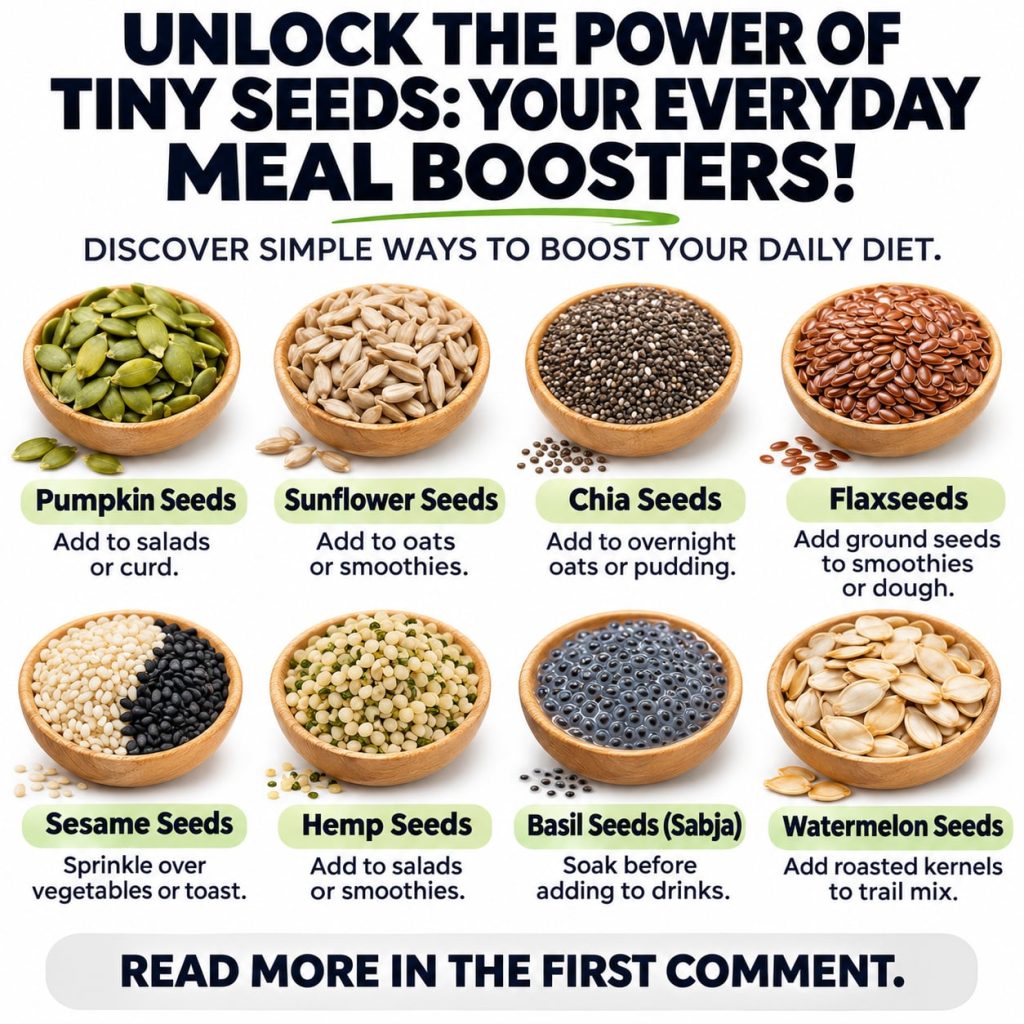
Chia seeds are rich in fiber and plant-based omega-3 fats. When soaked in liquid, they form a gel that thickens puddings and overnight oats.
Hemp Seeds
Hemp hearts are the shelled version of hemp seeds. They offer a useful amount of plant protein and a mild, nutty flavor. They work well on yogurt, salads, and smoothies.
Ground Flaxseed
Flaxseed is one of the best-known plant sources of omega-3 fats. Ground flax is easier for your body to use, because whole seeds can pass through undigested.
Pumpkin Seeds
Pumpkin seeds, also called pepitas, provide magnesium, zinc, and a satisfying crunch. Toasting them lightly brings out their flavor.
Quick Nutrition Comparison
The table below shows approximate values for common serving sizes. Brands vary, so check your package label for exact numbers.
| Seed | Serving | Calories | Protein | Fiber | Main Benefit |
|---|---|---|---|---|---|
| Chia seeds | 1 oz (28 g) | about 140 | about 5 g | about 10 g | Fiber and omega-3 fats |
| Hemp hearts | 3 tbsp (30 g) | about 165 | about 10 g | about 1 g | Plant protein |
| Ground flaxseed | 1 tbsp (7 g) | about 37 | about 1 g | about 2 g | Omega-3 fats |
| Pumpkin seeds | 1 oz (28 g) | about 150 | about 7 g | about 2 g | Magnesium and zinc |
Simple Ways to Add Seeds to Meals
- Breakfast: Stir chia into oatmeal or sprinkle hemp hearts over Greek yogurt.
- Lunch: Top salads and grain bowls with toasted pumpkin seeds.
- Dinner: Mix ground flax into meatball or veggie burger mixes.
- Snacks: Blend a spoonful of seeds into smoothies.
- Baking: Add ground flax or chia to muffins and pancakes.
Easy Healthy Swaps
| Common Choice | Easy Upgrade |
|---|---|
| Store-bought croutons | Toasted pumpkin seeds |
| Plain yogurt | Hemp hearts with fresh berries |
| Sugary granola | Chia pudding with sliced fruit |
| Breadcrumbs on baked chicken | Ground flaxseed with herbs |
Practical Tips
- Start small with about 1 teaspoon per day, then work up to 1 tablespoon.
- Store seeds in an airtight container in a cool, dark place or in the fridge.
- Buy whole flaxseed and grind it fresh, or buy pre-ground and refrigerate it.
- Soak chia seeds for at least 15 minutes before eating them in puddings.
- Drink plenty of water when you increase fiber, so your digestion adjusts smoothly.
Potential Risks to Keep in Mind
Seeds are calorie-dense, so a measured spoonful goes a long way. People with digestive conditions, seed or nut allergies, or those taking certain medications should talk with a healthcare professional before making big changes.
Frequently Asked Questions
Do I need to grind flaxseed?
Yes, ground flaxseed is easier for your body to digest. Whole flax can pass through without releasing much of its nutrients.
Can I eat seeds every day?
Most people can enjoy a small serving daily. Keep portions moderate, since seeds are high in calories.
Which seed has the most protein?
Hemp hearts are one of the highest in plant protein per serving among the seeds listed here.
Do chia seeds need to be soaked?
Soaking is not required, but it makes chia easier to digest and gives puddings a smooth texture.
Can kids eat seeds?
Many children enjoy seeds in smoothies or baked goods. Always supervise young children and choose age-appropriate sizes and forms.
Are seeds good for weight management?
Their fiber and protein can help you feel full. Seeds fit best within a balanced eating pattern rather than as a standalone solution.
Conclusion
Tiny seeds can add fiber, healthy fats, protein, and minerals to meals with very little effort. Start with one seed you already like and try it in a breakfast or lunch you eat often. Looking for more ideas? Explore our guides on healthy breakfast ideas, high protein vegetarian meals, best foods for gut health, and smart grocery shopping tips.
This content is for educational purposes only and should not be considered medical advice. Consult a qualified healthcare professional for personalized dietary recommendations.