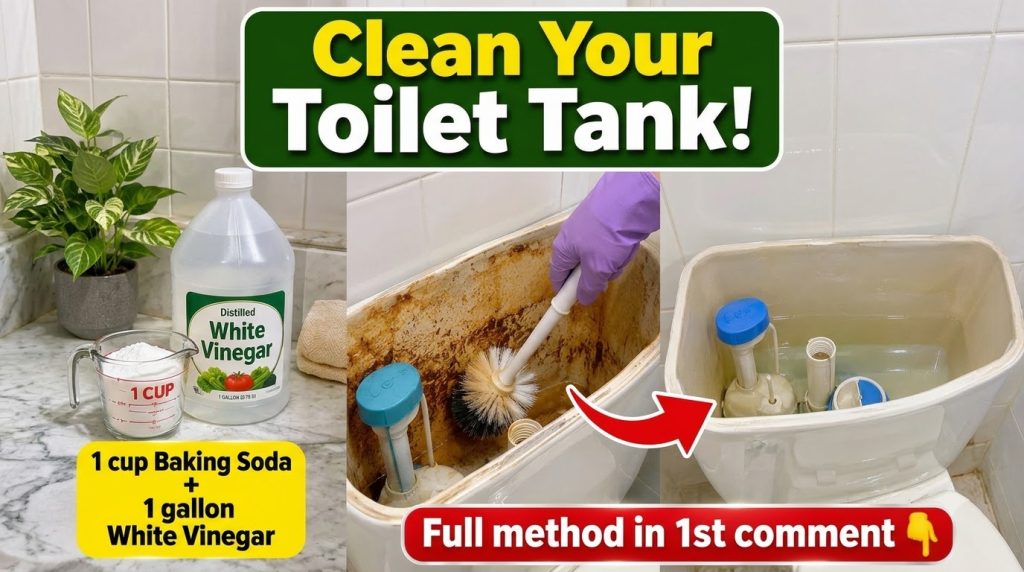
Most people never look inside their toilet tank, but once you do, it’s common to find rust streaks, chalky mineral rings, and a layer of grime around the valves. Hard water and older pipes are often the cause. The good news is that this problem is simple to fix with basic household supplies and about an hour of your time.
This guide walks you through a practical cleaning method using white vinegar and baking soda. It removes surface rust and mineral buildup, and it helps keep the tank looking clean between deeper cleanings.
What You’ll Need
Tools
- Rubber gloves
- A stiff nylon scrub brush (keep it separate from your kitchen tools)
- A sponge or soft cloth
- A small bucket
- An old towel
- A flashlight, if your tank is dim
Cleaning Ingredients
- 2 cups white vinegar
- 1/2 cup baking soda
- A small squirt of liquid dish soap
Why This DIY Can Be Useful
White vinegar is mildly acidic, which helps loosen rust and mineral deposits such as the white or grayish crust that forms along the waterline. Baking soda is mildly abrasive, so it helps lift stuck-on grime when you scrub. Together, they work well on the kind of buildup most tanks collect over time, and they are gentle enough for everyday ceramic and standard plastic fixtures.
How to Make It
- Turn off the water supply valve behind the toilet, which is usually a small oval or round knob near the base of the tank.
- Flush the toilet to empty as much water as possible from the tank. Use a sponge or towel to soak up the water left at the bottom.
- Make a paste by mixing the baking soda with a small splash of dish soap until it has a thick, spreadable texture.
- Apply the paste to the tank walls and bottom, then scrub with the stiff brush to loosen grime around the valves and along the waterline.
- Pour the white vinegar into a bucket or spray it directly onto heavy rust and mineral spots. Let it sit for 30 minutes.
- Scrub the stained areas again with the brush, then wipe everything down with a sponge. Rinse the sponge often and rinse the tank with clean water until no residue remains.
How to Use It
Focus on the areas where buildup collects most, including the waterline, the bottom of the tank, and the base of the fill valve. Apply enough vinegar to fully wet the stains, but avoid pouring so much that it sloshes into the flush mechanism. Let the solution sit for the full 30 minutes so it has time to break down the deposits. Then scrub gently and wipe clean.
Once the tank is clean, turn the water supply back on and let the tank refill completely. Flush two or three times to rinse out any leftover cleaning solution. Check the fill valve and the connection at the water supply for drips.
What to Expect
This method should remove light to moderate rust, fresh mineral film, and everyday grime. Very old or heavy stains may need a second round or a little extra scrubbing. If the rust returns quickly, your water may contain a high level of iron or minerals, and a plumber or water testing service can help you find the source.
Helpful Tips
- Wear gloves, since vinegar and baking soda can dry out your skin over time.
- Use a flashlight to check hard-to-see corners and areas around the valves.
- Do a quick wipe-down every month and a full scrub every few months to prevent heavy buildup.
- Be gentle around the rubber flapper and plastic parts, because harsh scrubbing can wear them down.
Important Notes and Safety
- Never mix vinegar with bleach or bleach-based cleaners. Mixing them can release harmful fumes. Rinse the tank thoroughly before using any other cleaner.
- Do not use abrasive pads, steel wool, or pumice on plastic valve parts, since they can scratch surfaces and leave behind areas where grime collects more easily.
- Check the label before adding any tank cleaning tablet. Some products are not suitable for all toilet models.
- Ventilate the bathroom by opening a window or running the exhaust fan while you clean.
- After refilling, watch the tank and water connection for leaks for at least 15 minutes.
Cleaning the inside of your toilet tank is a simple way to keep your bathroom truly clean, even in the places most people never see. With a little vinegar, baking soda, and patience, you can restore the sparkle and keep the buildup under control.