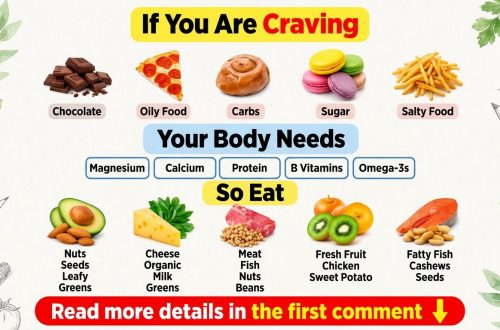
Feeling stressed lately? You are not alone. Stress affects sleep, energy, and mood, and many of us reach for convenience snacks when life gets busy. The good news is that everyday foods can be a gentle, supportive part of your routine. Small changes on your plate can help you feel more balanced over time.
This guide is for anyone who wants to eat well, enjoy cooking at home, and learn which foods are linked with calmer days. You will find simple food ideas, the nutrients behind them, and easy ways to add them to meals you already make.
How Food Can Support Your Mood
Your brain and nervous system rely on steady nutrition. Certain nutrients play roles in energy, muscle relaxation, and the gut-brain connection. Research suggests that diets rich in whole foods are associated with better mood patterns, although food is only one piece of the puzzle.
Key Nutrients to Know
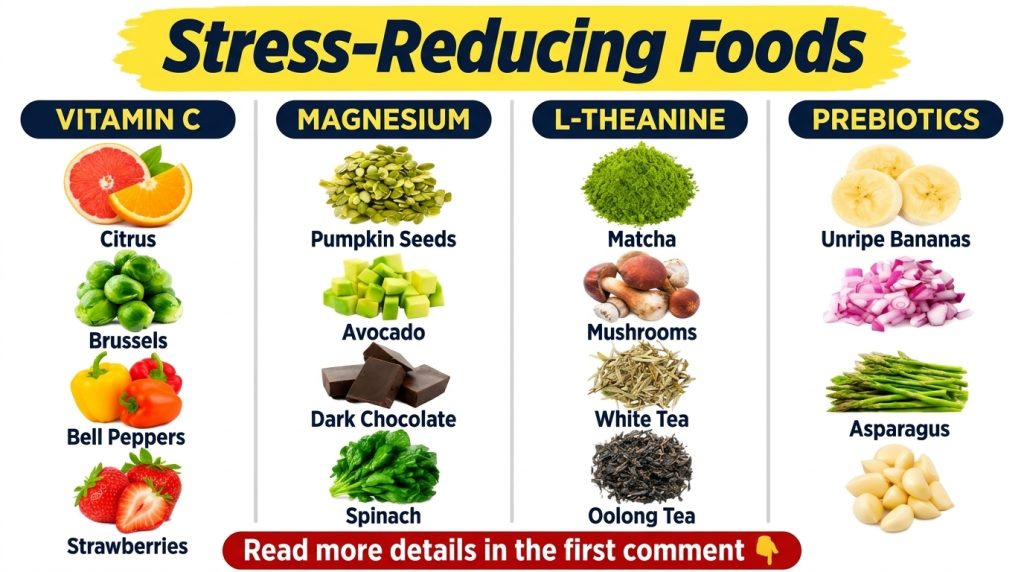
- Magnesium: Found in nuts, seeds, leafy greens, and whole grains. It contributes to normal nerve and muscle function.
- Vitamin C: Found in citrus, berries, and bell peppers. It supports normal immune function and the body’s stress response.
- L-Theanine: An amino acid found in green tea. Some studies link it with a sense of relaxed alertness.
- Prebiotic fiber: Found in oats, onions, bananas, and beans. It feeds beneficial gut bacteria, which may support digestion and mood.
Stress-Friendly Foods to Add to Your Plate
Dark Chocolate
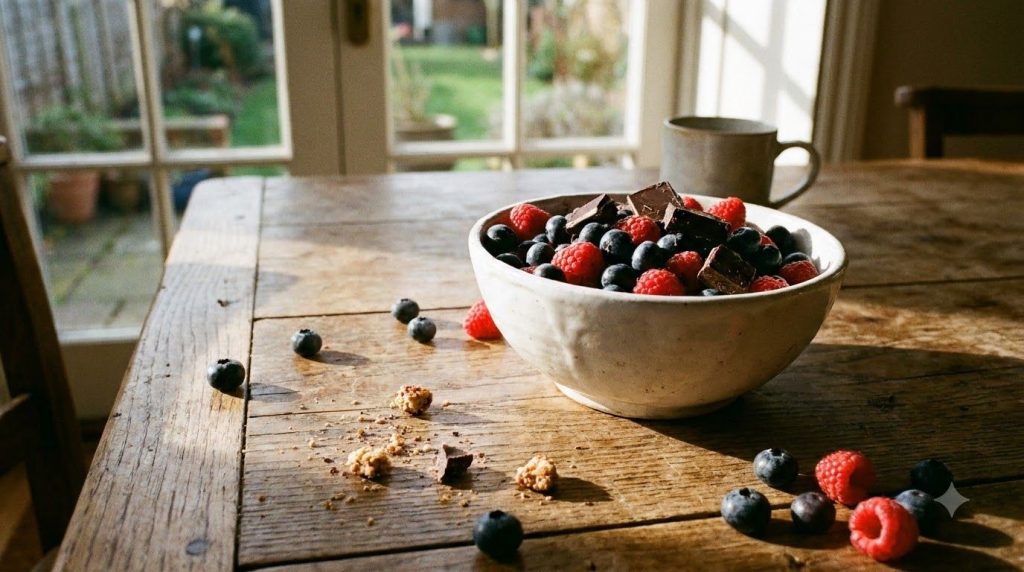
Choose dark chocolate with at least 70 percent cacao for less sugar and more plant compounds. A small square after dinner can be a pleasant way to satisfy a craving.
Berries and Citrus
Blueberries, strawberries, oranges, and kiwi offer vitamin C and fiber. Keep a bowl of fruit on the counter so healthy snacks are easy to grab.
Nuts and Seeds
Almonds, pumpkin seeds, and walnuts provide magnesium and healthy fats. A small handful, about one ounce, makes a filling snack.
Leafy Greens
Spinach, kale, and brussels sprouts add magnesium, folate, and fiber. Toss them into eggs, soups, or stir-fries for an easy boost.
Green Tea
Green tea contains L-theanine and gentle caffeine. Enjoying a cup in the afternoon may be a calming ritual, though those sensitive to caffeine should keep portions modest.
Easy Ways to Eat for Calm
- Start breakfast with oats topped with berries and a spoonful of nuts.
- Add a handful of spinach to pasta sauce, smoothies, or omelets.
- Pack a snack of almonds, an orange, and a few dark chocolate squares.
- Swap one sugary afternoon drink for green tea or sparkling water with lemon.
- Include a fermented food like plain yogurt or kefir a few times a week.
Practical Tips for Lasting Habits
- Plan two or three stress-friendly foods into each day rather than overhauling your diet.
- Keep nuts, dark chocolate, and fruit visible at home for easy choices.
- Drink water regularly, since mild dehydration can make you feel more tired and irritable.
- Notice how your energy and mood change over a few weeks, and keep what works for you.
Common Mistakes to Avoid
Many people expect one food to fix stress overnight. That rarely happens. Relying on large amounts of chocolate or caffeine can also backfire by causing jitters or poor sleep. Balance, regular meals, sleep, and movement matter just as much.
Frequently Asked Questions
Can food really reduce stress?
Food can support overall mood and energy, but it does not replace stress management strategies. Think of it as one helpful part of a healthy routine.
How much dark chocolate is reasonable?
A small portion, such as one or two squares a day, is a sensible amount for most adults. Check labels for sugar content.
Is green tea better than coffee for stress?
Both can fit into a balanced diet. Green tea has less caffeine and contains L-theanine, which some people find more soothing. Choose the drink that feels best for your body.
Which snack is best for an afternoon slump?
A mix of nuts, seeds, and fruit offers fiber, healthy fats, and magnesium, which can keep you full and steady.
Do I need supplements to get these nutrients?
Most people can meet their needs through food. Speak with a healthcare professional before starting any supplement, especially if you take medication.
How long before I notice a difference?
Everyone responds differently. Many people focus on consistent habits for several weeks before judging how they feel.
Conclusion
Eating for calm is about steady, enjoyable choices rather than perfect ones. Add a handful of nuts, a colorful bowl of berries, some leafy greens, and a cup of tea when you can. Explore more of our healthy food guides for easy recipes, nutrition charts, and meal ideas that fit your life.
This content is for educational purposes only and should not be considered medical advice. Consult a qualified healthcare professional for personalized dietary recommendations.