If your skin often feels dry or tight after a long day, a simple infused oil can be a relaxing part of your self-care routine. Many viral videos about DIY infused oils use bright ingredients like lemon and cloves, but some of those ideas can irritate the skin or make it more sensitive to sunlight. In this guide, we will make a gentler version with dried calendula flowers and sweet almond oil.
You will learn exactly what to buy, how to infuse the oil slowly, how to apply it safely, and how to store it so it stays fresh for as long as possible.

Beauty Recipe Overview
- Recipe Name: Calendula-Infused Almond Oil
- Beauty Category: Body and face moisturizing oil
- Suitable Skin Type: Dry or rough-feeling skin, after a patch test
- Preparation Time: 15 minutes
- Infusion Time: 2 to 4 weeks
- Application Time: 1 to 2 minutes
- Total Time: About 2 to 4 weeks, mostly waiting
- Difficulty Level: Easy
- Yield: About 1/2 cup (120 ml)
- Recommended Usage: 2 to 3 times per week, or as needed on dry areas
- Storage: Cool, dark place in a sealed dark glass bottle; discard after 6 months
Why You’ll Love This Recipe
- It uses only two ingredients, so it is simple and affordable.
- Dried flowers are much more stable than fresh produce, which lowers the risk of spoilage.
- It needs no cooking or special tools.
- It works well as a light body oil or as a small amount for dry hands and elbows.
- You control the strength, so you can make a small batch and try it first.
Complete Ingredients
- 1/2 cup (120 ml) sweet almond oil, cold-pressed and refined or unrefined. Note: almond is a tree nut, so avoid this recipe if you have a nut allergy.
- 2 tablespoons dried calendula flowers (petals only), fully dry and crisp with no moisture. Do not use fresh flowers, carrots, or any fruit or vegetable, because they add water that can cause spoilage.
Equipment
- Clean, completely dry glass jar with a tight lid (about 1 cup size)
- Measuring cup and measuring spoons
- Fine mesh strainer or cheesecloth
- Clean funnel
- Small dark glass bottle with a dropper or pump for storage
Step-by-Step Preparation
- Wash your hands, then wipe the jar and lid with rubbing alcohol and let them air-dry completely. Water left in the jar can spoil the oil.
- Measure 2 tablespoons of dried calendula petals. Check that they are dry and crisp. If they feel soft or damp, do not use them.
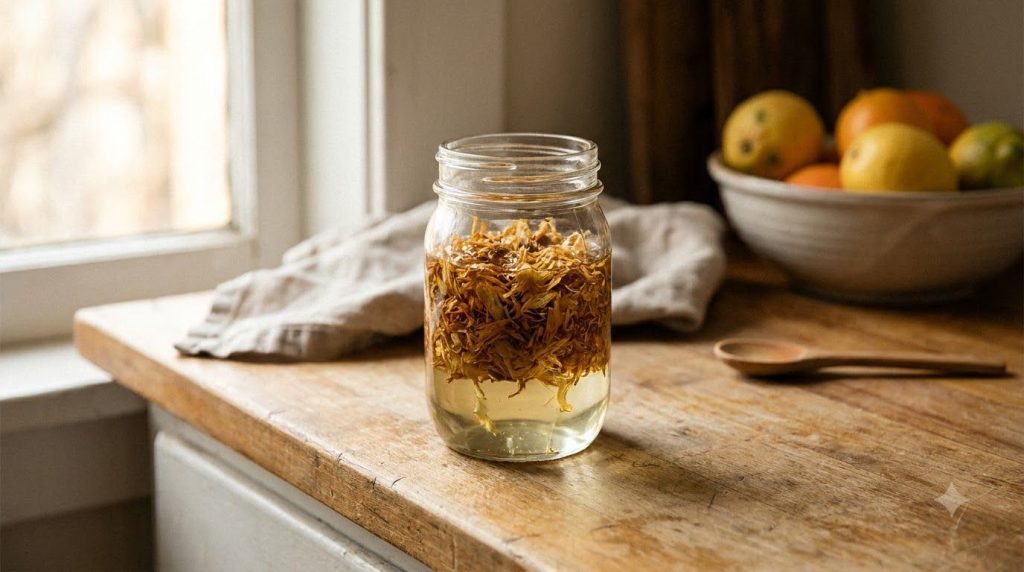
- Place the dried petals in the jar, then pour in the almond oil until the petals are fully covered.
- Stir gently with a clean, dry spoon so the petals are evenly soaked.
- Seal the lid tightly and label the jar with the date.
- Store the jar in a warm, dark cabinet away from direct sunlight for 2 to 4 weeks. Shake gently once a day.
- When the oil has a light golden color and a pleasant floral scent, strain it through a fine mesh strainer lined with cheesecloth into a clean bowl. Press the petals gently to get the last drops of oil, then discard the petals.
- Use the funnel to pour the strained oil into a clean dark glass bottle. Seal it tightly.
How to Apply the Oil
This oil is best for dry areas such as elbows, knees, hands, and feet. You can also use a very small amount on dry areas of the face, but avoid the eyes, the inner mouth, and any broken, cut, or irritated skin.
- Wash and dry the skin gently. Applying oil to damp skin can trap moisture, but you should still avoid rubbing.
- Pour a small amount, about 1/4 teaspoon, into your palm. Start small because a little goes a long way.
- Warm the oil between your hands, then press it gently onto the skin.
- Leave it on for 10 to 15 minutes, or longer as a light moisturizer. Blot any excess with a soft tissue.
- Wash your hands afterward. Oil can make surfaces slippery, so take care when walking or using stairs.
Ingredient Benefits
Sweet almond oil is a light plant oil often used to help skin feel softer and more comfortable. It can provide temporary moisture on dry areas, but it does not repair skin or change its natural structure. People with nut allergies should avoid it.
Dried calendula flowers are a traditional botanical ingredient used in many skincare products for their soothing reputation. The infused oil may help skin feel comfortable, but the evidence in homemade form is limited, and it should not be seen as a treatment for any skin condition.
Recommended Frequency
Use this oil two to three times per week, or whenever your dry areas feel tight. Because it is a moisturizing oil, daily use on a small area is generally fine for most people, but stop if you notice redness, itching, or stinging. Do not use it on skin that is irritated or broken.
Expert Beauty Tips
- Apply oil to slightly damp skin to help lock in moisture from your normal routine.
- Use a small amount and massage gently in circles rather than rubbing hard.
- Choose a fully dry, crisp flower for the best result and to lower the risk of spoilage.
- Keep the jar away from heat and sunlight to help the oil stay fresh longer.
- Use a clean, dry spoon every time to avoid introducing water or bacteria.
- Test on a small area first, such as the inner forearm, and wait 24 to 48 hours before wider use.
Safe Recipe Variations
- Dried chamomile instead of calendula: Chamomile has a gentle floral scent and is commonly used in soothing products. Choose dried flowers only and check for allergies to daisy-family plants.
- Jojoba oil instead of almond oil: Jojoba is a plant wax ester that many people find lighter on the skin. It is a good option for those with nut allergies, but patch testing is still important.
- Dried rose petals: Use food-safe, dried, unsprayed petals only. Rose petals are gentle for many people but can still cause allergic reactions.
Avoid adding lemon, lime, citrus peel, cloves, or essential oils to this recipe. Citrus can cause skin irritation and sun sensitivity, and cloves and undiluted essential oils can irritate the skin.
Storage and Shelf Life
Infused oil is not preserved, so it is best to make small batches. Store the finished oil in a sealed dark glass bottle in a cool, dark place away from heat and sunlight. Do not refrigerate it to extend shelf life, because that does not prevent spoilage. Discard the oil after about 6 months, or sooner if it smells sour or rancid, changes color, or looks cloudy. Never store the oil with fresh or damp ingredients.
Safety Precautions
- Do a patch test on a small area of skin and wait 24 to 48 hours. Patch testing cannot rule out every reaction, so stay alert.
- Avoid contact with the eyes, the inside of the nose and mouth, and open or broken skin.
- Stop using the oil if you notice redness, itching, burning, swelling, or a rash. Rinse with water and contact a healthcare professional if symptoms are severe or do not fade.
- Do not use the oil on children under two years old without asking a pediatric professional.
- If you have a skin condition such as eczema, psoriasis, or acne, speak with a dermatologist before using homemade products. This recipe is for basic comfort, not treatment.
- Keep the oil away from open flames, because most plant oils are flammable.
Common Mistakes to Avoid
- Using fresh ingredients: Fresh carrots, fruit, and flowers add water and can spoil the oil. Use only fully dried plant material.
- Adding citrus or cloves: These can irritate skin, and citrus may increase sun sensitivity. Skip them and use the gentler recipe above.
- Storing the oil too long: Even without water, oils can go rancid over time. Label your jar and discard it after 6 months.
- Skipping the patch test: Natural ingredients can still cause allergic reactions, so always test first.
- Applying too much: Heavy layers can feel greasy and may clog pores on some people. Use a thin layer instead.
Frequently Asked Questions
Is this oil suitable for sensitive skin?
It may be gentler than recipes with citrus or spices, but sensitive skin can still react. Always patch test first and stop if irritation occurs.
How often can I use it?
Two to three times per week is a comfortable starting point for dry areas.
Can I make it in advance?
Yes, you can make it up to 4 weeks ahead while the oil infuses, but only store the finished, strained oil for up to 6 months.
Should I refrigerate leftovers?
Refrigeration does not make homemade oil last longer. Keep it in a cool, dark place and discard it when it begins to smell off.
Can I replace the almond oil?
Yes, jojoba oil is a common choice. Choose a plant oil that you have used before and that you can tolerate.
What if my skin becomes irritated?
Stop using the oil, wash the area with lukewarm water and mild soap, and avoid further use. Seek medical advice if symptoms are severe or do not improve.
Can this oil replace my regular skincare?
No. It can be a simple addition for dry areas, but it does not replace sunscreen, prescribed treatments, or your regular moisturizer.
Conclusion
This calendula-infused almond oil is a simple, affordable way to add a little extra comfort to your dry-skin routine. With just two ingredients, a clean jar, and a few weeks of patient waiting, you can make a small batch that feels soft and calming on the skin.
Remember that gentle, consistent care works best, and it is always wise to test first and keep your batches small. Enjoy the process and take a moment to care for your skin!