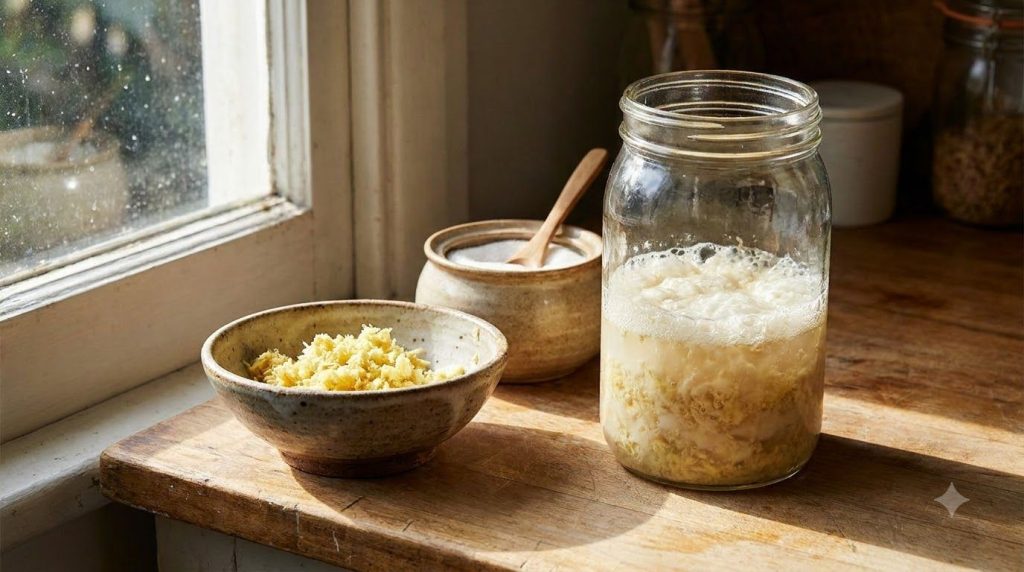
Most people assume homemade ginger beer needs special brewing equipment or a lot of experience. This is the part most people skip: the real secret is a simple ginger bug, a natural starter made from fresh ginger, sugar, and water. Once that starter is bubbling, the rest of the process takes about fifteen minutes of hands-on work spread over a few days.
What It Is
Homemade ginger beer is a lightly fermented, non-alcoholic ginger drink. Unlike the sweet soda sold in stores, it gets its fizz from wild yeasts and bacteria that feed on sugar and ginger. The result is a sharp, spicy, refreshing drink with a natural sparkle. Most home batches are ready in four to seven days after the ginger bug is active.
Ingredients
- Fresh ginger root, firm and smooth-skinned
- Organic cane sugar or white sugar
- Non-chlorinated water (filtered or boiled and cooled)
- Fresh lemon or lime juice
Approximate Measurements
| Component | Approximate Amount | Purpose |
|---|---|---|
| Fresh ginger (for bug) | 2 tablespoons, grated | Wild yeast source |
| Sugar (for bug) | 2 teaspoons | Food for the starter |
| Water (for bug) | 100 ml | Starter base |
| Fresh ginger (for brew) | 2 tablespoons, grated | Flavor and spice |
| Sugar (for brew) | 1/2 cup (about 100 g) | Fermentation fuel |
| Water (for brew) | 1 liter | Main liquid |
| Lemon juice | 1 tablespoon | Brightness and acidity |
Formula and Recipe
Your recipe has two parts. First, you build a ginger bug. Second, you use a small amount of that bug to ferment a sweetened ginger brew. Keep both in clean glass jars with a loose cover so gases can escape.
Step-by-Step Method
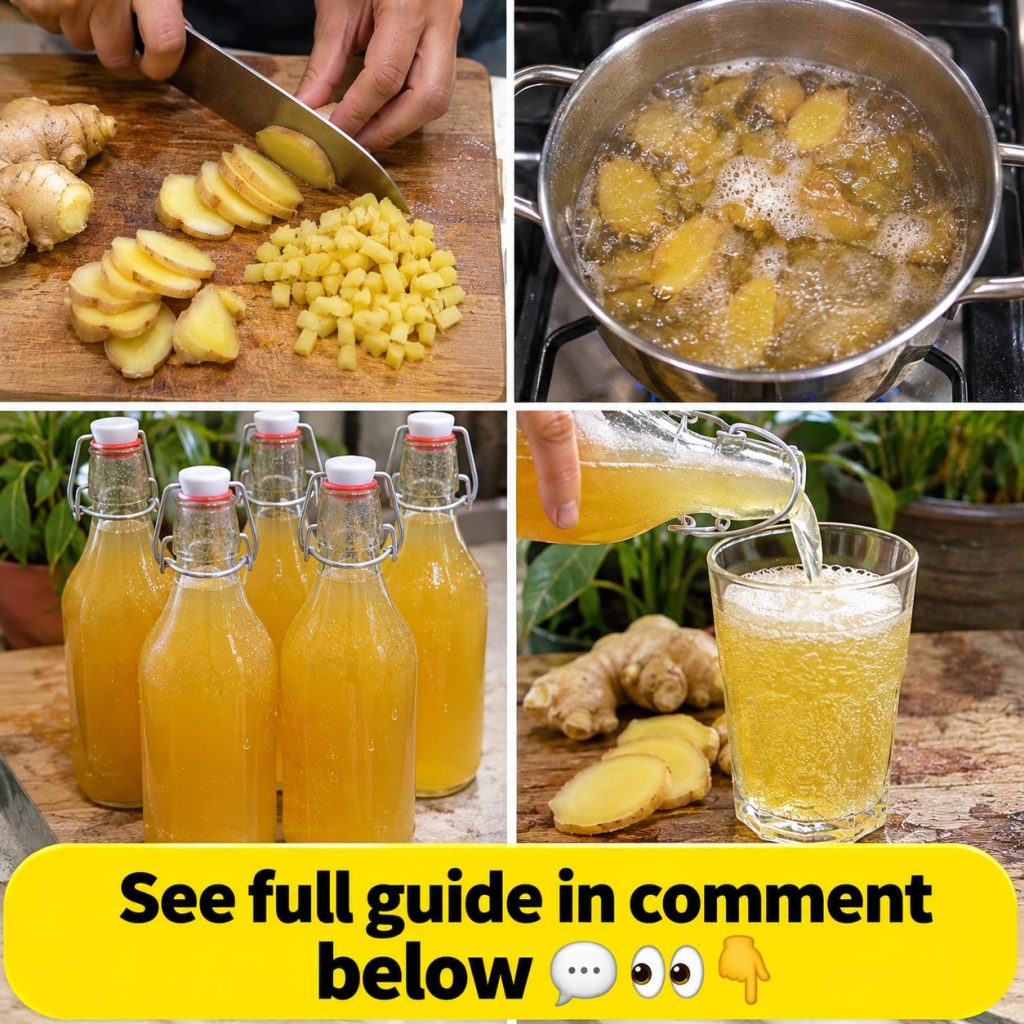
- Day 1: Mix 2 tablespoons grated ginger, 2 teaspoons sugar, and 100 ml water in a clean jar. Stir well and cover loosely with a cloth or lid that is not fully sealed.
- Days 2 to 5: Each day, add 1 teaspoon grated ginger and 1 teaspoon sugar. Stir. You should see small bubbles and smell a yeasty, slightly sour aroma within two to three days.
- Day 5 or 6: Bring 1 liter of water to a gentle simmer, then stir in the 1/2 cup sugar until dissolved. Let it cool to room temperature.
- Add 2 tablespoons grated ginger, the lemon juice, and the cooled sugar water to a clean fermentation jar or pitcher.
- Strain 1/4 cup of the active ginger bug into the brew. Stir, cover loosely, and keep at room temperature away from direct sun.
- Ferment for 2 to 4 days, checking daily for bubbles and a sharp, tangy smell.
- Strain out the ginger solids, then bottle in clean swing-top bottles, leaving about 2.5 cm of headspace.
- Leave bottles at room temperature for 1 to 3 days to build carbonation, then refrigerate.
How to Use
Serve chilled in a tall glass with ice, a squeeze of lime, or a few mint leaves. You can also use it as a base for a refreshing mocktail. Because it is naturally fizzy, pour slowly to avoid overflow.
How Often to Use
A single batch of about 1 liter usually lasts a few days to a week in the fridge once it is carbonated. Many people enjoy a small glass once or twice a day. Keep the ginger bug alive by feeding it daily, or store it in the fridge and feed it once a week.
How to Choose Ingredients
Choose ginger that feels heavy for its size, has thin skin, and shows no mold or soft spots. Young ginger has a milder, juicier flavor, while mature ginger is spicier. Use filtered water if your tap water contains chlorine, since chlorine can slow or stop the starter.
Storage
Keep the ginger bug in a jar at room temperature while you are actively feeding it. Once you are done, store it in the fridge. Finished ginger beer should always be stored in sealed bottles in the refrigerator to slow fermentation.
Practical Tips
- Use a wide-mouth glass jar so the starter gets enough air.
- Keep the brew between 20 and 25 degrees Celsius for steady fermentation.
- Taste daily once bubbling starts. It should turn tangier and fizzier over time.
Common Mistakes
- Using chlorinated tap water, which can stop fermentation.
- Sealing the jar tightly, which can build dangerous pressure.
- Skipping the daily feeding of the ginger bug.
- Leaving bottles at room temperature too long after carbonation, which can cause over-fizzing or bottle breakage.
- Using metal containers, which can react with the acidic brew.
Cautions and Who Should Avoid It
Homemade ginger beer can contain small amounts of alcohol and carbon dioxide, so handle bottles carefully. Use only sturdy swing-top or PET bottles made for fermentation and release pressure regularly. Children, pregnant women, and people with ginger sensitivity or on specific medications should check with a qualified health professional before drinking it regularly. Stop using any batch that smells rotten, shows fuzzy mold, or looks slimy.
Quick Summary
| Question | Quick Answer |
|---|---|
| Best preparation | Fresh ginger bug plus sweetened ginger brew |
| Best use case | Refreshing homemade fizzy drink |
| Storage | Refrigerate sealed bottles after carbonation |
| When to drink | Chilled, within about a week |
| What to avoid | Chlorinated water, sealed jars, rotten smells |
FAQ
Can I use dried ginger?
Fresh ginger works best for the ginger bug because it carries the wild yeasts needed for fermentation. Dried ginger usually will not start a bug reliably.
How long does homemade ginger beer last?
Sealed and refrigerated, it is best within about one week. Over time it becomes more sour and fizzy.
Can I refrigerate the ginger bug?
Yes. Store it in the fridge and feed it once a week to keep it active. Bring it back to room temperature and feed it daily for a day or two before brewing.
Can I freeze ginger beer?
Freezing is not recommended for bottled ginger beer because the bottles can burst as the liquid expands. Freeze only ginger bug portions if needed.
Can I reuse the ginger solids?
Once strained, the ginger pieces have lost much of their flavor. You can add them to a fresh batch of ginger bug for extra yeast activity.
Why is my ginger beer not fizzy?
Usually the bug was not active, the room was too cold, or the bottles were not kept warm long enough after sealing.
Conclusion
Homemade ginger beer is simpler than it looks once you understand the ginger bug. With fresh ginger, filtered water, and clean jars, you can make a bright, bubbly drink at home. Read more about natural fermented drinks in our related guides.
You may also like: Simple Homemade Herbal Tea Blends
Read more: Easy Fermented Drinks for Beginners
Related remedy: Fresh Ginger Uses in Everyday Recipes