Most of us think of chicken, eggs, beans, and yogurt when we hear the word protein. Fruit rarely makes that list. Yet a few everyday fruits do contain protein, and they bring fiber, vitamins, and antioxidants along with it. This article takes a friendly look at five fruits that often surprise people.
Here is what you will learn: which fruits contain protein, how much you can expect, and simple ways to add them to your meals and snacks.
Why Protein Matters
Protein helps your body build and repair muscle, supports healthy skin and hair, and helps you feel full between meals. Most adults need a steady supply of protein throughout the day, not just at dinner.
Fruits will never replace a main protein source. Still, they can add a helpful bit of protein to your daily total, especially when you eat a variety of plant foods.
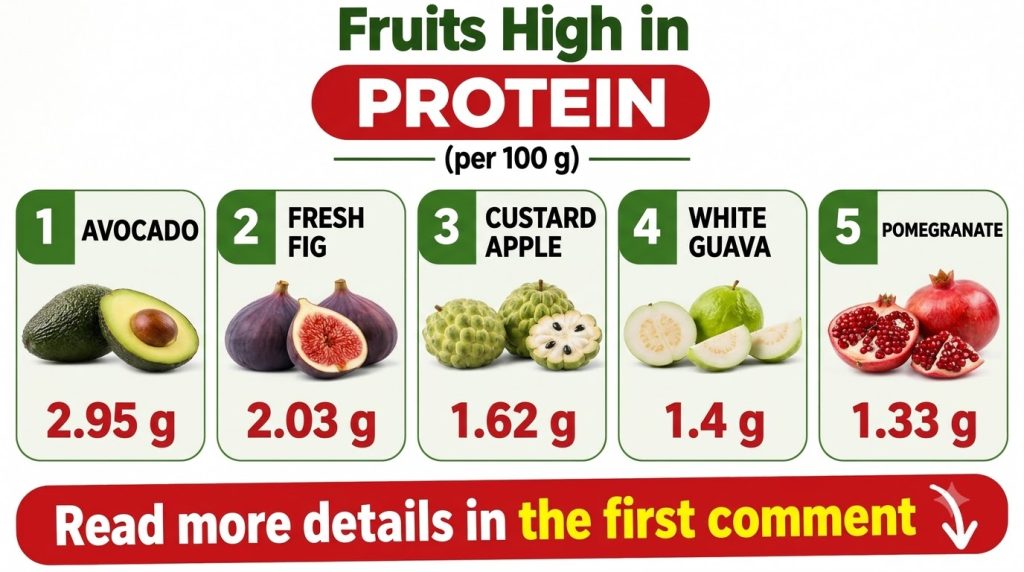
Five Fruits With Surprising Protein
The amounts below are approximate and can vary by variety and ripeness.
1. Avocado
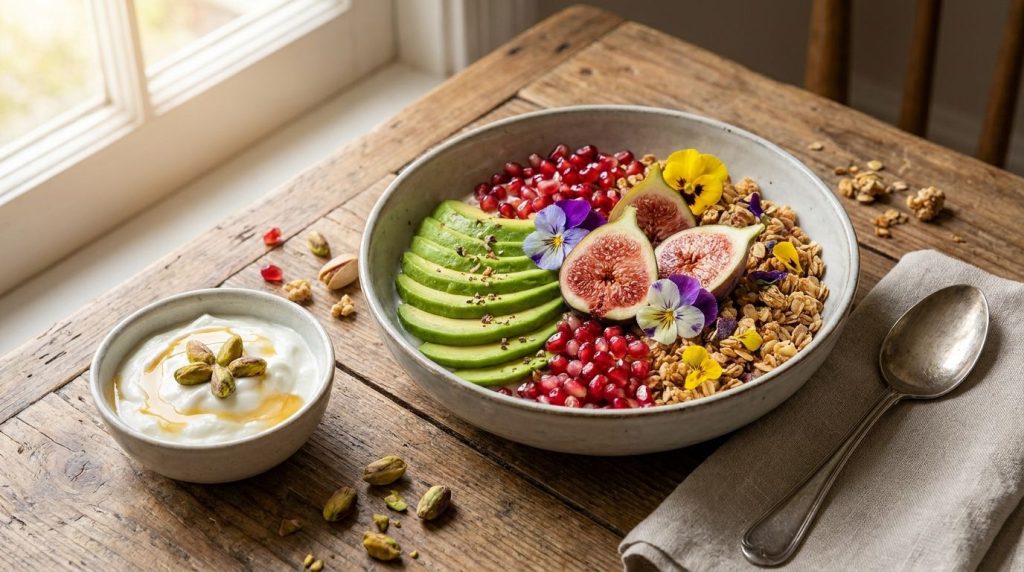
Avocado is best known for its healthy fats, but it also contains a modest amount of protein. It is also rich in fiber and potassium, which makes it a satisfying addition to toast, salads, and bowls.
2. Fresh Fig
Fresh figs are sweet, soft, and easy to slice. They provide some protein along with fiber and minerals such as potassium. Try them with a spoonful of plain Greek yogurt for a simple snack.
3. Custard Apple
Custard apple has a creamy, sweet flesh and offers a small amount of protein. It is often enjoyed fresh or blended into smoothies.
4. White Guava
White guava is one of the higher-protein fruits on this list. It also brings vitamin C and fiber, so it works well in fruit bowls or as a quick morning snack.
5. Pomegranate
Pomegranate seeds, called arils, add crunch and color to meals. They contain some protein along with antioxidants. Sprinkle them over oatmeal, salads, or roasted vegetables.
Protein Comparison Table
This table shows approximate protein amounts per 100 grams of fresh fruit.
| Fruit | Approx. Protein (per 100g) | Other Highlights |
|---|---|---|
| White Guava | About 2.6 g | Vitamin C, fiber |
| Avocado | About 2 g | Healthy fats, potassium |
| Pomegranate | About 1.7 g | Antioxidants, fiber |
| Custard Apple | About 1.6 g | Fiber, vitamin C |
| Fresh Fig | About 0.8 g | Fiber, potassium |
How to Add These Fruits to Your Day
- Spread mashed avocado on whole-grain toast with a sprinkle of seeds.
- Pair fresh figs with plain Greek yogurt and a few nuts.
- Blend custard apple or guava into a smoothie with milk or a protein-rich yogurt.
- Scatter pomegranate arils over oatmeal, salads, or grain bowls.
Practical Tips
- Combine fruit with a true protein source, such as eggs, beans, nuts, or yogurt, to build more complete meals.
- Check labels and nutrition databases when you want exact numbers for your portions.
- Choose ripe but firm fruit for the best flavor and texture.
- Keep a bowl of washed fruit on the counter so healthy snacks are easy to grab.
Frequently Asked Questions
Which fruit has the most protein?
Among the fruits listed here, white guava usually has the highest protein per 100 grams. Amounts still stay fairly low compared with meat or legumes.
Can fruit replace protein foods?
No. Fruit can add a little protein, but it should be part of a balanced plate that includes other protein sources.
Is avocado a good source of protein?
Avocado contains some protein, but it is better known for healthy fats and fiber. Enjoy it as part of a varied diet.
Are these fruits good for weight management?
Fiber-rich fruits can help you feel full and may support healthy eating habits. Portion size still matters, especially for higher-calorie fruits like avocado.
Do protein values change with ripeness?
Ripeness can affect taste, texture, and sugar content more than protein. Values in this article are rough estimates.
How much fruit should I eat each day?
Many health organizations suggest filling about half your plate with fruits and vegetables. Your needs depend on age, activity, and health goals.
Conclusion
Protein-containing fruits like avocado, figs, custard apple, white guava, and pomegranate can add variety and nutrition to your meals. They work best alongside reliable protein sources. If you enjoyed this guide, explore more healthy eating ideas on our site, and leave a comment with the word List if you want more fruit protein facts.
This content is for educational purposes only and should not be considered medical advice. Consult a qualified healthcare professional for personalized dietary recommendations.