Scrolling through beauty videos often leads to the same question: can a jar of petroleum jelly and a few kitchen staples really make a difference for your skin? The idea of turning simple Vaseline into homemade skin treatments is popular for good reason. It is affordable, easy to try, and it uses ingredients many of us already have on hand. This guide explains what these DIY mixtures are, which ingredients are commonly used, what they can realistically do, and how to try them safely.
What Is the Vaseline DIY Trend?
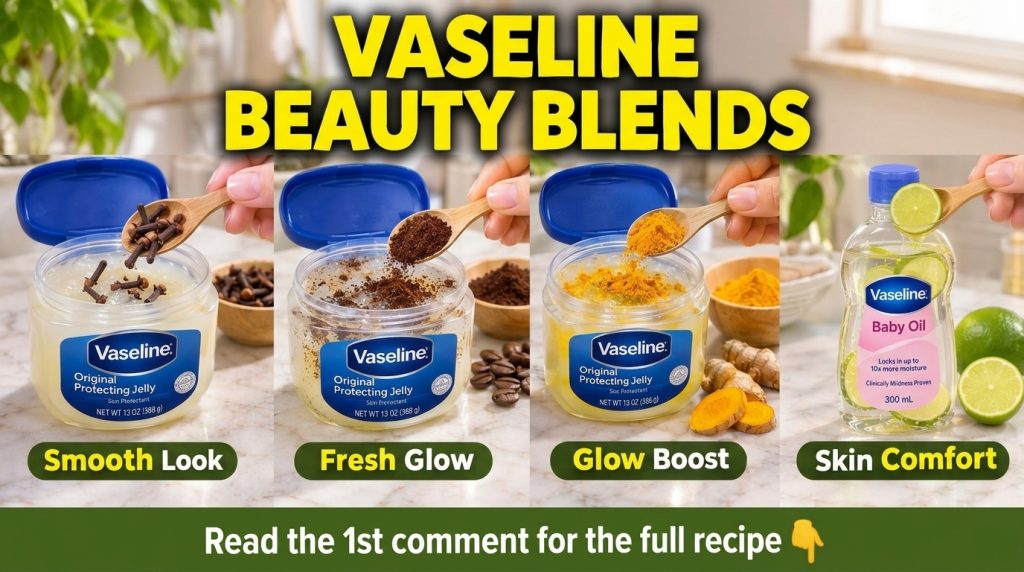
The trend centers on petroleum jelly, often sold under the Vaseline brand, as a base. Petroleum jelly is an occlusive ingredient, which means it forms a thin barrier on the skin that helps reduce water loss. Some creators also use baby oil, which is typically mineral oil, as a lighter base. Then they add extras such as ground cloves, coffee grounds, turmeric powder, or lime juice and label each jar with a specific benefit.
It is helpful to know that the base does most of the moisturizing work. The add-ins are mostly added for texture, scent, or a sense of a special treatment. Their effects are usually modest and have not been proven in clinical studies when combined this way.
Common Ingredients and What They Do
- Petroleum jelly: Helps lock in moisture and supports a healthy skin barrier, especially on dry areas like elbows, heels, and lips.
- Baby oil (mineral oil): Gives a smooth, light feel and can help soften dry skin. It is not a treatment for wrinkles or dark spots.
- Coffee grounds: Can act as a gentle physical scrub. Use only very fine grounds and avoid scrubbing hard, since rough particles can irritate skin.
- Turmeric powder: Contains curcumin, which some people like for its color and natural feel. It can stain skin and fabric, so use it carefully and test first.
- Ground cloves: Contain eugenol, a compound that can irritate sensitive skin. Many dermatologists advise against applying cloves directly to the face.
- Lime juice: Contains natural acids that may irritate skin. Citrus juice can also make skin more sensitive to sunlight, which raises the risk of burns and dark marks.
A Simple Base Recipe to Try
If you want to experiment in a gentle way, start with a plain base and skip the stronger add-ins. Use clean hands or a clean spoon, and store your mixture in a small clean jar with a lid.
- Scoop about one tablespoon of petroleum jelly into a clean bowl.
- Add a few drops of a plain, fragrance-free oil, such as jojoba or almond oil, if you want a softer texture.
- Mix gently until smooth, then transfer to a small clean container.
- Apply a thin layer to clean, dry skin at night, focusing on areas that feel rough or dry.
This type of simple moisturizing layer is much easier to tolerate than a mixture with cloves or citrus, and it is a sensible starting point for most people.
Realistic Expectations for Wrinkles, Dark Spots, and Glow
Benefits like erasing wrinkles or fading dark spots are big promises. Petroleum jelly can make skin look softer and more hydrated, which may temporarily reduce the appearance of dryness and fine lines. However, it does not change the deeper structure of wrinkles, and it does not remove dark spots. Dark spots and hyperpigmentation are best evaluated by a dermatologist, who can recommend treatments with proven ingredients.
A healthy glow usually comes from consistent basics: gentle cleansing, daily sunscreen, adequate hydration, good sleep, and a moisturizer that suits your skin type.
Safety Tips Before You Try Any DIY Mixture
- Do a patch test on a small area of your inner arm or behind your ear for 24 to 48 hours before applying to your face.
- Avoid citrus juice, cloves, and other strong irritants if you have sensitive, rosacea-prone, or broken skin.
- Do not use lime or other citrus on skin you will expose to the sun, and wear sunscreen daily.
- Keep mixtures clean and use within a short time. Store them in a cool place and discard any that smell off or look changed.
- Stop using any mixture if you notice redness, itching, burning, swelling, or breakouts, and see a healthcare professional if symptoms persist.
- Avoid applying heavy petroleum-based products to acne-prone areas if they tend to clog your pores.
The Bottom Line
Simple Vaseline and baby oil blends can be a pleasant, budget-friendly way to add extra moisture to your routine, especially for dry skin on the body. The more dramatic claims in viral jars are not well supported, and some add-ins can cause irritation or sun sensitivity. Start gently, patch test first, and talk with a dermatologist about persistent concerns like wrinkles or dark spots. Share your own experience in the comments and tell us which simple beauty habit has worked best for you!