Zesty Lemon Cheesecake Delight
This lemon cheesecake brings bright citrus flavor to a rich, creamy dessert. The filling is smooth and tangy, with a buttery graham cracker crust underneath. It works well for birthdays, holiday gatherings, or any time you want a make-ahead dessert that feels special.
Why You’ll Love This Lemon Cheesecake
- Bright, fresh flavor: Fresh lemon zest and juice cut through the richness of the cream cheese.
- Creamy texture: A slow bake and a gentle cool-down give the filling a dense, silky finish.
- Make-ahead friendly: The cheesecake needs several hours to chill, so you can bake it the day before serving.
- Simple ingredients: Most of the items are common pantry and refrigerator staples.
Ingredients
For the crust:
- 1 1/2 cups (about 200 g) graham cracker crumbs
- 1/4 cup (50 g) granulated sugar
- 6 tbsp (85 g) unsalted butter, melted
For the lemon filling:
- 24 oz (680 g) full-fat cream cheese, softened to room temperature
- 3/4 cup (150 g) granulated sugar
- 3 large eggs, at room temperature
- 1/3 cup (80 g) sour cream, at room temperature
- Zest of 2 lemons (about 2 tbsp)
- 1/4 cup (60 ml) fresh lemon juice (about 2 lemons)
- 1 tsp (5 ml) pure vanilla extract
- 1 tbsp (8 g) all-purpose flour (optional, helps the filling hold its shape)
Ingredient Notes
Full-fat cream cheese gives the best structure and flavor. Low-fat versions can make the filling loose and grainy. Softened cream cheese blends smoothly, so the filling does not need extra beating that can add air bubbles.
Use fresh lemons rather than bottled juice. Fresh zest and juice provide a brighter, more natural lemon flavor. Room-temperature eggs mix in more evenly and reduce lumps.
Equipment You’ll Need
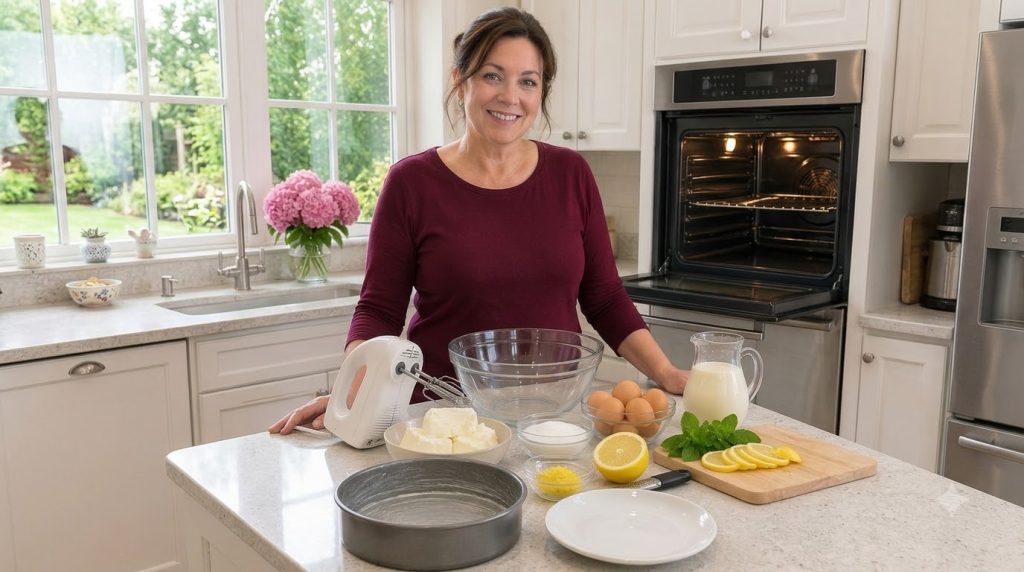
- 9-inch (23 cm) springform pan
- Aluminum foil for wrapping the pan
- Large roasting pan or baking dish for the water bath
- Electric mixer or stand mixer
- Mixing bowls and a rubber spatula
- Fine grater or zester
How to Make Lemon Cheesecake
- Heat the oven. Set the oven rack to the lower-middle position and preheat to 325°F (163°C). Lower oven temperatures help the cheesecake bake gently and reduce cracking.
- Make the crust. Stir together the graham cracker crumbs, sugar, and melted butter until the mixture looks like wet sand and holds together when pinched. Press it evenly into the bottom of the springform pan using the bottom of a measuring cup.
- Pre-bake the crust. Bake for about 8 to 10 minutes, until the crust is fragrant and slightly darker at the edges. Let it cool while you make the filling. Keep the oven on.
- Prepare the pan for a water bath. Wrap the outside of the springform pan tightly with two layers of aluminum foil to keep water out. Set it aside.
- Beat the cream cheese. In a large bowl, beat the softened cream cheese on medium speed for about 2 minutes, until completely smooth with no lumps.
- Add the sugar and flour. Beat in the sugar and optional flour until the mixture looks fluffy and even, about 1 to 2 minutes.
- Add the eggs. Mix in the eggs one at a time on low speed, stopping to scrape the bowl after each addition. Mix only until each egg disappears into the batter. Overmixing adds air and can cause cracks.
- Add the lemon and sour cream. Mix in the sour cream, lemon zest, lemon juice, and vanilla until just combined. The filling should be smooth, pale yellow, and pourable like thick pudding.
- Assemble and bake. Pour the filling over the cooled crust and smooth the top with a spatula. Set the springform pan inside the roasting pan and pour hot water into the roasting pan until it reaches about halfway up the sides of the springform pan.
- Bake until set. Bake for about 50 to 60 minutes. The edges should look set and the center should jiggle slightly when you gently shake the pan. The time can vary by oven, so start checking around 45 minutes.
- Cool slowly. Turn off the oven, prop the door open slightly, and let the cheesecake sit inside for about 1 hour. This gradual cooling helps prevent cracks.
- Chill. Remove the cheesecake from the water bath, remove the foil, and refrigerate uncovered for at least 4 hours, or preferably overnight, until firm enough to slice cleanly.
Pro Tips for the Best Results
- Scrape the bowl often while mixing so there are no streaks of cream cheese left in the filling.
- Use a hot, not boiling, water bath. Water that is too hot can cook the edges too quickly.
- Dip your knife in hot water and wipe it dry before each cut for clean, neat slices.
- Zest the lemons before juicing them. Zest is much easier to grate when the fruit is whole.
- Let the cheesecake chill fully before slicing. Cutting it too early can make the slices soft and messy.
Common Mistakes to Avoid
- Using cold cream cheese: Lumps are hard to beat out once the batter is mixed. Let the cream cheese soften at room temperature for at least 1 hour.
- Overbeating after adding eggs: Too much air can puff up the filling in the oven and then cause cracks as it cools.
- Skipping the foil: Water can seep into the springform pan and soggy the crust.
- Cutting too soon: A warm or partly set cheesecake will not hold its shape. Plan for a long chill.
Variations and Substitutions
- Lemon-blueberry: Spoon a thin layer of blueberry compote over the chilled cheesecake before serving.
- Lemon-ginger crust: Add 1/2 tsp ground ginger to the graham cracker crust for a warm, spicy note.
- No-bake version: Whip the cream cheese filling with heavy cream and lemon, then chill in the crust for at least 6 hours. The texture will be lighter but less dense.
- Gluten-free: Use gluten-free graham-style cookies or crumbs for the crust. Check labels to confirm they are gluten-free.
Serving Suggestions
Serve the cheesecake cold, topped with fresh berries, a few strips of lemon zest, or a spoonful of lemon curd. Whipped cream adds a soft contrast to the tangy filling. A pot of unsweetened iced tea or sparkling water goes well alongside a rich slice.
Storage and Reheating
Store leftover cheesecake covered in the refrigerator. Keep it in an airtight container or wrap it well so it does not absorb other food odors. Cheesecake is generally best eaten within about 4 to 5 days. It is usually not reheated, so serve it chilled.
Freezing is possible but may change the texture slightly. Wrap the cooled, unsliced cheesecake tightly in plastic wrap and then foil, and freeze for up to about 1 month. Thaw overnight in the refrigerator before serving.
Frequently Asked Questions
Why did my lemon cheesecake crack?
Cracks often come from overbaking, overmixing, or cooling too quickly. Pull the cheesecake out when the center still jiggles slightly, and let it cool gradually in the turned-off oven.
Can I make lemon cheesecake ahead of time?
Yes. Making it one day ahead is ideal because it needs several hours to chill and set. Flavor and texture usually improve overnight.
Can I use bottled lemon juice?
You can, but fresh lemon juice gives a brighter taste. If you use bottled juice, choose one that is 100% lemon juice and taste the filling before baking.
How do I know when the cheesecake is done?
The edges should look set and the center should wobble slightly, like gelatin, when you gently shake the pan. The center will firm up as it chills.
Can I make it without a water bath?
You can, but the water bath helps prevent cracks and keeps the texture creamy. If you skip it, bake at a low temperature and watch the top closely.
Would you like to share your favorite cheesecake flavor in the comments? Let us know what you would try next!