Zinc is one of those quiet nutrients that does a lot of behind-the-scenes work. It supports your immune system, helps your body process food, and plays a role in healing and normal growth. The good news is that you don’t need exotic ingredients to get enough. Many everyday foods, from lentils to pumpkin seeds, can help you meet your needs.
This guide is for anyone who wants to eat more zinc, whether you eat meat, follow a vegetarian lifestyle, or simply like variety on your plate. You’ll learn which foods are richest in zinc, how to build easy meals around them, and a few simple habits that can help your body absorb more of this mineral.
Why Zinc Matters for Everyday Health
Your body doesn’t store zinc in large amounts, so you need to get it from food most days. Research links adequate zinc intake with normal immune function and healthy metabolism. Zinc is also involved in wound healing and in the way your senses of taste and smell work.
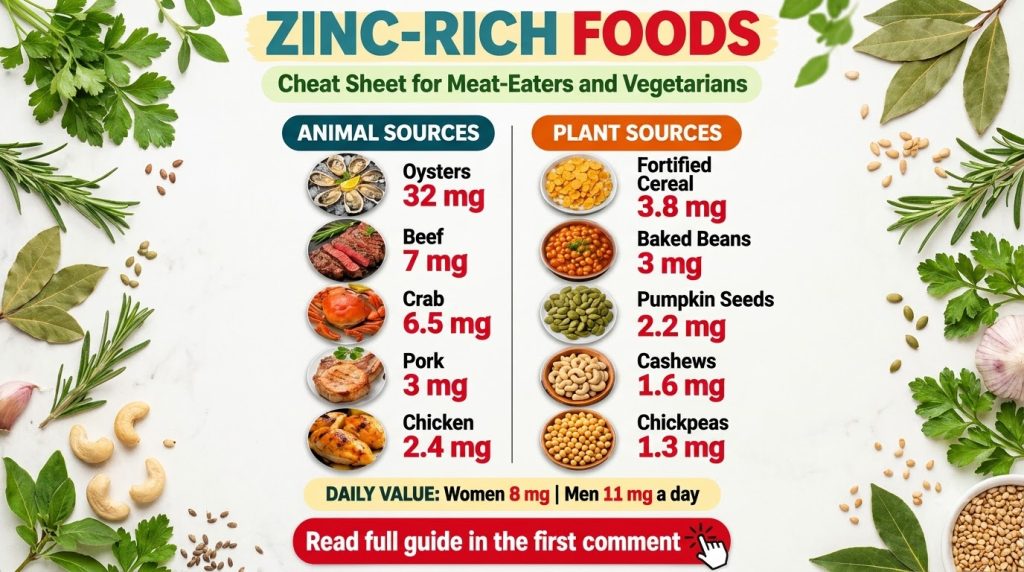
Most adults need roughly 8 mg per day for women and 11 mg per day for men, according to commonly used U.S. reference values. Needs can vary with age, pregnancy, and overall diet, so it’s always worth checking with a healthcare professional if you have concerns.
Animal-Based Zinc Sources
Animal foods tend to offer zinc in a form the body absorbs quite well. Shellfish, especially oysters, is famously rich in zinc. Red meat and poultry are also solid choices.
| Food | Typical Serving | Approximate Zinc |
|---|---|---|
| Oysters, cooked | 3 oz | Often over 30 mg |
| Beef chuck roast, cooked | 3 oz | About 5 mg |
| Chicken thigh, cooked | 3 oz | About 2.5 mg |
| Plain low-fat yogurt | 1 cup | About 1.5 mg |
Plant-Based Zinc Sources
Plant foods contain zinc too, but the amount your body absorbs can be lower. That’s because plants also contain compounds called phytates, which can bind to minerals. You don’t need to avoid these foods. Simply eat a variety and use a few preparation tricks.
| Food | Typical Serving | Approximate Zinc |
|---|---|---|
| Lentils, cooked | 1 cup | About 2.5 mg |
| Chickpeas, cooked | 1 cup | About 2.5 mg |
| Pumpkin seeds, roasted | 1 oz | About 2.2 mg |
| Firm tofu | 1/2 cup | About 1.5 mg |
| Cashews | 1 oz | About 1.6 mg |
Values are approximate and can vary by brand, cooking method, and growing conditions. Check a reliable nutrition database for exact numbers.
Easy Ways to Add More Zinc to Your Meals
- Start your day with yogurt. Top plain yogurt with pumpkin seeds, berries, and a drizzle of honey.
- Build bowls around legumes. Combine lentils or chickpeas with roasted vegetables, greens, and a simple lemon dressing.
- Snack smarter. A small handful of pumpkin seeds or cashews makes a satisfying snack.
- Add tofu to stir-fries. Press and cube firm tofu, then toss it with vegetables and a light sauce.
- Include seafood or lean meat twice a week. This is an easy way to boost zinc without a lot of planning.
Tips to Help Your Body Absorb More Zinc
Small changes in how you cook plant foods may help. Soaking dried beans overnight, sprouting grains, and fermenting foods like tempeh can reduce phytate levels. Pairing zinc-rich plants with a source of protein at the same meal also supports a balanced intake.
- Soak and rinse dried beans before cooking.
- Choose whole grains that have been sprouted or fermented when you can.
- Spread your zinc sources across the day rather than all at once.
- Include a variety of foods so you don’t rely on one ingredient.
Common Mistakes to Avoid
- Relying on one food, such as only nuts, for all your zinc.
- Assuming supplements are always needed. Food first is a good starting point for most people.
- Taking high-dose zinc supplements for long periods without guidance, since too much zinc can interfere with copper absorption.
Frequently Asked Questions
Which food has the most zinc?
Oysters are among the richest natural sources of zinc. Red meat and fortified cereals are other strong options.
Can vegetarians get enough zinc?
Yes, many vegetarians meet their needs with a mix of legumes, seeds, nuts, dairy, and whole grains. Planning meals with a variety of these foods makes a real difference.
Do I need a zinc supplement?
Most people can get enough zinc from food. If you think you may have a shortage or are considering a supplement, talk with a healthcare professional first.
Does cooking destroy zinc?
Zinc is a mineral, so it is quite stable during cooking. Boiling may cause some loss into the water, so using cooking liquids in soups or stews can help.
How can I tell if I’m low on zinc?
Signs of low zinc can include slow wound healing, changes in taste or smell, and frequent infections. These symptoms have many possible causes, so a medical evaluation is important.
Is zinc from plants as good as zinc from meat?
Plant zinc is absorbed less efficiently, but eating a varied diet with preparation methods like soaking can help close the gap.
Conclusion
Zinc doesn’t have to be complicated. With a few simple swaps, like adding pumpkin seeds to yogurt or building meals around lentils, you can enjoy this mineral every day. Explore more of our healthy food guides for easy meal ideas, smart grocery tips, and nutrition basics that fit real life.
This content is for educational purposes only and should not be considered medical advice. Consult a qualified healthcare professional for personalized dietary recommendations.