Zinc is one of those quiet nutrients that does a lot of work behind the scenes. It supports normal immune function, helps your body make proteins and DNA, and plays a role in wound healing and healthy taste and smell. The good news is that you don’t need supplements to get enough. A varied diet with the right foods can cover most adults’ needs.
In this guide, you’ll learn which foods are good sources of zinc, how they compare, and easy ways to add them to your everyday meals.
Why Zinc Matters for Your Body
Your body cannot store zinc for long, so it needs a steady supply through food. Research suggests that adequate zinc intake is linked to normal immune responses and healthy growth. Many people get enough from their meals, but vegetarians and older adults may need to pay closer attention.
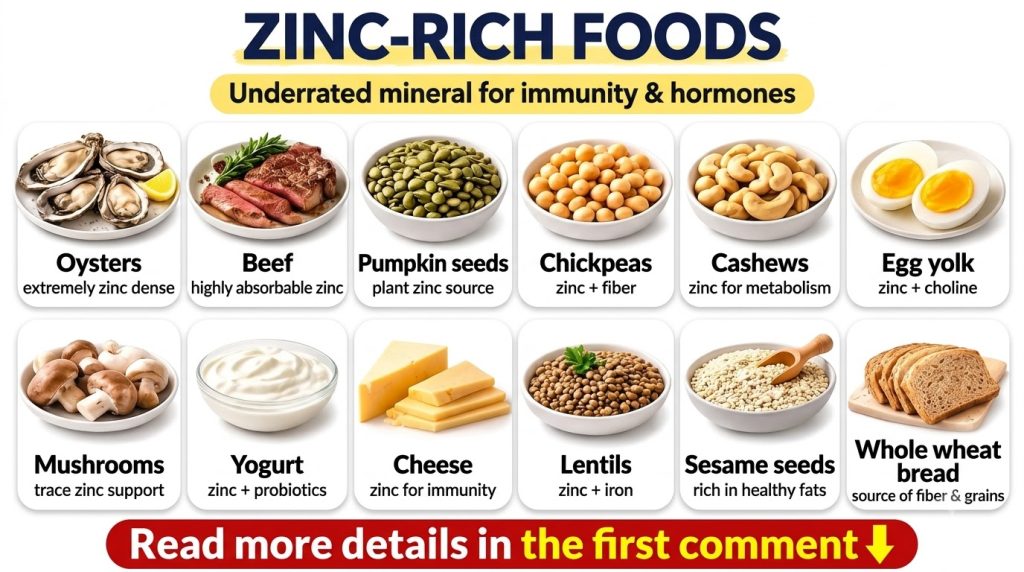
12 Zinc-Rich Foods to Try
Zinc amounts vary by food, portion size and preparation method. The table below shows approximate zinc levels to help you compare options.
| Food | Serving | Approximate Zinc | Main Benefit |
|---|---|---|---|
| Oysters | 3 oz cooked | Very high | Among the richest natural sources |
| Beef | 3 oz cooked | High | Also provides protein and iron |
| Pumpkin seeds | 1 oz | Moderate | Easy snack with healthy fats |
| Lentils | 1 cup cooked | Moderate | Adds fiber and plant protein |
| Chickpeas | 1 cup cooked | Moderate | Versatile for salads and stews |
| Chicken thigh | 3 oz cooked | Moderate | Lean protein option |
| Cashews | 1 oz | Moderate | Good for snacking and sauces |
| Greek yogurt | 1 cup | Low to moderate | Pairs well with fruit |
| Eggs | 2 large | Low to moderate | Simple breakfast protein |
| Oatmeal | 1 cup cooked | Low to moderate | Whole grain for breakfast |
| Tofu | 1/2 cup | Low to moderate | Plant-based protein for stir-fries |
| Mushrooms | 1 cup cooked | Low | Low calorie and savory |
Values are approximate and can differ by brand, growing conditions and cooking method. Check package labels or a trusted nutrition database for exact numbers.
Who Should Pay Extra Attention to Zinc
- Vegetarians and vegans, since plant foods contain zinc that is absorbed less easily than zinc from animal foods.
- Older adults, whose appetite and food variety may decrease over time.
- Pregnant and breastfeeding women, who have higher daily needs.
- People with digestive conditions that affect nutrient absorption.
Easy Ways to Eat More Zinc
- Add a handful of pumpkin seeds to oatmeal or salads.
- Stir cooked lentils or chickpeas into soups and grain bowls.
- Choose tofu or chicken thigh for stir-fries and weeknight dinners.
- Top Greek yogurt with berries and crunchy nuts for a simple snack.
Practical Tips
- Combine plant sources like beans and whole grains in the same meal to make the most of your intake.
- Soak and sprout beans or grains when you have time, since this can improve mineral absorption.
- Keep canned chickpeas, lentils and pumpkin seeds on hand for quick meals.
- Spread zinc-rich foods across the week instead of relying on one large serving.
Potential Risks to Know About
More is not always better. Taking high-dose zinc supplements for long periods can cause nausea and may interfere with copper absorption. Food sources rarely cause problems, but a supplement should only be used under professional guidance.
Frequently Asked Questions
Which food has the most zinc?
Oysters are one of the richest natural sources of zinc. Beef and other red meats also provide a good amount.
Can vegetarians get enough zinc?
Yes, with planning. Legumes, seeds, nuts, tofu and whole grains all contribute zinc. Pairing them across meals helps.
Is zinc the same as vitamin C for immunity?
They are different nutrients with different roles. Both support normal immune function, so a varied diet with both is a good approach.
How much zinc do adults need each day?
Daily needs are commonly listed around 8 mg for adult women and 11 mg for adult men, though needs change with age and life stage. Ask a healthcare professional for guidance on your own needs.
Do cooking methods affect zinc?
Zinc is fairly stable during cooking, so most of it stays in your food. Phytates in beans and grains can reduce absorption, which soaking can help with.
Can I get zinc from breakfast?
Yes. Oatmeal topped with pumpkin seeds and a serving of Greek yogurt is an easy zinc-containing breakfast.
Should I take a zinc supplement?
Some people may benefit from one, but it is best to check with a doctor or dietitian first to find the right dose.
Conclusion
Zinc is easy to include in a balanced diet once you know where to find it. Start with two or three foods from this list, and build from there. For more ideas, explore our guides on high protein meals, healthy breakfast ideas and gut-friendly foods.
This content is for educational purposes only and should not be considered medical advice. Consult a qualified healthcare professional for personalized dietary recommendations.