Why Baking Soda and Dish Soap Work So Well on Stovetop Grease
Stovetop grease builds up slowly. Every time you fry bacon or sear vegetables, a thin film of oil settles on the glass and traps dust, splatters, and food residue. Over time, that film turns yellow-brown and bakes into a surface that looks dull no matter how often you wipe it. This simple baking soda cleaning method is an affordable, eco-friendly way to lift that buildup without harsh chemicals.
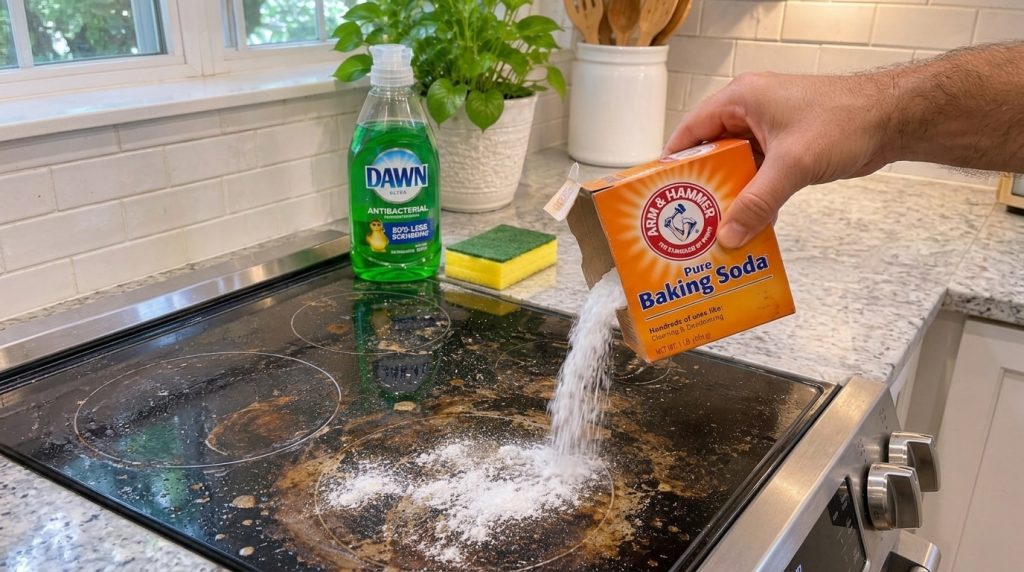
Baking soda is a mild alkaline powder with a gentle abrasive texture. It helps loosen grease and neutralize odors. Dish soap is a surfactant, which means it breaks up oil so it can be wiped away with water. Combined, they tackle grease that water alone cannot remove.
What You Will Need
- About 1/2 cup of baking soda
- 1 to 2 teaspoons of grease-cutting dish soap
- Warm water in a spray bottle or small bowl
- A non-abrasive sponge or soft microfiber cloth
- A dry, clean microfiber towel for buffing
Step-by-Step Method for a Sparkling Stovetop
- Turn off all burners and let the stovetop cool completely before you start.
- Remove loose crumbs and debris with a dry cloth or paper towel.
- Sprinkle a generous layer of baking soda over the greasy areas.
- Mix one to two teaspoons of dish soap with a few tablespoons of warm water to form a light paste or foamy solution.
- Spread the mixture over the baking soda and let it sit for 10 to 15 minutes so it can loosen baked-on grime.
- Gently scrub in small circles with a non-abrasive sponge, working from the cleanest areas toward the dirtiest ones.
- Wipe away the residue with a damp cloth, rinsing the cloth often.
- Dry the glass with a clean microfiber towel to reveal a streak-free shine.
Tips for Stubborn Stains
- For heavily burned spots, apply a warm, damp cloth over the paste for a few extra minutes before scrubbing.
- Repeat the process on tough areas instead of scrubbing harder, which can scratch glass.
- Use a plastic scraper to lift hardened food from the surface, held at a low angle.
- Clean the stovetop regularly, ideally after each cooking session, to prevent buildup from forming again.
Safety Notes
Always make sure the stovetop is off and cool before cleaning. Avoid steel wool and abrasive scouring pads, which can leave fine scratches on glass and ceramic cooktops. Do not mix baking soda with vinegar in a closed container, and never use this method on a surface you are unsure about without testing a small hidden area first. Rinse thoroughly so no residue is left on the cooktop, and keep the cleaning mixture away from children and pets.
Final Thoughts
This baking soda and dish soap method is a practical, budget-friendly way to restore a greasy stovetop without relying on strong commercial cleaners. With a little patience and regular upkeep, your cooktop can look clean and bright again. What are your go-to natural cleaning solutions for tough kitchen messes?