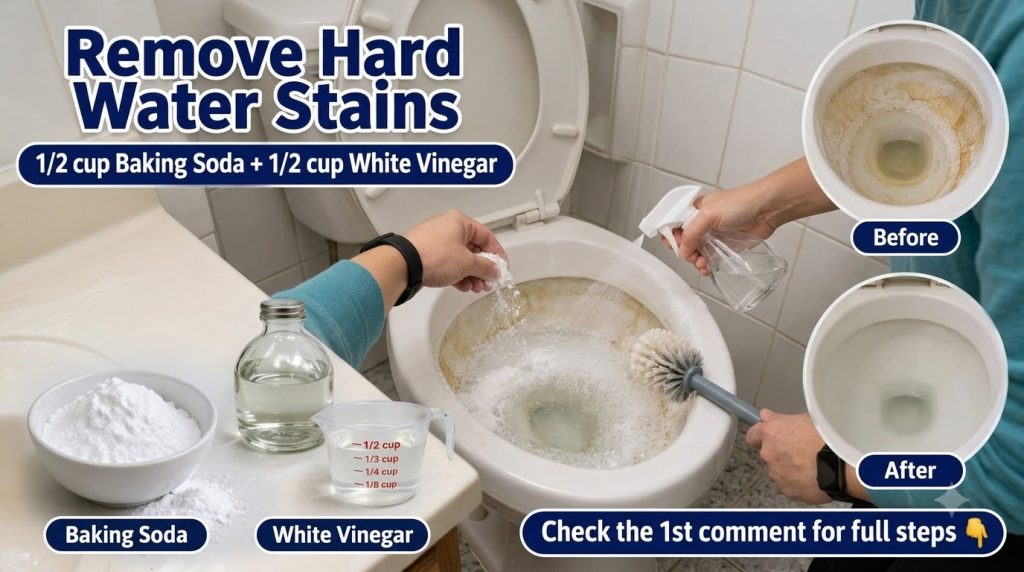
Hard water rings in the toilet bowl are one of those cleaning problems that seem to come back no matter how often you scrub. The brownish-yellow line near the waterline and the chalky white crust under the rim are usually mineral deposits left behind as water evaporates. Regular toilet cleaner can help with light buildup, but heavier rings often need a little more contact time and some gentle scrubbing.
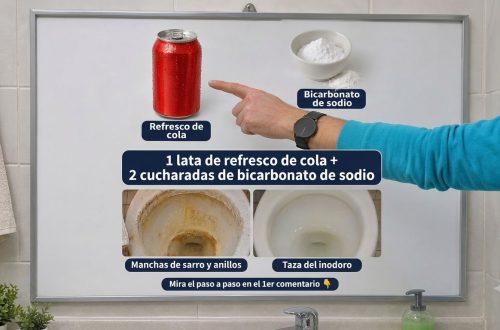
This simple DIY uses two pantry staples, Coca-Cola and baking soda, to loosen those mineral stains without harsh fumes. It is a practical option for routine maintenance and for bowls with moderate staining. It will not work miracles on years of crust, but it is an easy first step before reaching for stronger products.
What You’ll Need
- 1 can of Coca-Cola (regular, not diet)
- 1/2 cup baking soda
- A toilet brush with stiff bristles
- Disposable gloves
- A soft cloth or sponge for wiping the outside of the bowl
Why This DIY Can Be Useful
Coca-Cola contains phosphoric acid, which can help dissolve some mineral deposits over time. Baking soda is a mild abrasive and helps lift loosened residue off the porcelain when you scrub. Used in sequence, the soda softens the stain and the baking soda helps remove it. Results depend on how thick the buildup is and how long the drink is allowed to sit.
How to Make It
You do not need to mix anything together. Keeping the two steps separate gives you more control and avoids a messy fizz in the bowl.
- Turn off the water supply valve behind the toilet if you want to keep the bowl water level low, then flush to empty as much water as possible.
- Pour the can of Coca-Cola slowly around the inside of the bowl, making sure it reaches the stained areas under the rim and along the waterline.
- Let it sit for 30 to 60 minutes. For heavier rings, you can leave it for a few hours, but do not let it dry out on the surface.
- Sprinkle about 1/2 cup of baking soda around the stained areas, focusing on the rings and crust.
- Scrub the bowl with a stiff toilet brush, working in small circles and paying extra attention to the stain lines.
- Turn the water supply back on and flush several times to rinse away the residue.
How to Use It
Use this method on porcelain toilet bowls that show light to moderate hard water staining. Start with the bowl that looks the least stained if you have more than one, so you can gauge how the method works before tackling heavier buildup. Wipe the outside of the bowl with a damp cloth to remove any drips, and keep your gloves on the whole time.
What to Expect
Expect gradual improvement rather than an instant transformation. Light rings often fade noticeably after one treatment, while thick white crust may only soften and need a second round or a dedicated descaling product. Repeating the method every few weeks can help keep buildup from getting out of hand.
Helpful Tips
- Scrub the waterline first, since that is where most rings form.
- Use a brush with fresh bristles, because worn ones do not reach under the rim as well.
- If you have a hard water problem throughout the house, check faucets and shower heads too, as the same minerals build up there.
Important Notes / Safety
Never mix baking soda with vinegar, bleach, or other cleaning products in the same bowl. Bleach combined with acidic or other chemicals can release harmful fumes. Wear gloves and keep the room ventilated while you work. Do not use this method on toilets with special finishes or delicate coatings unless the manufacturer allows it. If the stains are thick, crusty, or do not respond after a couple of treatments, a dedicated descaler or a professional cleaner is the safer choice.