Glue and rubbing alcohol are two of the most common supplies in a craft drawer, and mixing them is a popular way to experiment with homemade materials. This guide explains what the combination is, what each ingredient contributes, how to mix it safely, and where its limits are. The recipe is written as a craft and household experiment, so treat the results as a practical test rather than a guaranteed cleaning solution.
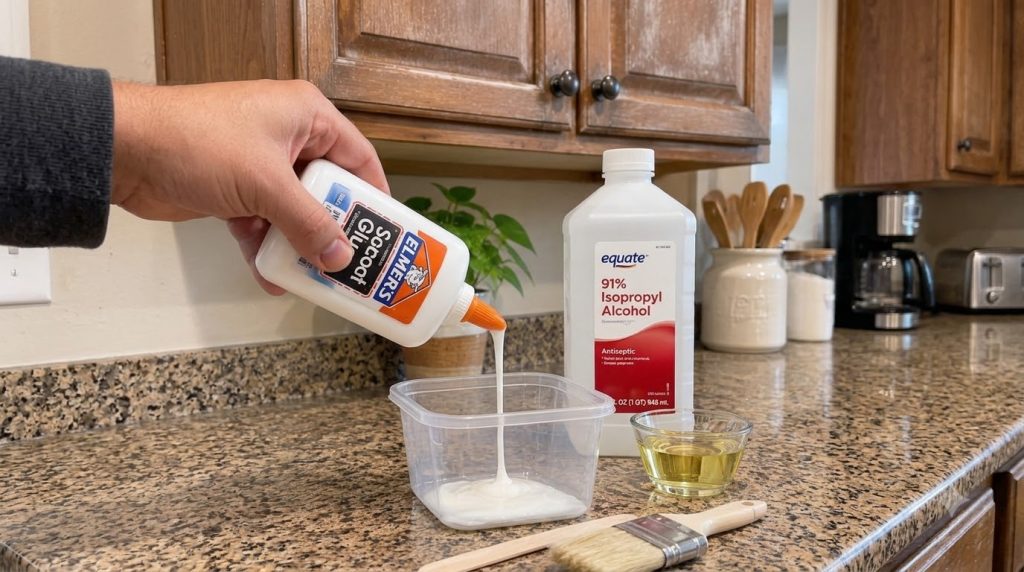
What Each Ingredient Does
- White school glue: Most school glues are polyvinyl acetate, a water-based polymer that dries into a flexible film. It provides the body and structure of the mixture.
- 91% rubbing alcohol: Isopropyl alcohol evaporates quickly and can cause water-based glue to thicken, separate, or form clumps. It also speeds up drying.
- Light yellow oil: Oils can change the texture and feel of a mixture, but they may not blend evenly with glue and alcohol. Treat this ingredient as optional and test it in a small amount first.
Tools and Containers to Use
Choose a disposable plastic cup, a small glass jar, or a silicone mixing bowl. Use a wooden stirrer or a plastic spoon that you do not plan to use for food. Keep a paintbrush nearby only if you intend to apply the mixture to a craft surface. Avoid metal containers, which can react with some glue formulas over time.
Step-by-Step Mixing Method
- Work in a well-ventilated area, away from heat sources, open flames, and pilot lights.
- Pour a small amount of white school glue into your container, starting with one tablespoon for a test batch.
- Add rubbing alcohol slowly, a few drops at a time, while stirring gently.
- Watch for thickening or clumping. Stop adding alcohol once the texture matches what you need.
- If you want to test the yellow oil, add only a few drops and stir until blended.
- Let the mixture rest for several minutes, then check consistency before using it.
Practical Uses and Limits
Mixtures like this are often used for craft projects, texture experiments, or quick modeling tasks on non-porous surfaces. Results depend heavily on the ratio of glue to alcohol and on the brand of glue you use. The mixture is not a proven stain remover, disinfectant, or general cleaner, so do not rely on it for those jobs. Always test a small hidden area before using any homemade mixture on furniture, walls, or fabric.
Safety Precautions
- Isopropyl alcohol is flammable. Keep it away from heat, flames, and sparks.
- Wear nitrile gloves and eye protection, and avoid breathing strong fumes.
- Never ingest the mixture or store it in food containers.
- Keep all ingredients away from children and pets.
- Label any leftover mixture clearly and dispose of it according to your local guidelines.
Working carefully with simple supplies can be a fun way to learn how household materials behave. Start with small test batches, record your ratios, and share what works best in the comments below.