Master Steak at Home: A Guide to Easy Steak Recipes
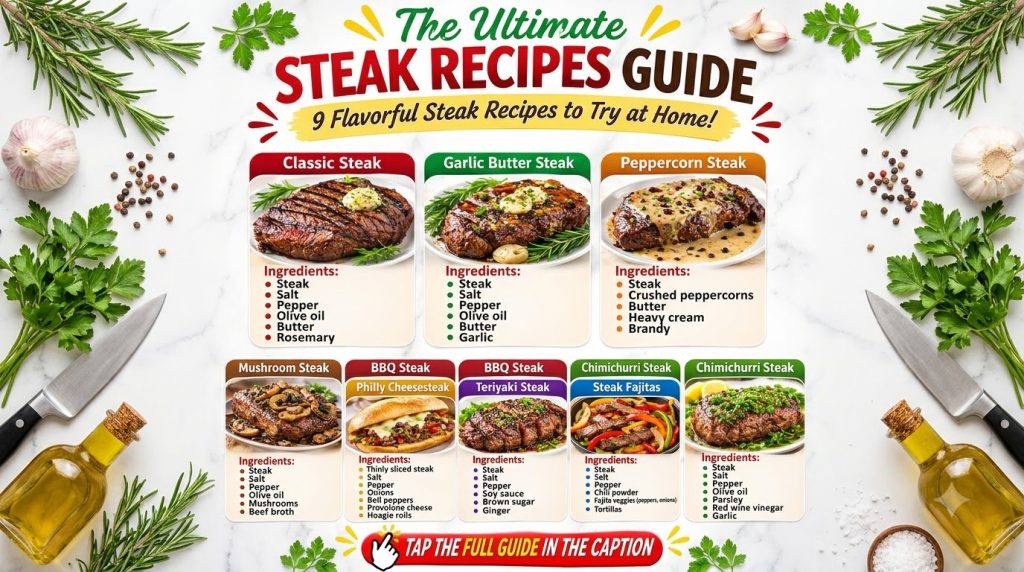
Steak is one of the most rewarding dishes to cook at home. With a hot pan, a little seasoning, and a few simple techniques, you can serve a restaurant-style dinner in about 30 minutes. This guide covers the core method for a great pan-seared steak, plus several popular ways to change up the flavors.
Why You’ll Love Cooking Steak at Home
- Quick cooking time, usually under 30 minutes for most cuts
- Only a few basic ingredients are needed
- Easy to adapt for weeknight dinners or special occasions
- Simple cleanup with one skillet
- Endless flavor options, from garlic butter to fajita-style seasoning
Classic Pan-Seared Steak
This is the foundation recipe. Once you learn it, you can use the same method for most of the variations below.
Ingredients
- 1 boneless steak, such as strip, ribeye, or sirloin, about 1 inch (2.5 cm) thick, 8 to 12 oz (225 to 340 g)
- 1 tsp kosher salt
- 1/2 tsp freshly ground black pepper
- 1 tbsp (15 ml) high-heat oil, such as canola or avocado oil
- 1 tbsp (14 g) unsalted butter
- 2 cloves garlic, lightly crushed
- A few sprigs fresh thyme or rosemary, optional
Instructions
- Take the steak out of the refrigerator about 30 minutes before cooking so it cooks more evenly. Pat it completely dry with paper towels, then season both sides generously with salt and pepper.
- Heat a heavy skillet, preferably cast iron, over medium-high heat for 2 to 3 minutes until it is very hot. Add the oil and let it shimmer.
- Lay the steak in the pan away from you. You should hear a strong sizzle. Do not move it for 3 to 4 minutes, until a deep brown crust forms.
- Flip the steak and cook another 2 to 4 minutes, depending on thickness and how you like it done. Add the butter, garlic, and herbs, then tilt the pan and spoon the melted butter over the steak for about 1 minute.
- Check doneness with an instant-read thermometer. Many cooks pull steak around 130 to 135 F (54 to 57 C) for medium-rare, then rest it. These are practical guidelines, and exact times will vary by thickness and stove.
- Transfer the steak to a cutting board and rest it for 5 to 10 minutes. Slice against the grain and serve.
Popular Steak Variations to Try
Once the basic method feels comfortable, these ideas are easy to try:
- Steak Fajitas: Season thin strips of flank or skirt steak with chili powder, cumin, garlic, and lime. Sear quickly over high heat with sliced bell peppers and onions. Serve in warm tortillas.
- Garlic Butter Steak: Finish the steak with extra garlic butter and a squeeze of lemon juice for a rich, simple sauce.
- Peppercorn Steak: Crush black peppercorns onto the steak before searing, then finish with a quick pan sauce made from cream and beef broth.
- Chimichurri Steak: Serve sliced steak with a fresh herb sauce made from parsley, garlic, vinegar, and olive oil.
- Steak Salad: Slice cooked steak over greens, cherry tomatoes, and a light vinaigrette for an easy lunch.
Common Mistakes to Avoid
- Cooking cold steak: Meat that has been in the fridge cooks unevenly. Let it sit at room temperature briefly first.
- Crowding the pan: Too many pieces lower the pan temperature and cause steaming instead of searing.
- Skipping the rest: Cutting in too soon lets the juices run out onto the board.
- Moving the steak too often: Let the crust form before flipping.
Serving Suggestions
Steak pairs well with roasted potatoes, buttered green beans, a simple green salad, or garlic mashed potatoes. For fajitas, serve with warm tortillas, sour cream, salsa, and guacamole.
Storage and Reheating
Store leftover cooked steak in an airtight container in the refrigerator and eat it within 3 to 4 days. To reheat, warm it gently in a skillet over low heat with a splash of broth or a little butter, just until warmed through. Avoid overheating, which can make the meat tough.
Frequently Asked Questions
What is the best cut of steak for beginners?
Sirloin and strip steak are forgiving choices. They are widely available and cook well in a hot pan.
How do I know when steak is done?
An instant-read thermometer is the most reliable tool. Pull the steak a few degrees before your target doneness because it will continue to rise while resting.
Why is my steak tough?
Overcooking, slicing with the grain, or skipping the rest are the most common causes. Slice thinly against the grain for more tender bites.
Can I cook steak without a cast iron pan?
Yes. Any heavy, flat-bottomed skillet works well as long as it gets hot before the meat goes in.
Which steak recipe will you try first? Share your favorite variation in the comments and let us know how it turned out.