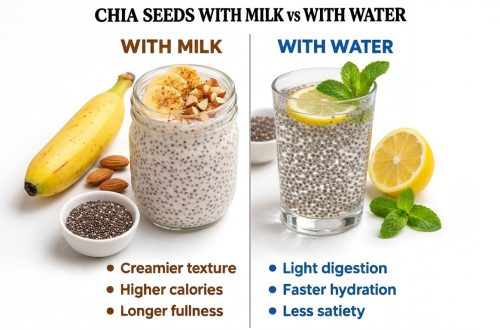
Chia seeds are easy to add to almost anything, but the liquid you soak them in can change how they fit into your day. Milk and water both turn chia into a soft, pudding-like texture, yet they bring different nutrition profiles to the bowl. Here is how each option may suit your wellness goals.
Why the Liquid Matters
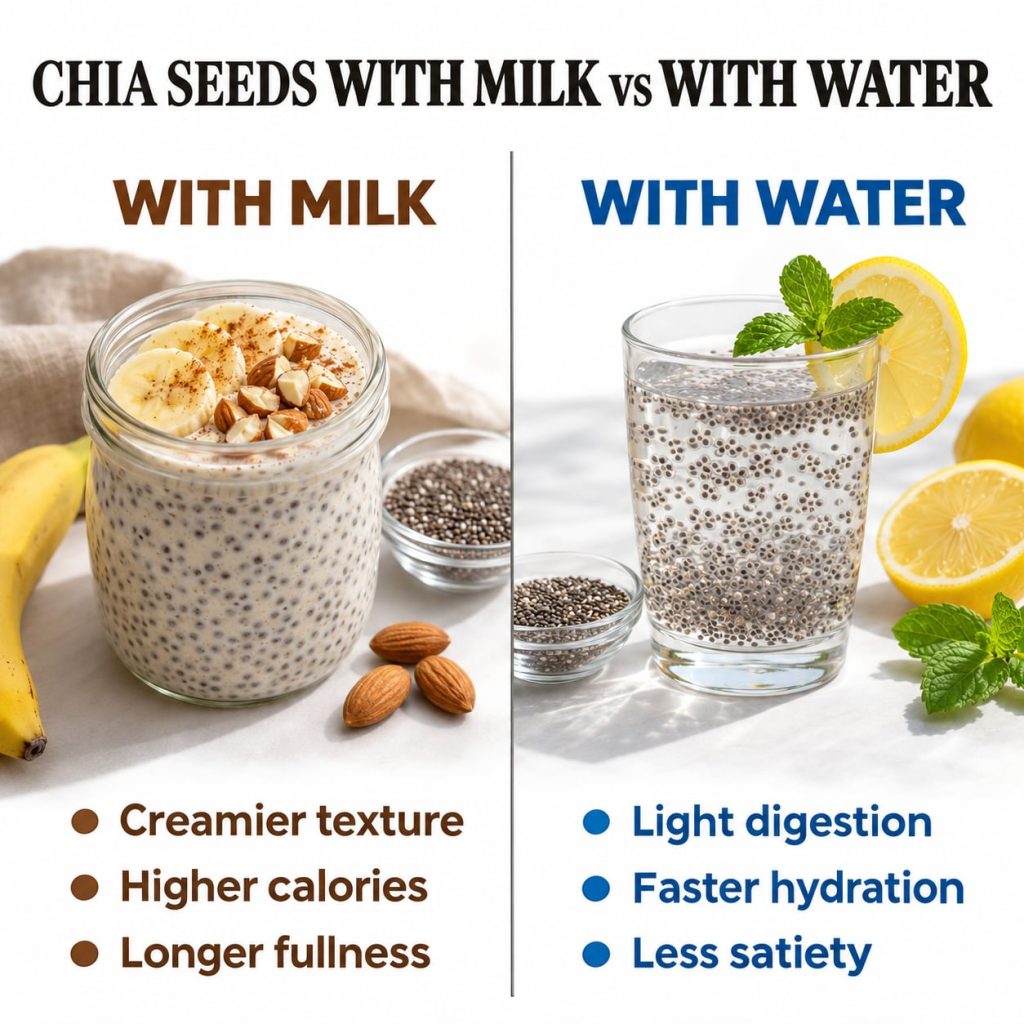
Chia seeds absorb liquid and form a gel around themselves. That gel helps create the familiar pudding texture. The liquid is not just a base, though. It adds its own calories, protein, fats, and minerals, so the final bowl can feel quite different depending on what you choose.
Chia Seeds Soaked in Water
Water is the simplest option. It keeps the dish light and adds almost no calories, which makes it a good fit for people who want a neutral base and plan to add their own flavors.
- Lower in calories, since water adds no energy on its own
- Lets the natural nutty flavor of chia come through
- Works well with fruit, cinnamon, or a small drizzle of honey
- Suits people who avoid dairy or prefer a plant-based routine
Chia Seeds Soaked in Milk
Milk gives chia pudding a richer, creamier texture and a more filling feel. Dairy milk contributes protein and calcium, while plant milks vary widely, so it helps to check the label for added sugar and fortification.
- Creamier, more dessert-like texture
- Adds protein and calcium, especially with dairy milk
- Can feel more satisfying as part of a breakfast or snack
- Choose unsweetened versions to keep sugar in check
How to Make a Simple Chia Pudding
Servings: 1
Prep time: 5 minutes
Chill time: at least 2 hours, or overnight
- Add 2 tablespoons chia seeds to a jar or small bowl.
- Pour in 3/4 cup water or milk of your choice.
- Stir well for about 30 seconds so the seeds do not clump.
- Let it sit for 5 minutes, then stir again to break up any clumps.
- Cover and refrigerate for at least 2 hours, or overnight, until thick.
- Top with fresh fruit, a pinch of cinnamon, or a teaspoon of honey before serving.
Chia pudding keeps in the refrigerator for up to 4 days in a sealed container.
Which Should You Choose?
There is no single right answer. Water is a good choice if you want a lighter, lower-calorie base. Milk may suit you better if you want a creamier texture and a bit more protein and calcium. Many people rotate between the two depending on their schedule and goals.
Frequently Asked Questions
Do I need to soak chia seeds before eating them?
Soaking is not strictly required, but it helps chia seeds soften and gives them a pleasant texture. Dry seeds can also be sprinkled over yogurt, oats, or salads.
Can I mix milk and water?
Yes. A blend of half milk and half water is a practical middle ground if you want some creaminess without the heaviness of a full milk base.
Final Thoughts
Milk and water are both simple ways to prepare chia seeds for breakfast, snacks, or desserts. The liquid you choose shapes the flavor, texture, and nutrition of the final dish, so it is worth matching it to your own goals. Which do you prefer? Tell us in the comments.
Medical disclaimer: This article is for general information only and is not a substitute for professional medical advice. If you have a health condition, allergy, or dietary restriction, please consult a qualified healthcare professional before changing your diet.