A foggy windshield on a cold morning or a dusty dashboard that looks dull no matter how often you wipe it can make everyday driving more frustrating than it needs to be. Two common household products, shaving cream and a simple olive oil and vinegar mix, can help with both problems when used carefully. Here is how to try them and what results to realistically expect.
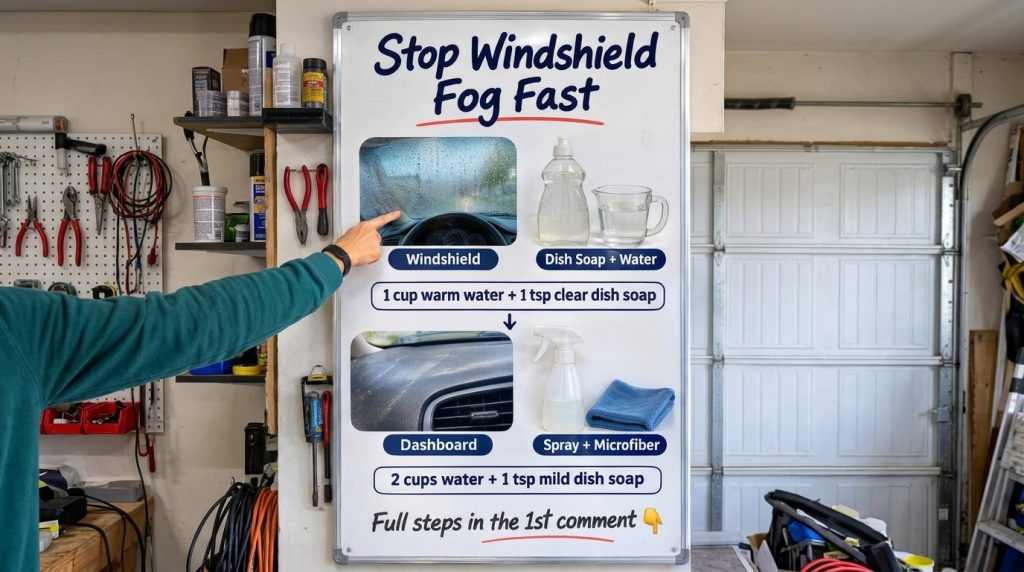
Part 1: Stop a Windshield From Fogging Up
What You’ll Need
- Plain white shaving cream (not gel or a colored variety)
- Two clean, dry microfiber cloths
- Clean water and a small cloth for final wiping (optional)
Why This Works
Fog forms when warm, moist air inside the car condenses on the cooler glass. Shaving cream leaves a very thin film on the glass that helps keep that moisture from beading up into visible droplets. It does not stop fog from forming in extreme conditions, so think of it as a helpful supplement to your defroster rather than a replacement for it.
How to Apply It
- Make sure the inside of the windshield is clean and dry. Dirt and oily film can cause streaks.
- Squeeze a small dollop of shaving cream onto a dry microfiber cloth. A little goes a long way.
- Rub it in a thin, even layer across the inside of the glass in small circular motions.
- Buff with a second clean, dry cloth until the glass looks clear and no white residue remains.
- Check the glass from the driver seat. It should look clear, not hazy or streaked.
What to Expect
The treated glass should resist fogging better than untreated glass, especially on mild, damp days. You may still need to run the defroster on very humid or cold mornings. Reapply every few weeks, or when you notice fog returning sooner than usual.
Part 2: Clean a Dusty Dashboard
What You’ll Need
- Olive oil (any regular cooking olive oil works)
- Clear white vinegar
- Distilled or clean tap water
- A small spray bottle
- Soft microfiber cloths
Why This Works
Vinegar helps loosen grime and dust, while a small amount of olive oil leaves a light, non-greasy protective sheen that makes dust less likely to cling to the surface. Because both are mild, this mix is a gentler option for many interior plastics. Still, it is not right for every surface, so test first.
How to Make It
- Pour equal parts clear vinegar and water into a clean spray bottle. For a light mix, use about one part vinegar to two parts water.
- Add only a few drops of olive oil. Too much will leave a sticky, greasy film that attracts more dust.
- Shake well before each use so the oil blends in.
How to Use It
- Lightly mist a microfiber cloth, not the dashboard directly. This keeps liquid away from vents, seams, and electronics.
- Wipe the dashboard in one direction, working from top to bottom.
- Go over the surface with a second dry cloth to remove any leftover moisture and oil.
- Use a soft brush or cotton swab for the air vents and tight corners.
What to Expect
The dashboard should look cleaner and have a softer, more even finish with less dust settling on it. This is a surface cleaning method, so it will not restore faded or cracked trim. Repeat once a week or as needed.
Helpful Tips
- Clean the windshield first, then the dashboard, so any drips or overspray from cleaning the interior do not stain freshly treated glass.
- Keep a spare dry microfiber cloth in the car for quick touch-ups.
- Wipe any extra oil off with a dry cloth. Leftover residue is the most common reason dashboards look greasy after this method.
Important Notes and Safety
- Test the vinegar mix on a small, hidden area first. Vinegar can dull or damage some finishes, especially leather, suede, and certain coated plastics.
- Do not spray any cleaner onto touchscreens, navigation displays, instrument clusters, or speakers. Apply it to a cloth instead.
- Avoid using this mix on leather seats or unsealed wood trim.
- Keep shaving cream and vinegar away from children and pets, and wash your hands after handling them.
- Do not rely on a treated windshield for visibility. If fog keeps you from seeing clearly, turn on your defroster and use fresh air settings until the glass is fully clear.
- Store the spray bottle out of direct sunlight and label it clearly, since it is not meant for drinking or cooking use.