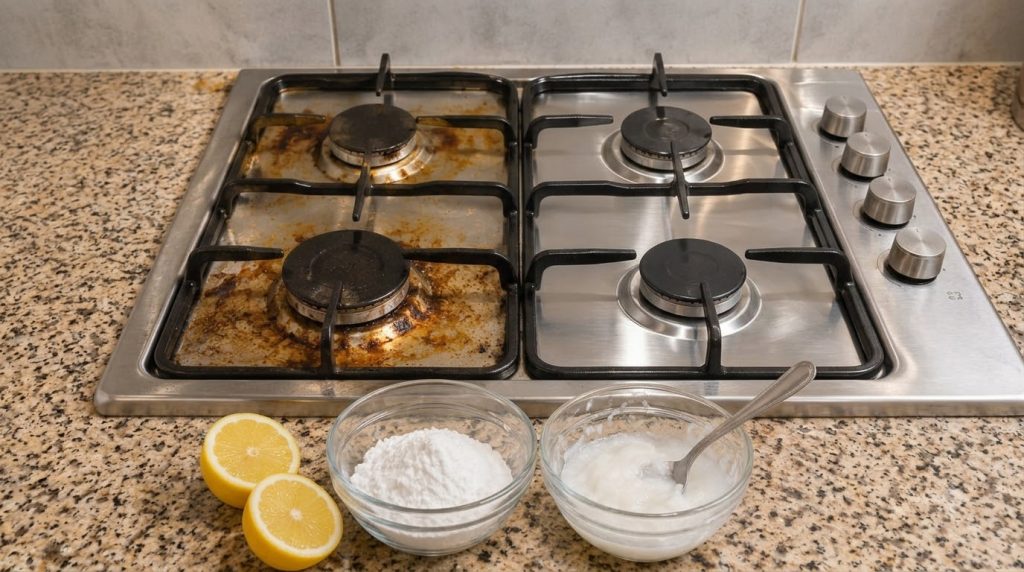
Few things make a kitchen feel more tired than a greasy, grimy stovetop. Burner caps lose their shine, grates turn dull, and the stainless steel surface collects stains that seem to appear overnight. The good news is that you do not need harsh chemicals to bring it back. With two simple ingredients you probably already have at home, lemon and baking soda, you can achieve a remarkable glow-up.
Why Lemon and Baking Soda Work So Well
Baking soda is a mild alkaline powder that helps lift grease and loosen baked-on residue without scratching most surfaces when used gently. Lemon juice contains citric acid, which helps cut through mineral deposits and leaves a fresh, clean scent behind. Together, they form a paste that is gentle enough for regular kitchen use yet effective on everyday buildup.
What You Will Need
- Baking soda, about half a cup
- Fresh lemon, one or two halves
- Warm water, a few tablespoons if needed
- A small bowl and a spoon
- Soft cloths or a non-scratch sponge
- A soft brush for grates and crevices
Step-by-Step Cleaning Process
Step 1: Turn Off and Cool the Stove
Make sure all burners are off and the cooktop has cooled completely. Remove the grates and burner caps so you can reach the grease that collects underneath them.
Step 2: Make the Cleaning Paste
In a small bowl, mix baking soda with a little lemon juice until it forms a thick, spreadable paste. Add a few drops of warm water if the mixture feels too dry. The consistency should be similar to toothpaste.
Step 3: Apply and Let It Sit
Spread the paste over greasy areas of the stainless steel surface, grates, and burner caps. Allow it to sit for about 10 to 15 minutes so it can loosen stubborn grime.
Step 4: Scrub Gently
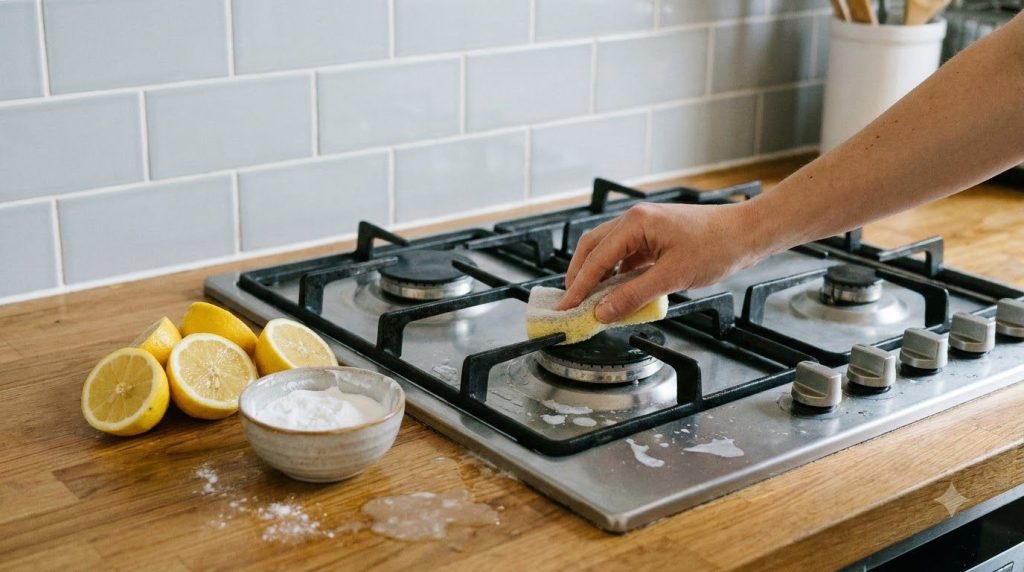
Use a soft brush or non-scratch sponge to work in small circular motions. Follow the grain of the stainless steel to avoid visible scratches. Focus on corners and around the burners where grease tends to build up.
Step 5: Rinse and Wipe Dry
Wipe away the paste with a damp cloth, then rinse the cloth and wipe again to remove any residue. Dry the surface thoroughly with a clean microfiber towel to bring back the reflective shine.
Tips for Keeping Your Stove Clean
- Wipe up spills as soon as the stove cools to prevent them from hardening.
- Clean the stovetop lightly once a week to avoid heavy buildup.
- Test the paste on a small hidden area first if your cooktop has a special finish.
Final Thoughts
A clean stove does more than look good. It makes cooking more pleasant and helps your kitchen feel fresh and cared for. With lemon and baking soda, a simple routine can deliver a stunning transformation using ingredients you already have on hand. What natural cleaning tricks do you rely on in your home?