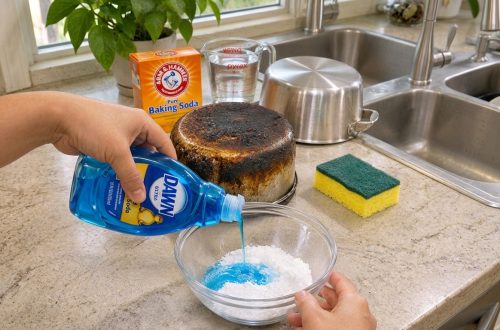
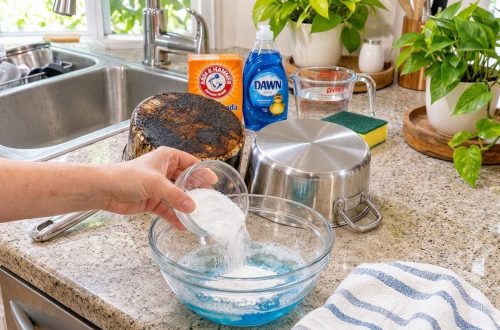
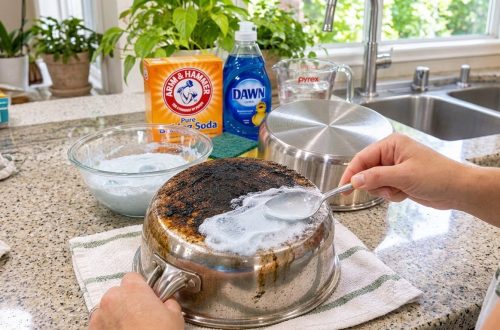
Coca-Cola and dish soap in one cup sounds like a wild kitchen experiment, and it is easy to see why it has caught people’s attention. Many home cleaning videos promise that a common soda can cut through a greasy stovetop in minutes. Before you try it, let’s look at what actually happens, what the mixture can and cannot do, and which cleaning methods are safer and more effective.
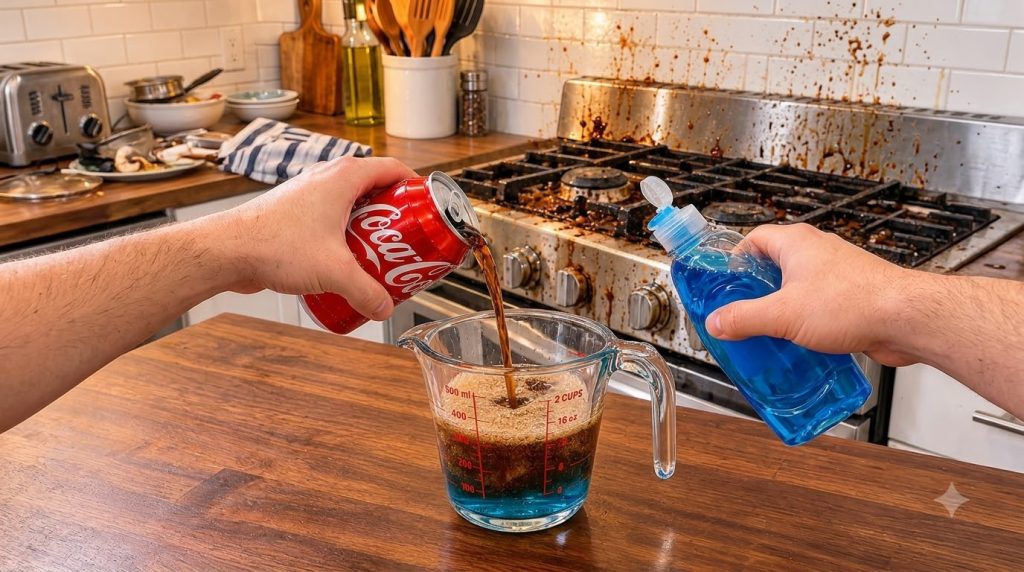
Why the Idea Became Popular
Cola is acidic and contains sugar, and some people believe these ingredients can loosen stuck-on food and grime. Dish soap, on the other hand, is designed to break down grease. Put them together and the result looks dramatic, which makes it attractive for short videos. The foam and color changes are visually impressive, but they do not prove that the mixture cleans well.
What Actually Happens on a Stovetop
Cola can soften some light residue, but it also leaves behind sugar and sticky film. Sugar that is not fully rinsed away can attract dust and make the surface feel tacky again. Dish soap helps lift grease, yet mixing it with a sugary drink does not make it stronger. In many cases, you will simply spend more time wiping and rinsing than you would with a simple cleaning solution.
Potential Risks to Keep in Mind
- Sticky sugar residue may remain on glass, metal, or enamel surfaces.
- Soda can dull some finishes if left on too long.
- Foaming mixtures can spill over and create a slippery floor.
- Mixing cleaning products with other chemicals can be dangerous, so never combine dish soap with bleach or ammonia.
Safer and More Effective Stovetop Cleaning Methods
If your goal is a clean stovetop, reliable methods usually work better than experimental mixtures. Here are some simple options that many households already have.
- Warm soapy water: Mix a few drops of dish soap into warm water, soak a cloth, and wipe the surface. Rinse with clean water and dry.
- Baking soda paste: Combine baking soda with a little water to form a paste. Spread it over stubborn spots, let it sit for about 10 minutes, then scrub gently and wipe clean.
- White vinegar solution: Use equal parts vinegar and water for light grease and mineral marks. Test on a small area first, especially on natural stone or special finishes.
- Scraping before cleaning: For dried-on food, use a plastic scraper while the surface is still slightly warm, then clean as usual.
Tips for a Cleaner Kitchen Routine
Consistency matters more than strong mixtures. Wipe the stovetop after each use while it is still warm, which prevents grease from hardening. Keep a microfiber cloth nearby and replace it when it starts to smell or look dingy. Check your appliance manual for approved cleaning products, since some glass cooktops and stainless steel surfaces need specific care.
The Verdict
The Coca-Cola and dish soap combination is more of a viral experiment than a dependable cleaning method. It may look impressive in a video, but it can leave sticky residue and does not offer clear advantages over basic soapy water or a baking soda paste. For a stovetop that needs real attention, start with gentle, tested methods and save your experiments for the things that will not damage your kitchen.
What do you think will happen when these two team up? Share your predictions in the comments and tell us which cleaning hacks you would like us to test next!