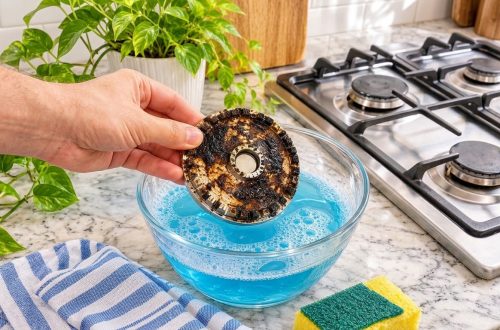
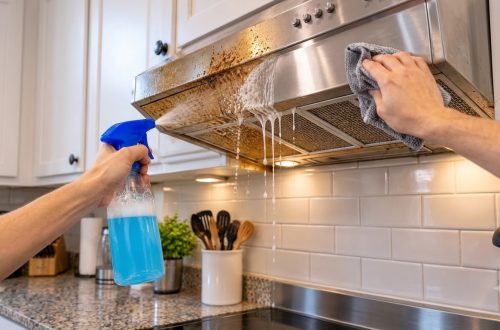
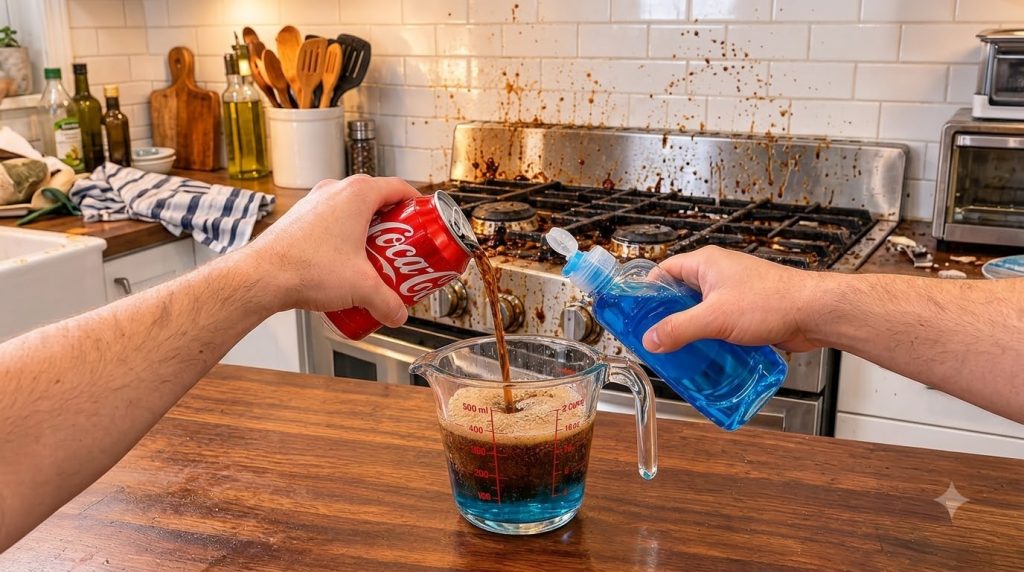
Every home cook has faced it: a greasy stovetop, a baked-on pan, or a backsplash splattered with sauce that seems to resist every wipe. When the usual sprays fail, many people start searching for an unusual fix. One popular idea making the rounds online is mixing cola with dish soap. The combination looks dramatic in videos, but it is worth understanding what it can and cannot do before you try it in your own kitchen.
Why Cola Gets Attention as a Cleaner
Cola contains phosphoric acid and sugar. The acid can help loosen some mineral deposits and light rust stains, which is why people have used soft drinks on certain stubborn spots for years. The sugar and syrup can also soften some sticky residue, making it easier to lift off with a cloth. These effects are real, but they are limited and vary widely depending on the surface and the type of mess.
What Dish Soap Adds to the Mix
Dish soap is designed to cut grease. Its surfactants lift oil so that water can carry it away. When combined with a mildly acidic liquid, a bit of soap may help break up greasy film on some hard surfaces. However, cola is sticky, and the sugar can leave a tacky residue if it is not rinsed away thoroughly. That residue can attract dust and grime, so the clean-up may create a new problem.
Where This Hack Makes Sense and Where It Does Not
Before trying any unusual cleaning mix, consider the surface you are working on:
- Stainless steel: Mild dish soap and warm water usually work best. Cola may leave a sticky film that needs extra rinsing.
- Ceramic tile and grout: A gentle soap solution is safer. Acidic drinks can wear down grout over time.
- Natural stone such as marble or granite: Avoid acidic cleaners entirely, since they can etch the surface.
- Wood countertops: Keep liquids to a minimum and dry the surface promptly to prevent water damage.
A Safer Approach to Tough Kitchen Grime
If you want to tackle stubborn grease without experimenting with sugary drinks, a simple method works well for most kitchens. Mix a few drops of dish soap with warm water, apply it to the spot, let it sit for a few minutes, and scrub gently with a soft cloth or sponge. For mineral buildup, a mixture of equal parts white vinegar and water is a common alternative. Always test any solution on a small, hidden area first.
Important Safety Reminders
Never mix cleaning products with other chemicals, especially bleach and ammonia-based cleaners, because toxic gases can form. Keep young children and pets away while cleaning, and ventilate the room well. Rinse all surfaces with clean water after cleaning so that no sticky or acidic residue remains.
The Bottom Line
The cola and dish soap combination is an eye-catching kitchen experiment, but it is not a miracle solution. Cola may loosen a few stains, and dish soap cuts grease well, yet the results are inconsistent and can leave sticky residue behind. For most homes, a gentle soap solution, a little patience, and the right cleaner for each surface will get better and safer results. What is your go-to trick for tackling kitchen grime? Share it in the comments and help other readers keep their kitchens spotless.