Stubborn stains and everyday grime have a way of showing up in the most inconvenient places. A stain on a white shirt, greasy film near the stove, dingy grout between tiles, or a sticky patch on a light countertop can make a clean kitchen feel anything but clean. This simple homemade cleaning paste is a practical way to tackle those tough spots without reaching for harsh chemicals.
This guide is for anyone who wants a straightforward, budget-friendly cleaner made from ingredients most households already have. Whether you are new to DIY cleaning or you just want a reliable go-to recipe for spot cleaning, you will learn what goes into the paste, how to mix it safely, where it works best, and how to store any leftovers.
Quick Summary
- Preparation Time: About 5 minutes
- Application Time: 10 to 15 minutes of dwell time, plus scrubbing
- Difficulty Level: Beginner
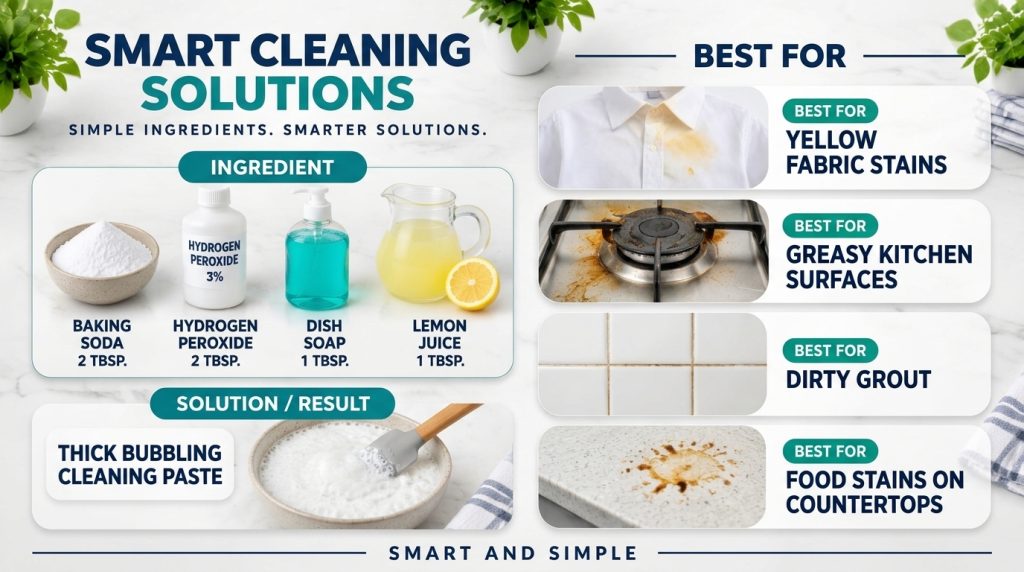
- Best Uses: Fabric spot stains, greasy kitchen areas, grout lines, food stains on countertops
- Suitable Surfaces: Sealed tile, grout, glass, stainless steel, many sealed countertops (test first)
- Storage Time: Make fresh each time. Do not store the mixed paste.
Why You’ll Love This DIY Solution
- Made from common household ingredients
- Budget-friendly compared with many specialty cleaners
- Beginner-friendly with no special skills needed
- Works on a range of stains and grime
- Quick to mix and easy to apply with a brush or cloth
- Lets you control exactly what goes into your cleaning routine
Ingredients and Materials
- 2 tablespoons baking soda (substitution: none needed)
- 2 tablespoons hydrogen peroxide, 3% solution (use only the 3% strength found in drugstores)
- 1 tablespoon liquid dish soap (a turquoise or any standard grease-cutting dish soap)
- 1 tablespoon fresh lemon juice (bottled lemon juice works if fresh is not available)
Equipment Needed
- Small mixing bowl (glass or ceramic)
- Measuring spoons
- Silicone or wooden spatula
- Soft-bristled brush or old toothbrush
- Microfiber cloths
- Gloves
- Spray bottle of water for rinsing, if needed
Step-by-Step Instructions
-
Put on gloves and open a window. Good ventilation keeps the area fresh while you work. Expected result: a safe, comfortable workspace. Time: 1 minute.
-
Add the baking soda to your bowl. Spoon in 2 tablespoons of baking soda. Helpful tip: use a dry bowl so the powder stays loose and easy to mix. Time: 30 seconds.
-
Stir in the dish soap. Add 1 tablespoon of liquid dish soap and stir until the mixture looks like a soft, damp sand. Expected result: a slightly grainy base that clings to surfaces. Time: 1 minute.
-
Add the lemon juice. Pour in 1 tablespoon of lemon juice and stir gently. You may notice some light fizzing. Let it settle for a moment before the next step. Time: 1 minute.
-
Add the hydrogen peroxide slowly. Pour in 2 tablespoons of 3% hydrogen peroxide a little at a time while stirring. Expected result: a thick, bubbling paste that looks similar to the one in the poster. Stop adding liquid if it becomes too runny to hold its shape. Time: 1 to 2 minutes.
-
Test on a hidden spot. Dab a small amount onto a hidden area of the item or surface and wait 10 minutes. Check for discoloration, dullness or damage before going further. Time: 10 minutes.
-
Apply the paste to the stain or grime. Use a spatula or brush to spread a thin layer over the spot. For grout, work it into the lines. For fabric, apply it directly to the stain. Expected result: the paste covers the area and begins to lift surface grime. Time: 2 minutes.
-
Let it sit. Leave the paste on for 10 to 15 minutes. Do not let it dry completely on fabric or light surfaces, because a thin, damp layer works better. Time: 10 to 15 minutes.
-
Scrub gently. Use a soft brush or old toothbrush in small circular motions. For fabric, rub gently with a cloth and avoid scrubbing so hard that the fibers fray. Expected result: stains and grime loosen. Time: 2 to 5 minutes.
-
Wipe and rinse. Remove the residue with a damp microfiber cloth, then rinse the area with clean water. For fabric, rinse under cool water and launder as usual once the stain is gone. Expected result: a clean surface with no sticky film left behind. Time: 3 minutes.
-
Dry and check. Let the surface air dry or dry the fabric as you normally would. If a stain remains, repeat the process with a fresh batch. Time: varies.
Best Uses
Fabric Stains
Try the paste on yellow stains on a white shirt or other light, colorfast fabrics. Always test first, because hydrogen peroxide can lighten some dyes.
Greasy Kitchen Surfaces
Use it around a gas stove burner or on greasy areas of a backsplash. Keep the paste away from open flames and hot burner parts, and make sure the stove is cool before you start.
Grout Between Tiles
Work the paste into light-colored grout lines with a brush. It works best on sealed grout. Be cautious with unsealed grout or natural stone.
Food Stains on Countertops
Apply to food stains on light countertops, but only if the surface is sealed and tested first. Avoid using it on marble, granite or other natural stone because acidic lemon juice can dull the finish.
Safety Notes
- Wear gloves to protect your skin from irritation.
- Test on a small, hidden area before using the paste on any item or surface.
- Keep the paste and its ingredients away from children and pets.
- Never mix this paste with bleach, vinegar or ammonia. Those combinations can create dangerous fumes.
- Ensure good ventilation while mixing and cleaning.
- Do not use this paste on marble, natural stone or unsealed surfaces because lemon juice can etch them.
- Rinse the area well so no residue is left on food-contact surfaces.
Expert Tips
- Mix only what you need for one cleaning session. Fresh paste works best.
- Add the hydrogen peroxide slowly so you can control the consistency.
- Use a soft brush for grout and a cloth for fabric to avoid damaging the material.
- Keep a damp cloth nearby to wipe away residue quickly.
- For delicate fabrics, do a spot test and consider a professional cleaner for valuable items.
- Clean the bowl and spatula right after use to keep them free of dried residue.
- Lemon juice can fade some colors, so be extra careful with colored surfaces and fabrics.
Storage Instructions
This paste is best made fresh and used right away. Once the ingredients are combined, the fizzing reaction continues, so sealing it in a container is not recommended. If you have a small amount left, let it finish reacting in an open bowl and discard it safely. Store the dry ingredients separately in airtight containers in a cool, dry cabinet away from direct sunlight. Discard any dry ingredients that clump, smell off or change color. Keep all ingredients out of reach of children and pets.
Frequently Asked Questions
Can I store this paste?
It is not recommended. The mixed paste reacts and changes over time, so make only what you need for each use.
How long does the paste last?
Use it within the same session. It loses its effect as it sits and reacts.
Can I use it on marble?
No. Lemon juice and other acidic ingredients can etch or dull marble, so choose a different cleaner for natural stone.
Can I replace an ingredient?
You can use bottled lemon juice in place of fresh. Avoid swapping in vinegar, because it should not be mixed with hydrogen peroxide.
Is this safe around pets?
Keep pets away while the paste is being used and until the area is fully rinsed and dry. Store all ingredients out of their reach.
Can I use this on colored fabric?
Test first on a hidden seam. Hydrogen peroxide can lighten some dyes, so colored fabrics carry a higher risk.
Will this remove every stain?
Results vary by stain age, fabric type and surface. Some stains may need more than one treatment or professional help.
Conclusion
This simple paste shows how a few common household ingredients can handle everyday messes around the home. With careful testing, good ventilation and gentle scrubbing, you can clean stains on fabric, greasy kitchen areas, grout and food spills without relying on harsh products. Try it on a small area first, follow the safety notes, and enjoy a cleaner, tidier home. Happy cleaning!