Why a Clean Fridge Gasket Matters
The gasket is the rubber seal around your refrigerator door. It keeps cold air inside so the appliance does not have to work harder to stay cool. When it is coated with grime, it can also trap food residue and moisture, which encourages mold and unpleasant odors. A quick, regular cleaning keeps the seal flexible, hygienic and efficient.
What You Will Need
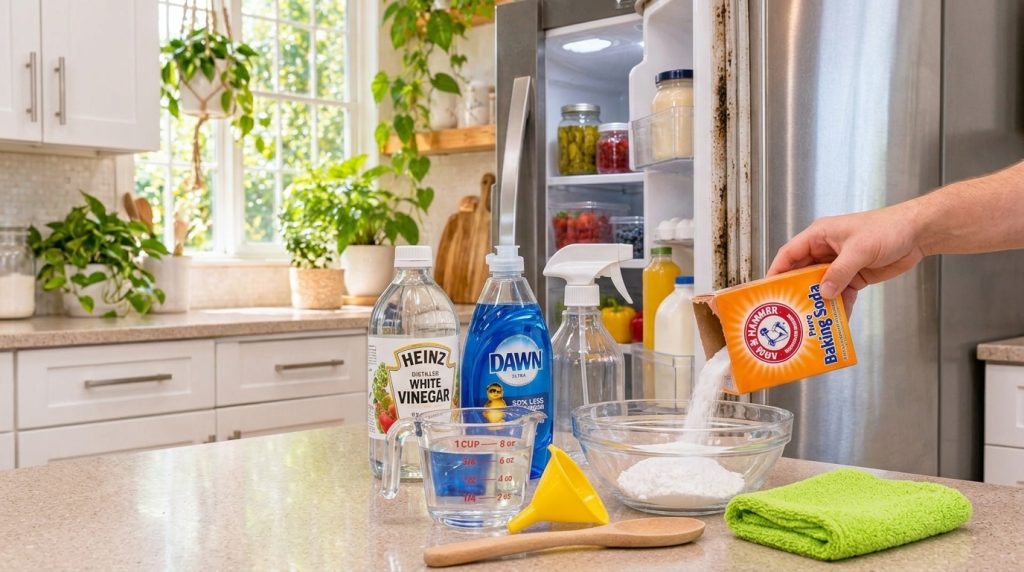
- 1 tablespoon of baking soda
- A few drops of Blue Dawn dish soap
- White vinegar
- Water
- A small bowl and a spoon
- An old toothbrush or soft cleaning brush
- 2 clean microfiber cloths
Why This Combination Works
Baking soda is a mild abrasive that lifts stuck-on grime without scratching the rubber. Blue Dawn dish soap is a degreaser that breaks down oily residue and fingerprints. White vinegar is mildly acidic, which helps cut mineral deposits and leave a fresh finish. Each ingredient handles a different part of the job, so the cleaning works best when you use them in sequence rather than mixing everything into one container.
Step-by-Step Cleaning Method
- Prepare the area. Empty the door shelves near the gasket and wipe away any loose crumbs.
- Make a gentle paste. In a small bowl, combine about 1 tablespoon of baking soda with 2 to 3 drops of Blue Dawn and a teaspoon of water. Stir until it forms a spreadable paste.
- Scrub the folds. Dip the toothbrush into the paste and work it into the ridges and folds of the gasket. Use small circular motions and focus on dark or sticky areas.
- Let it sit briefly. Allow the paste to rest for 5 to 10 minutes so it can loosen stubborn grime.
- Wipe away the paste. Dampen a microfiber cloth with plain water and remove all the residue. Rinse the cloth often.
- Apply a vinegar rinse. Mix equal parts white vinegar and water in a spray bottle. Lightly mist the gasket, then wipe it with a clean cloth to remove any film and freshen the surface.
- Dry completely. Use a dry cloth to wipe the gasket and the surrounding door edges. Leave the door open for a few minutes so no moisture remains in the folds.
Important Safety Notes
- Never mix vinegar and baking soda in the same container for cleaning. They react and fizz, which cancels out much of their cleaning power. Use them one after the other.
- Never combine vinegar, dish soap or baking soda with bleach or ammonia. Mixing these can release harmful fumes.
- Avoid harsh scrubbing pads or abrasive powders, which can tear or dull the rubber gasket over time.
- Test any cleaner on a small hidden area first if your gasket is older, cracked or unusually delicate.
- Keep cleaning solutions away from children and pets, and rinse food-contact surfaces thoroughly.
How Often Should You Clean the Gasket?
For most households, a light cleaning once a month is enough to prevent buildup. Homes with children, pets or frequent cooking may benefit from a check every two weeks. Wipe up spills right away, since dried sauces and drips are much harder to remove later.
Tips for Keeping the Seal in Good Shape
- Check the gasket for cracks, tears or flattened areas and replace it if the seal no longer closes firmly.
- Clean the surrounding door edges and the floor below the fridge, where dust and crumbs often collect.
- Keep the fridge at a steady, cool temperature so condensation does not build up around the seal.
- Dry the gasket after every deep clean to discourage mold growth.
Final Thoughts
Cleaning your fridge gasket is one of the most affordable home maintenance tasks you can do. With baking soda, a drop of dish soap and a little white vinegar, you can remove grime, freshen the seal and help your refrigerator run more efficiently. A few minutes of regular care can make a noticeable difference in hygiene and energy use.