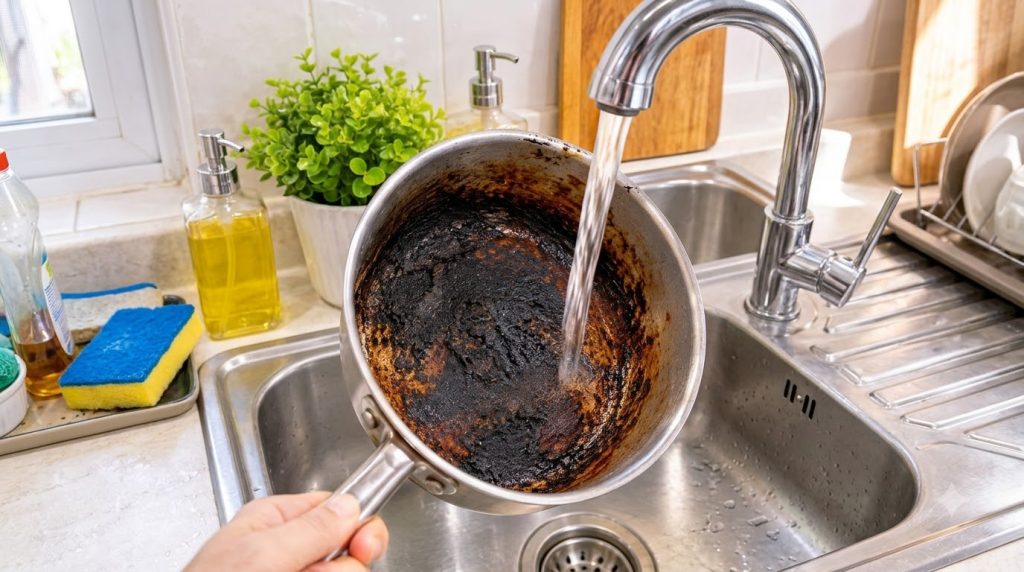
We have all been there. Cooking is going beautifully, the smell is perfect, and then you get distracted for a minute and the bottom of the pot turns black. A burnt pot is one of the most common kitchen mishaps, and even experienced home cooks face it from time to time.
Why Food Sticks and Burns
Most burnt pots happen for a simple reason. Food proteins and sugars cling to the metal when heat is too high or when liquid cooks away too quickly. Once the bottom starts to char, the residue bonds tightly to the surface, which is why rinsing alone rarely works.
Step-by-Step Method to Loosen the Residue
-
Let the pot cool down slightly, then pour out any loose food. Avoid cold water on a very hot pot, since sudden temperature changes can warp some metals.
-
Fill the pot with enough water to cover the burnt area, then add two to three tablespoons of baking soda.
-
Bring the water to a gentle boil and let it simmer for 10 to 15 minutes. The heat and baking soda help soften the crust.
-
Turn off the heat, let the pot cool, and scrape gently with a wooden spoon or plastic spatula.
-
Wash with warm soapy water and a non-abrasive sponge, then rinse and dry completely.
Alternative Tricks That Work Well
If you prefer a different approach, white vinegar can also help. Mix equal parts vinegar and water, boil the mixture in the pot, and then scrape once it cools. For stubborn spots, a soak of warm water with a generous spoonful of dish soap can loosen residue overnight. These methods are gentle and suitable for most everyday cookware.
Tools to Keep on Hand
- Baking soda, which is inexpensive and effective for lifting burnt food.
- White vinegar, useful for mineral deposits and light residue.
- A wooden spoon or plastic scraper that will not damage the surface.
- A non-abrasive sponge for finishing the job without scratching.
Prevention Tips for Next Time
Cooking on medium heat is often enough for sauces, rice, and milk-based dishes. Stir regularly, especially near the bottom of the pot, and use enough liquid when simmering. A heavy-bottomed pan spreads heat more evenly, which lowers the chance of hot spots that scorch food.
Final Thoughts
A burnt pot does not have to be the end of a good meal or a good pot. With a little patience, baking soda or vinegar, and gentle scraping, most cookware can look like new again. So, what is your secret for cleaning a pot like this?