Most people keep a jar of petroleum jelly in the medicine cabinet and never think about it again. Yet this simple product can quietly solve several small garden and household problems, from rusty tools to sticky hands. Here is the part most people skip: it works best as a thin protective barrier, not as a thick coating.
What Petroleum Jelly Is and Why It Helps
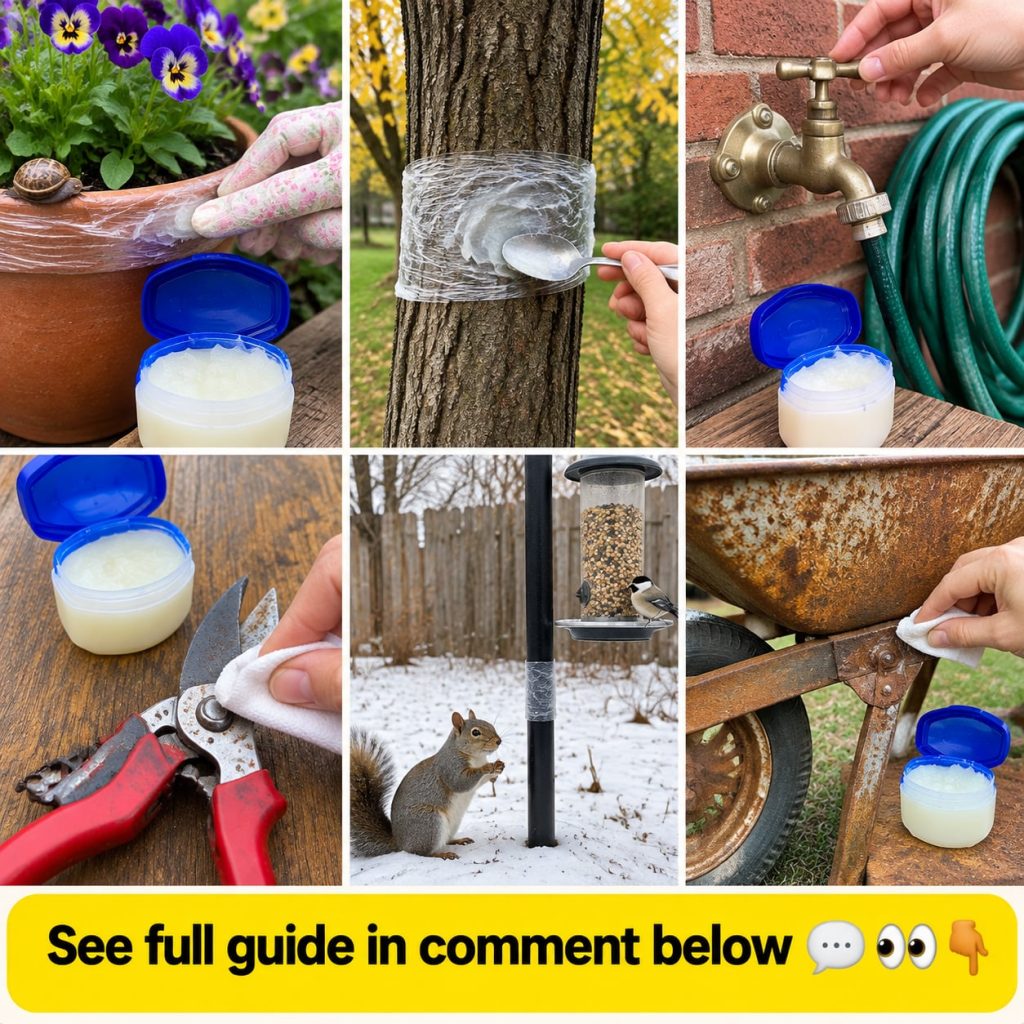
Petroleum jelly is a semi-solid mixture of mineral oil and wax. It is water-resistant, slow to evaporate, and does not react easily with metal, which is why it works as a barrier. It does not clean, kill pests, or repair structural damage. Think of it as a shield that keeps moisture, dirt, and air away from a surface.
Materials You Need
- 1 small jar of plain petroleum jelly (about 100 g)
- A clean, dry cloth or paper towel
- A cotton swab for small areas
- Mild dish soap and warm water for preparation
- Fine steel wool or a wire brush for light rust
Approximate Measurements
For garden tools, a pea-sized amount rubbed across a 10 cm section of blade is usually enough. For a hand barrier, a thumb-sized dab per hand works well. For a metal zipper, one or two small dabs along the teeth is plenty.
Step-by-Step: Protecting Garden Tools From Rust
- Wipe off soil, sap, and moisture with a dry cloth.
- Remove light surface rust with fine steel wool, then wipe away the dust.
- Apply a thin film of petroleum jelly to metal blades and joints with a clean cloth.
- Buff off the excess so the surface looks almost dry.
- Store tools in a dry shed or hang them indoors.
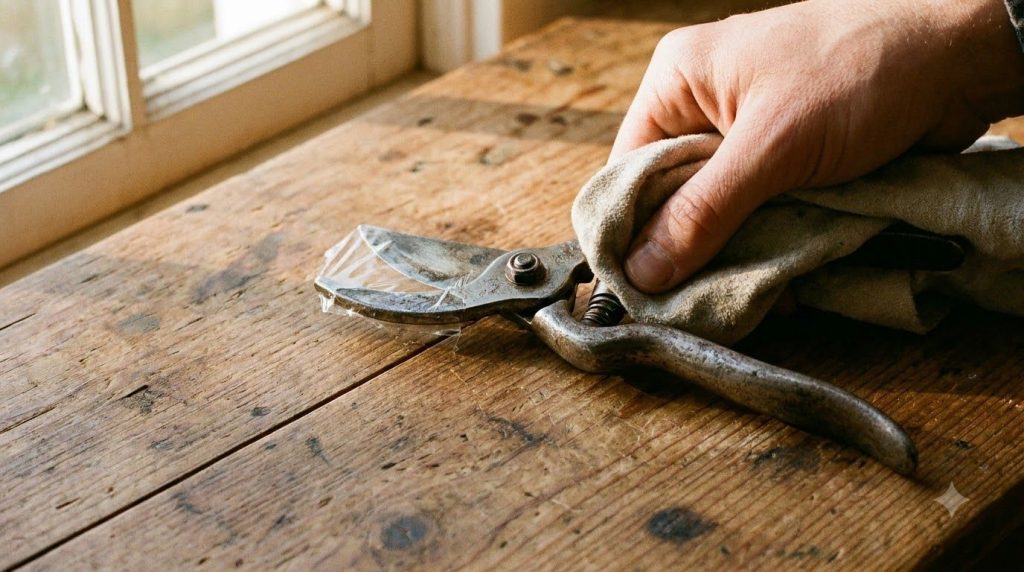
Quick Tip: Clean the tool first. Petroleum jelly traps whatever is underneath it, so applying it over grit creates a grinding paste.
Garden Uses That Actually Work
Hand Barrier Before Gardening
A small amount rubbed on knuckles and cuticles before work can make soil and plant sap easier to wash off later. It is not a replacement for gloves when handling thorny plants or treated soil.
Cleaning Sticky Sap and Tar
Dab petroleum jelly on resin or tree sap on your skin, let it sit for about a minute, then wash with soap and warm water. The sap loosens more easily than with dry scrubbing.
Protecting Pot Rims and Edges
Some gardeners run a thin line along pot rims or raised bed edges to slow slugs. Results vary, so treat this as a simple experiment rather than a guaranteed pest solution.
Household Uses Worth Trying
- Metal zipper teeth: a thin layer helps jackets and boot zippers slide smoothly. Test on a hidden area first, since it can leave a faint stain on fabric.
- Squeaky metal hinges: a small dab on the hinge pin reduces friction for a short time.
- Fresh crayon or wax marks: a little on a cloth can loosen marks before washing.
- Sliding metal door tracks: a light film reduces grit wear and noise.
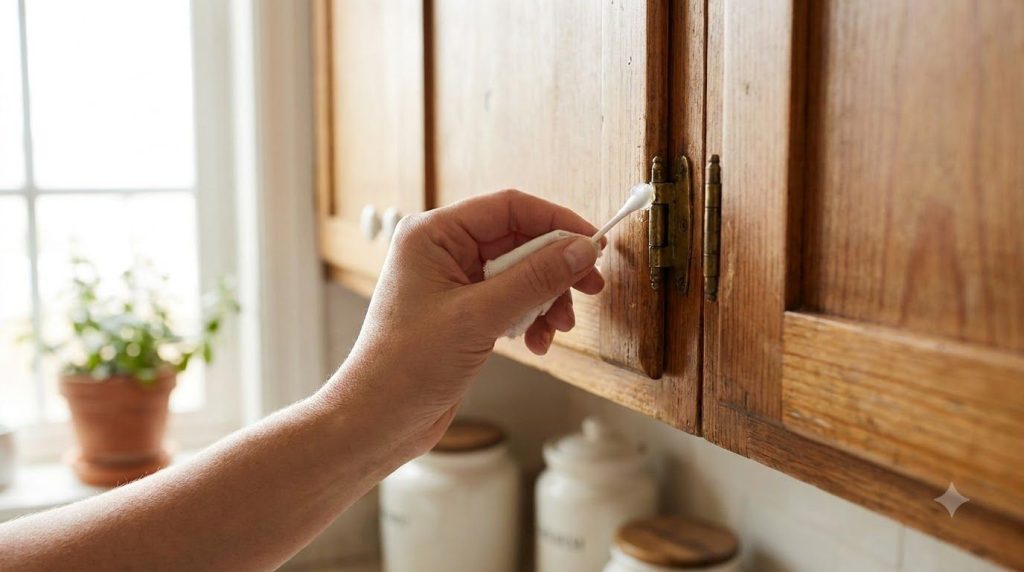
Did You Know? Thin layers stay where you put them. Thick layers attract dust and can make a tool or hinge look greasy within days.
Quick-Reference Table
| Use | Amount | How Often | Best Surface |
|---|---|---|---|
| Tool rust protection | Thin film | After each use or before storage | Metal blades and joints |
| Hand barrier | Pea-sized | Before each session | Hands and knuckles |
| Zipper teeth | 1 to 2 small dabs | Every few months | Metal zipper teeth |
| Hinge pin | Small dab | When squeaky | Metal hinges |
How Often to Use It
Tools benefit most from a light coat after cleaning and before long storage periods. Hands need it only before work sessions. Zippers and hinges usually need reapplication every few months or when movement starts to feel stiff again.
How to Choose and Buy
Choose plain, unscented white petroleum jelly. Flavored or colored versions are not needed for household or garden use. A small jar is easier to control, while a larger tub is more economical if you use it often in the shed or workshop.
Storage
Keep the lid tight and store the jar at room temperature in a dry place. Use a clean spatula or cotton swab instead of fingers to avoid introducing soil and moisture. Replace the jar if it smells off, changes color, or looks contaminated.
Practical Tips
- Apply in a cool, dry environment so the film sets evenly.
- Keep a separate jar for the garden shed so it does not end up near food preparation.
- Wipe excess off tools completely before storing them in a bag or box.
Common Mistake: Applying a thick layer to a tool blade. It collects soil and dries into a sticky film that is harder to clean than the rust it was meant to prevent.
Common Mistakes
- Applying over dirty or wet surfaces, which traps moisture underneath.
- Using thick layers that attract dust and grit.
- Rubbing it onto plant leaves, where it can block light and airflow.
- Dipping fingers into the jar repeatedly, which spreads contamination.
- Using it on tools that touch food prep surfaces without cleaning them thoroughly first.
Cautions and Who Should Avoid It
Do not use petroleum jelly on burns, deep cuts, animal bites, or infected skin without medical advice. Avoid applying it near the eyes if you have sensitive skin, and do a small patch test before using it widely. Keep it away from open flames, and never use it as a food ingredient. Store it out of reach of children.
Quick Summary
- Best preparation: clean and dry the surface first, then apply a thin film.
- Best use cases: rust protection for tools, sap cleanup on skin, zipper and hinge friction.
- Storage: tight lid, dry room temperature, clean application tools.
- When to use: after cleaning tools, before work sessions, and when hinges begin to squeak.
- What to avoid: thick layers, plant leaves, open wounds, and food surfaces.
FAQ
Can I use petroleum jelly on all garden tools?
It works best on bare metal blades and joints. Avoid using it on wooden handles where it can make grip slippery and attract dirt.
How long does a thin coat last on a tool?
A thin film can protect metal for several weeks in dry storage, though humid sheds may need reapplication sooner.
Can I refrigerate petroleum jelly to make it last longer?
Refrigeration is not needed. Room temperature storage in a sealed jar is enough, and cold temperatures can make it firmer and harder to spread.
Can I freeze it?
Freezing is unnecessary and does not improve shelf life. Keep it sealed and dry instead.
Is it safe to use on pruning cuts in plants?
It is not a recommended treatment for plant wounds. Use clean tools and follow the plant care guidance for the specific species.
How often should I use it on hands?
Apply a small amount before work sessions. Wash hands after gardening and reapply only when you need a barrier again.
When should I avoid it?
Avoid it on open wounds, burns, infected skin, and near food. Stop using it if irritation, redness, or swelling appears.
You may also like: how to clean garden tools safely.
Read more: simple home maintenance tips for hinges and doors.
See the full guide: natural cleaning ideas for tools and surfaces.
Final Thoughts
Petroleum jelly is most useful when you treat it as a thin protective layer for specific, practical problems. Start with one task, such as protecting your pruning shears before winter, and see how it fits your routine. Clean first, apply lightly, and keep it away from food and open wounds.