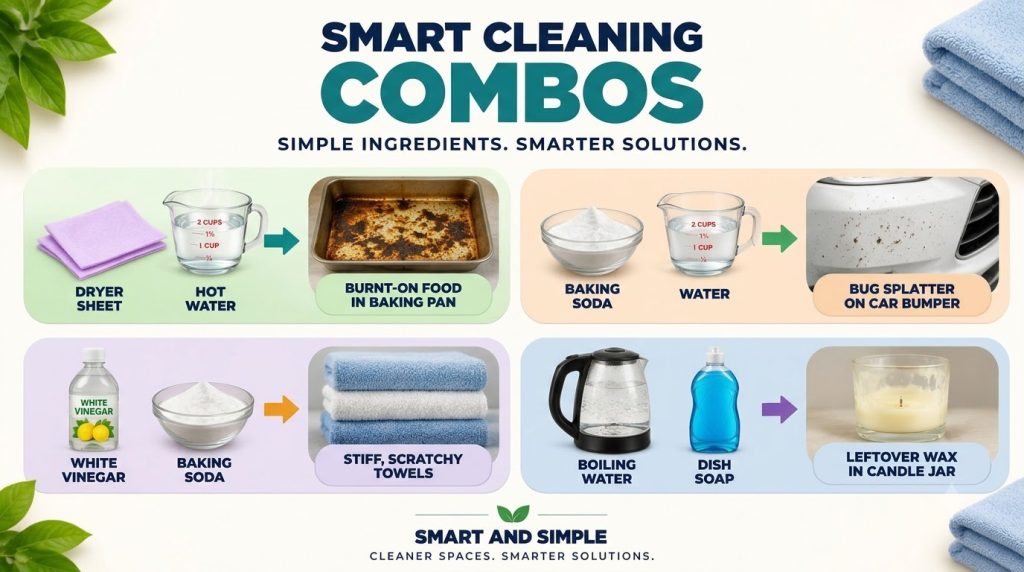
Cleaning does not have to be complicated. Many of the toughest messes in your home can be handled with everyday items you already keep in the kitchen, laundry room, and garage. This guide walks you through four smart combinations that pair simple ingredients with common problems, so you can spend less time scrubbing and more time enjoying your space.
This article is for busy homeowners, renters, and anyone who wants practical cleaning methods without buying a cabinet full of specialty products. Each combo below explains what to gather, how to use it, and what to watch out for. Results can vary depending on how old the stain is and what the surface is made of, so always test first.
Quick Summary
- Preparation Time: 5 to 10 minutes per combo
- Application Time: 10 to 60 minutes, depending on the mess
- Difficulty Level: Beginner
- Best Uses: Baked-on residue, bug splatter, stiff fabrics, and leftover wax
- Suitable Surfaces: Glass, metal, sealed wood, and most fabrics (always check care labels)
Why You’ll Love These Smart Combos
- They use ingredients you likely already have at home.
- They are budget-friendly compared with single-purpose cleaners.
- They require very little equipment.
- They are beginner-friendly and easy to repeat.
- They help reduce the number of harsh products in your cabinet.
Combo 1: Burnt-On Food in a Baking Pan
What You Need
- 1 dryer sheet
- 1 cup very hot tap water (not boiling)
- 1 heatproof glass measuring cup
- 1 non-scratch sponge
- Dish soap (optional, for rinsing)
- Gloves
Step-by-Step Instructions
- Place the pan in the sink. Set the baking pan on a folded towel in the sink so it does not slide. Expect about 2 minutes for this step.
- Add the dryer sheet and hot water. Pour the hot water into the pan and drop in the dryer sheet so it soaks into the burnt areas. Let it sit for 20 to 30 minutes.
- Scrub gently. Use the non-scratch sponge to lift the loosened residue. Most baked-on food should release with light pressure.
- Rinse and dry. Wash with a drop of dish soap, rinse well, and dry completely before storing.
Expected result: Softened residue that wipes away more easily. Heavily carbonized spots may need a second soak.
Combo 2: Bug Splatter on a Car Bumper
What You Need
- 1 tablespoon baking soda
- 1 tablespoon water
- Soft microfiber cloth
- Bucket of car wash soap and water for rinsing
- Gloves
Step-by-Step Instructions
- Make a paste. Mix the baking soda and water in a small bowl until it forms a thick paste. This takes about 1 minute.
- Test a hidden spot. Apply a small amount to a discreet area first and wipe it off to make sure the finish is unaffected.
- Apply and wait. Dab the paste onto the bug splatter and let it sit for 2 to 5 minutes. Do not let it dry out on the surface.
- Wipe gently. Use the microfiber cloth in light, circular motions. Rinse the area with clean water and dry it with a separate cloth.
Expected result: Bug residue should loosen with minimal effort. Work in the shade and on a cool surface whenever possible.
Combo 3: Stiff, Scratchy Towels
What You Need
- 1/2 cup white vinegar
- 1/2 cup baking soda
- Washing machine
- Your regular laundry detergent
Step-by-Step Instructions
- Wash the towels with detergent first. Run a normal cycle with your usual detergent to remove dirt and oils.
- Add vinegar to the rinse. Pour the white vinegar into the rinse compartment or add it during the final rinse. This helps soften fibers and remove detergent buildup.
- Dry as usual. Tumble dry on a medium setting or air dry. Towels should feel softer after one or two cycles.
Important: Do not mix vinegar and baking soda in the same container or in the same step. Used separately, baking soda can be added to the wash for odor control, and vinegar can be added to the rinse. Mixing them simply creates fizzing and cancels out much of the effect.
Combo 4: Leftover Wax in a Candle Jar
What You Need
- Boiling water from a kettle (use with extreme care)
- 1 teaspoon dish soap
- Heatproof glass or metal bowl
- Paper towels
- Oven mitts or thick gloves
Step-by-Step Instructions
- Let the jar cool slightly. Wait until the jar is warm, not hot, to the touch. Glass can crack if it changes temperature too quickly.
- Pour hot water into a bowl. Add a small amount of boiling water to a heatproof bowl and stir in the dish soap. Let it cool a little before handling.
- Soak the jar base. Place the jar in the warm soapy water so it loosens the wax from the bottom. Wait about 10 minutes.
- Lift the wax. Remove the jar carefully with oven mitts and wipe away softened wax with paper towels.
Expected result: Most wax should lift away in layers. For stubborn residue, place the jar in the freezer for about 30 minutes, then gently scrape the wax off.
Best Uses for These Combos
- Baking pans and cookware: Ideal for baked-on food on metal and sealed glass.
- Car exteriors: Good for bug residue on painted surfaces, but avoid hot panels and always test first.
- Towels and cloth items: Helpful for restoring softness, though not every fabric is suitable.
- Glass candle jars: Effective for clearing leftover wax when you want to reuse the container.
Safety Notes
- Wear gloves when handling hot water, baking soda paste, and cleaning residue.
- Never pour boiling water directly into a cold glass jar or thin glass, as it can crack.
- Keep boiling water and hot containers away from children and pets.
- Test every method on a small hidden area first.
- Never mix bleach with vinegar or ammonia.
- Ensure good ventilation when working with cleaning agents.
- Do not scrub painted car surfaces when they are hot or dry.
Expert Tips
- Be patient. Soaking usually does more work than scrubbing.
- Keep a dedicated non-scratch sponge for cookware so you do not damage nonstick coatings.
- Clean car bumpers soon after a road trip, before residue hardens.
- Use a separate cloth for drying and polishing to avoid streaks.
- Check fabric care labels before adding vinegar or baking soda to delicate items.
- Store your baking soda and vinegar in clearly labeled containers away from heat.
Storage Instructions
Baking soda keeps well in a sealed container in a dry cabinet for a long time. White vinegar is stable at room temperature and can be stored in its original bottle. Any paste you make, such as the car bumper mixture, should be used immediately and not saved, because it can dry out and lose its usefulness. Discard any mixture that develops an odd smell, mold, or separates into an unusual texture.
Frequently Asked Questions
Can I use the dryer sheet method on any pan?
It works best on metal and sealed glass. Avoid using it on unsealed wood, cast iron that needs seasoning, or anything that is not designed for soaking.
Is baking soda safe for car paint?
It is generally gentle when used as a light paste and rinsed well, but always test a hidden spot first and avoid scrubbing hard.
Why shouldn’t I mix vinegar and baking soda?
When combined, they react and mostly neutralize each other, which leaves less cleaning power. It is better to use each one separately in its own step.
Will vinegar make my towels smell?
The vinegar smell fades during drying. Adding it to the rinse cycle is usually enough to avoid any lingering odor.
Can I reuse a candle jar after removing the wax?
Yes, as long as the glass is undamaged and clean. Wash it with warm soapy water and dry it thoroughly before reuse.
Is boiling water safe to use around pets and kids?
It can be risky. Keep children and pets out of the area and let hot water cool before handling any container.
Conclusion
Smart cleaning does not require a long list of products. With a dryer sheet, baking soda, white vinegar, dish soap, and a little hot water, you can tackle baked-on food, bug splatter, stiff towels, and leftover wax with confidence. Start with one combo, follow the safety notes, and test before you commit. Happy cleaning, and enjoy the fresh results in your home!