Ever wondered what 30g of protein really looks like? For many health-conscious adults, hitting daily protein targets can feel like a guessing game. You know protein is crucial for muscle repair, satiety, and overall metabolic health, but translating grams into tangible food portions can be a real challenge. That’s where a visual guide comes in! This article aims to make hitting your daily protein targets simple and stress-free by showing you exactly what a 30g protein portion looks like across various food groups.
Why Protein Matters So Much
Protein is one of the three macronutrients, essential for virtually every function in your body. It’s the building block for muscles, enzymes, hormones, and antibodies. Adequate protein intake is vital for:
- Muscle Maintenance and Growth: Especially important for active individuals and as we age.
- Satiety and Weight Management: Protein helps you feel fuller for longer, reducing overall calorie intake.
- Metabolic Health: It has a higher thermic effect of food (TEF) compared to carbs and fats, meaning your body burns more calories digesting it.
- Bone Health: Studies show a positive correlation between higher protein intake and better bone mineral density.
How Much Protein Do You Need?
While individual needs vary based on age, activity level, and health goals, a general recommendation for healthy adults is around 0.8 to 1.2 grams of protein per kilogram of body weight. For active individuals or those looking to build muscle, this can increase to 1.6 to 2.2 grams per kilogram. Spreading your protein intake throughout the day, aiming for about 20-30g per meal, can optimize absorption and muscle protein synthesis.
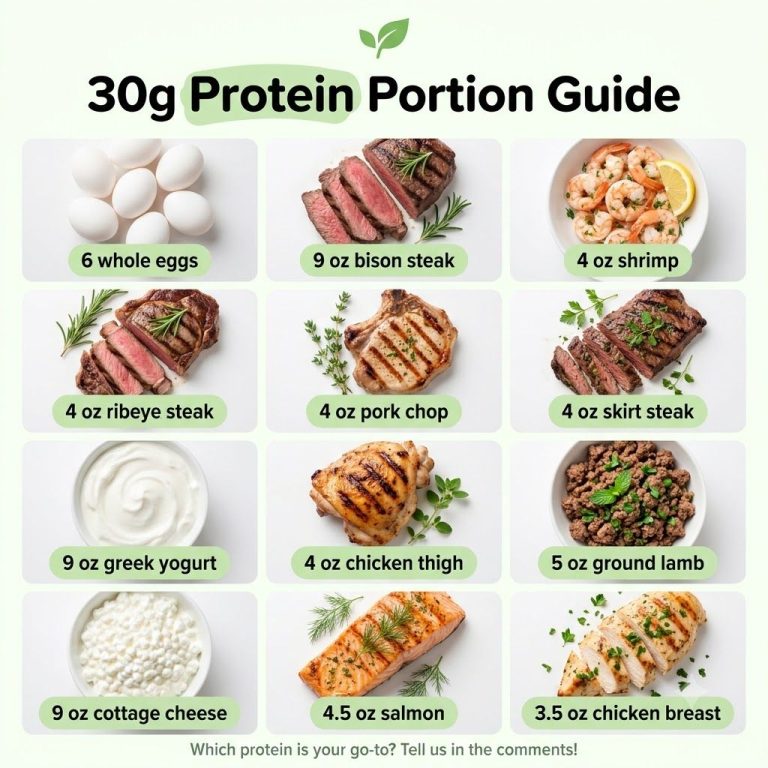
Visualizing 30g of Protein: A Practical Guide
Let’s demystify protein portions. Here’s a visual breakdown of what approximately 30 grams of protein looks like in common foods:
Meat & Poultry
- Chicken Breast (cooked): Approximately 4-5 ounces (about 115-140 grams). This is roughly the size of a deck of cards or the palm of your hand.
- Lean Beef (cooked): Similar to chicken, about 4-5 ounces (115-140 grams). Think of a small steak or a lean ground beef patty.
Fish & Seafood
- Salmon Fillet (cooked): Around 4-5 ounces (115-140 grams). A standard portion often found on a dinner plate.
- Canned Tuna (drained): One standard 5-ounce can, typically yielding about 3-4 ounces of drained tuna, provides roughly 25-30g of protein.
Eggs & Dairy
- Large Eggs: You’ll need about 5-6 large eggs to reach 30g of protein, as each large egg contains about 6 grams.
- Plain Greek Yogurt (high protein): Approximately 5-6 ounces (150-180 grams), or about 1 cup. Look for brands with higher protein content.
- Cottage Cheese: About 6-7 ounces (170-200 grams), or roughly 3/4 to 1 cup.
Plant-Based Powerhouses
- Lentils (cooked): Roughly 1.5 cups (about 300 grams). A substantial portion for a vegetarian meal.
- Tofu (firm, pressed): Approximately 6-7 ounces (170-200 grams). This is about half a standard block of tofu.
- Black Beans (cooked): You’d need a larger portion, closer to 2 cups (around 350-400 grams), to reach 30g of protein.
- Protein Powder: One standard scoop (around 25-30 grams of actual protein per scoop) mixed with water or milk. This is often the quickest way to hit a specific protein target.
Tips for Consistently Hitting Your Protein Goals
Now that you have a better idea of what 30g of protein looks like, here are some practical strategies to incorporate more into your daily diet:
- Plan Ahead: Include a protein source in every meal and most snacks. Meal prepping can help ensure you always have healthy options ready.
- Smart Snacking: Opt for protein-rich snacks like Greek yogurt, cottage cheese, a handful of almonds, or a hard-boiled egg instead of highly processed options.
- Combine Sources: Mix plant and animal proteins to get a broader spectrum of amino acids and enjoy variety.
- Read Labels: Always check the nutrition labels for protein content, especially for packaged foods, to ensure you’re making informed choices.
- Diversify Your Diet: Don’t stick to just one or two protein sources. Explore different meats, fish, legumes, nuts, seeds, and dairy products.
Conclusion
Understanding what a 30g portion of protein actually looks like can transform your approach to healthy eating. By visualizing your protein intake, you can make more informed choices, feel more satisfied after meals, and consistently meet your nutritional goals. Start incorporating these visual cues and practical tips into your daily routine, and you’ll be well on your way to unlocking a healthier, stronger you!
Which protein source is your favorite to help you reach your goals? Share your go-to in the comments below!