Vaseline has been a bathroom-shelf staple for generations, and lately it has become a favorite in DIY beauty circles. The idea is simple: mix petroleum jelly with everyday kitchen and pantry ingredients to create homemade treatments that aim to keep skin soft, hydrated, and glowing. Here is a practical look at the popular combinations, what they can and cannot do, and how to try them safely.
Why Vaseline Works as a Base
Petroleum jelly is an occlusive moisturizer. It forms a protective layer on the skin that helps reduce water loss, which is why it is often recommended for dry patches, chapped lips, and minor irritation. Because it locks in moisture, it makes a good base for mixing with other ingredients that bring their own properties.
Popular Combinations Explained
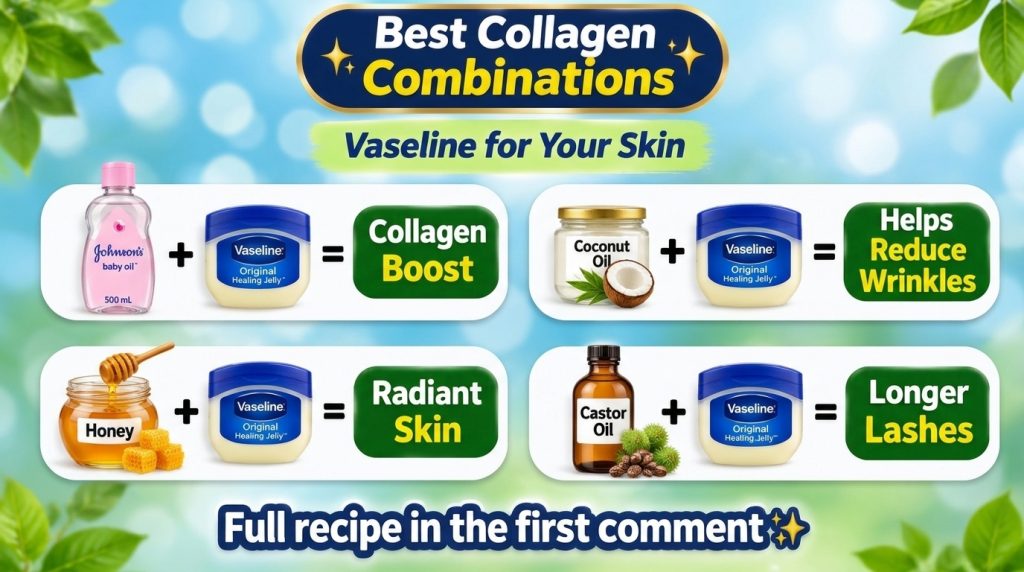
- Vaseline and baby oil: A light, slippery blend often used as an overnight moisturizer for dry areas such as elbows and heels.
- Vaseline and coconut oil: A rich mix many people use to soften very dry skin, as a pre-shave treatment, or on the ends of hair.
- Vaseline and honey: Honey attracts and holds water, so it is a popular addition to homemade face masks for a soft, hydrated feel.
- Vaseline and castor oil: Castor oil is thick and is sometimes applied to brows and lashes as a conditioning routine.
What the Claims Really Mean
Social media posts often promise collagen production, wrinkle reduction, and longer lashes. Topical petroleum jelly does not add collagen to the skin, and there is limited scientific evidence that these mixtures change collagen levels. Keeping skin well hydrated can make fine lines look less pronounced and give skin a smoother, more radiant appearance. Lash growth is mainly shaped by genetics and overall health, so any lash benefit from conditioning is about looking fuller rather than changing how lashes grow.
How to Try These Hacks Safely
- Patch test a small area of skin for 24 hours before using any new mixture.
- Use clean hands and clean containers to avoid contamination.
- Apply to clean, slightly damp skin to help lock in moisture.
- Avoid heavy mixtures on broken skin or acne-prone areas, and keep products out of the eyes unless a product is specifically made for that area.
- Stop using the mixture right away if you notice redness, itching, or swelling.
Tips for Getting the Best Results
Consistency matters more than complicated recipes. Choose one combination that suits your skin type, use it a few nights per week, and protect your skin with sunscreen during the day. Make small batches of homemade mixes and discard them if they smell off or change color.
Final Thoughts
Vaseline combinations can be a simple and affordable way to support soft, hydrated skin. Treat the bold claims with a healthy dose of skepticism, focus on hydration and gentle care, and see a dermatologist for persistent skin concerns. Have you tried any of these hacks? Share your experience in the comments below!