Few things make a home feel less comfortable than spotting cockroaches in the kitchen or a line of ants marching across the counter. Commercial sprays can work, but they often leave strong fumes behind and cost more than most people want to spend on a recurring problem. If you prefer a simple, pantry-based approach, two classic DIY baits can help you manage these pests: a baking soda and sugar mixture for cockroaches, and a borax and sugar water solution for ants.
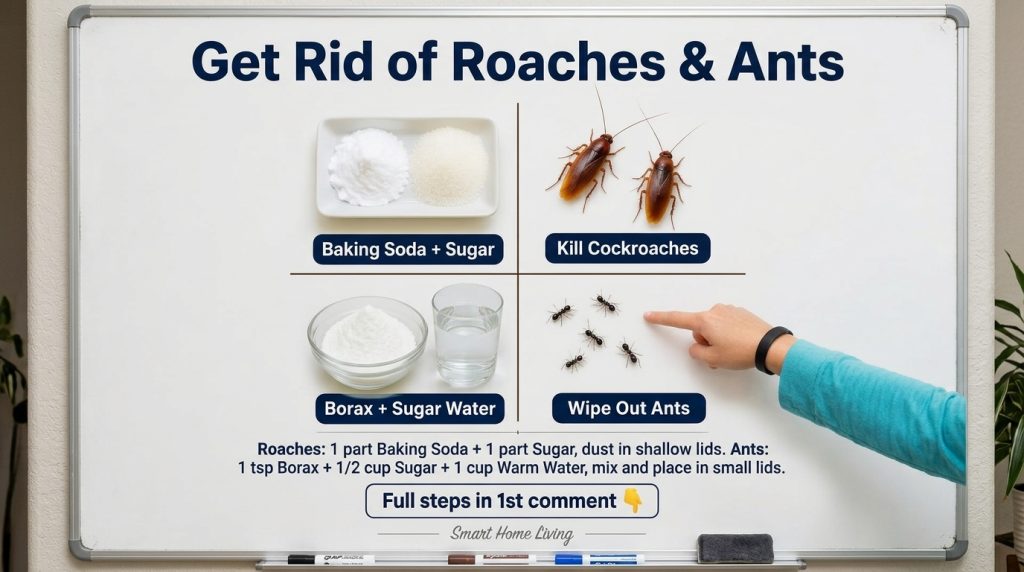
What You’ll Need
For the Cockroach Bait
- 1 part baking soda
- 1 part granulated sugar
- Small shallow dishes or bottle caps
For the Ant Bait
- 1 tablespoon borax (sold as a laundry booster in most grocery stores)
- 1 cup warm water
- 3 tablespoons granulated sugar
- Cotton balls or small pieces of sponge
- A small jar or squeeze bottle for storage
Tools and Supplies
- Measuring spoons and a measuring cup
- A mixing spoon
- Disposable gloves
- Clear labels and a permanent marker
Why This DIY Can Be Useful
Both baits rely on the same basic idea: pests are drawn to a food source, and the bait works only if they carry it back to the nest or eat it. Sugar is the attractant in both recipes. In the cockroach mix, baking soda is combined with the sugar as the active ingredient that the pest ingests. In the ant mix, borax is the active ingredient, and it is dissolved in sugar water so ants can take it back to the colony.
Because these baits are placed in small amounts in targeted spots, they are easier to control than broad sprays. They also avoid spreading strong chemicals across kitchen surfaces where food is prepared.
How to Make It
Cockroach Bait
- Combine equal parts baking soda and granulated sugar in a small bowl.
- Stir until the mixture is evenly blended and looks uniform.
- Spoon small amounts into shallow dishes or bottle caps. Keep portions small so they are easy to place in hidden areas.
Ant Bait
- Pour 1 cup of warm water into a clean jar or bowl.
- Add 3 tablespoons of sugar and stir until fully dissolved.
- Add 1 tablespoon of borax and stir thoroughly until it dissolves. You may need to stir for a minute or two.
- Soak small cotton balls or sponge pieces in the solution, then place them in shallow lids or containers.
- Label the container clearly and store any leftover liquid in a sealed jar away from food and children.
How to Use It
Place cockroach bait in areas where you have seen signs of activity, such as behind the stove, under the sink, along baseboards, or near the back of cabinets. Keep it out of reach of children and pets and away from food storage areas.
For ants, set the bait stations near ant trails, along windowsills, under sinks, or near the entry points where you see them coming in. Check the stations after a day or two. Replace them when they dry out or when the bait has been fully consumed.
Be patient. Roaches and ants can take several days to a week or more to show a noticeable decline, since the bait has to be carried back and shared.
What to Expect
These baits can help reduce activity over time, especially when used consistently and combined with good housekeeping. They are not guaranteed to remove an established infestation on their own. If you see a large number of pests, or pests keep returning after a few weeks, a licensed pest control professional is the safer option.
Helpful Tips
- Clean up crumbs, spills, and pet food every night. Pests are far less likely to stay where food is easy to reach.
- Seal cracks and gaps around pipes, baseboards, and window frames to make it harder for pests to enter.
- Move bait stations only a little at a time, and keep them where you have noticed pest activity.
- Check and refresh the ant bait every few days, since moisture loss can change how well it works.
Important Notes and Safety
- Borax is toxic if swallowed. Keep all bait stations, containers, and leftover solution away from children, pets, and food preparation areas.
- Wear gloves when handling borax and wash your hands afterward.
- Never store borax solution in food or drink containers. Label everything clearly.
- Do not place bait where pets or children can reach it, and avoid spraying or spreading loose powder into the air.
- Keep the bait in a cool, dry place when not in use, and dispose of old or unused solution according to your local guidelines.
With a few simple ingredients and consistent cleaning habits, these pantry-based baits can be a practical first step toward a cleaner, pest-free home.