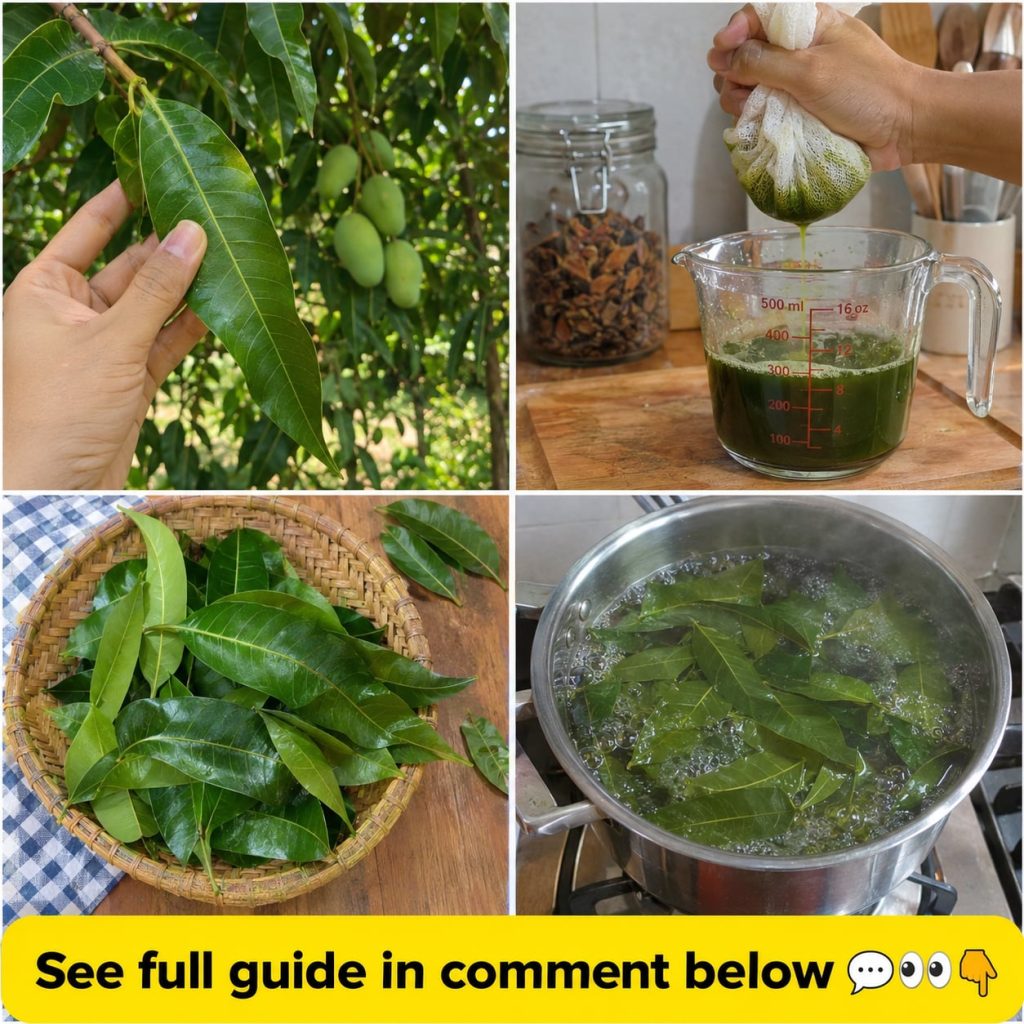
Most people throw away the leaves when they prune a mango tree, but many home herbalists keep them. The fruit gets all the attention, yet the leaves are the part most often used in simple home preparations such as teas and rinses.
What Mango Leaves Are and Why People Use Them
Mango leaves come from Mangifera indica, the same tree that produces the fruit. They are glossy, long, and pointed, and young leaves are often reddish or copper-colored before they turn deep green. In home remedy traditions, they are usually prepared as a tea, a warm rinse, or a simple infusion. Research on these uses is still limited, so treat them as traditional home preparations rather than proven treatments.
Quick Tip: Choose clean, undamaged leaves from a tree you know has not been sprayed with chemicals. Fresh leaves from your own tree or a trusted source are the safest starting point.
Ingredients You Need
- 6 to 8 fresh mango leaves, or 1 to 2 tablespoons dried leaves
- 2 cups filtered water for tea
- 1 cup filtered water for a rinse
- Optional: a thin slice of fresh ginger or a squeeze of lemon for flavor
- A clean glass jar or pot with a lid
- A fine strainer or cheesecloth
Approximate Measurements
For a single cup of tea, use 3 to 4 fresh leaves or about 1 teaspoon of dried leaves. For a larger batch, keep the ratio at roughly 1 tablespoon of dried leaves per 2 cups of water. Start mild. A stronger brew does not make the preparation more effective, and it can taste bitter.
Formula: Basic Mango Leaf Tea
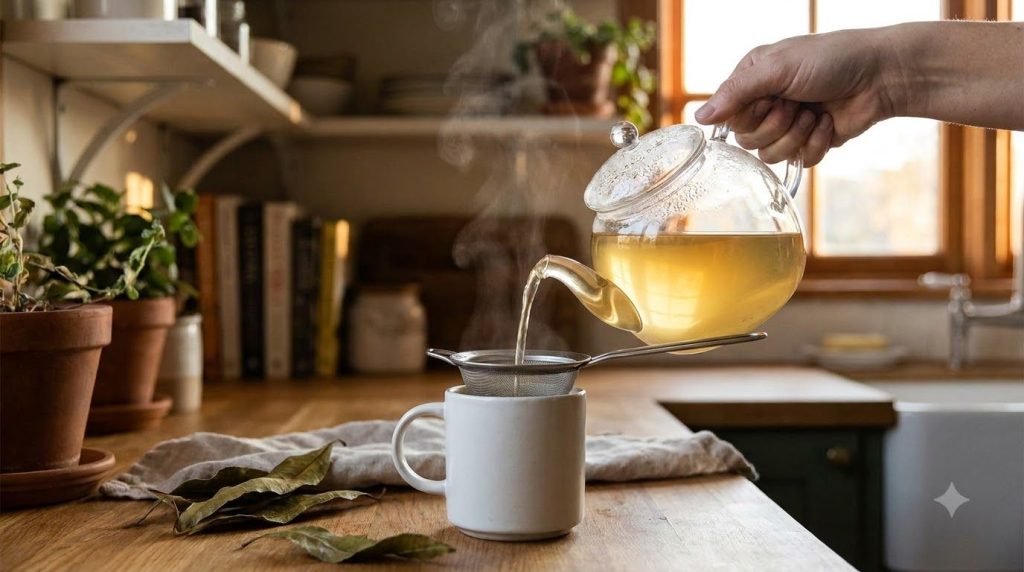
The simplest version is a gentle infusion. Combine 6 to 8 cleaned fresh leaves with 2 cups of water. Simmer for 5 minutes, remove from heat, cover, and steep for 10 minutes. Strain and drink warm or at room temperature.
Step-by-Step Method
- Rinse the leaves under cool running water to remove dust and insects.
- Pat them dry with a clean towel. Tear or chop them lightly to expose more surface area.
- Bring the water to a gentle simmer in a small pot. Do not hard-boil.
- Add the leaves and simmer for about 5 minutes.
- Turn off the heat, cover the pot, and let it steep for 10 minutes.
- Strain into a cup. Add ginger or lemon if you like.
How to Use Mango Leaves
There are three practical ways to use the leaves at home:
- Tea: Drink one cup warm, following the method above.
- Warm rinse: Simmer 1 cup of water with 4 to 5 leaves for 3 minutes, steep for 10 minutes, cool until comfortably warm, then strain and use as a final rinse.
- Bath addition: Steep a larger batch and add the strained liquid to a warm bath for a relaxing soak.
How Often to Use It
Most home users keep it simple: one cup of tea per day for a short period, such as a few days to two weeks, then take a break. Do not treat it as a daily habit without a reason, and stop if you notice irritation, stomach discomfort, or any unusual reaction.
How to Choose and Buy Ingredients
If you do not have a tree, look for dried mango leaves from herbal suppliers that list the origin and harvest date. Fresh leaves are sometimes sold at farmers markets in tropical regions. Avoid leaves with black spots, holes, mold, or a musty smell. Choose bright green or deep green leaves that are firm and flexible.
Fresh vs Dried Mango Leaves
| Option | Best For | Amount for 1 Cup | Shelf Life |
|---|---|---|---|
| Fresh leaves | Fresh tea, quick rinses | 3 to 4 leaves | Use within 2 to 3 days refrigerated |
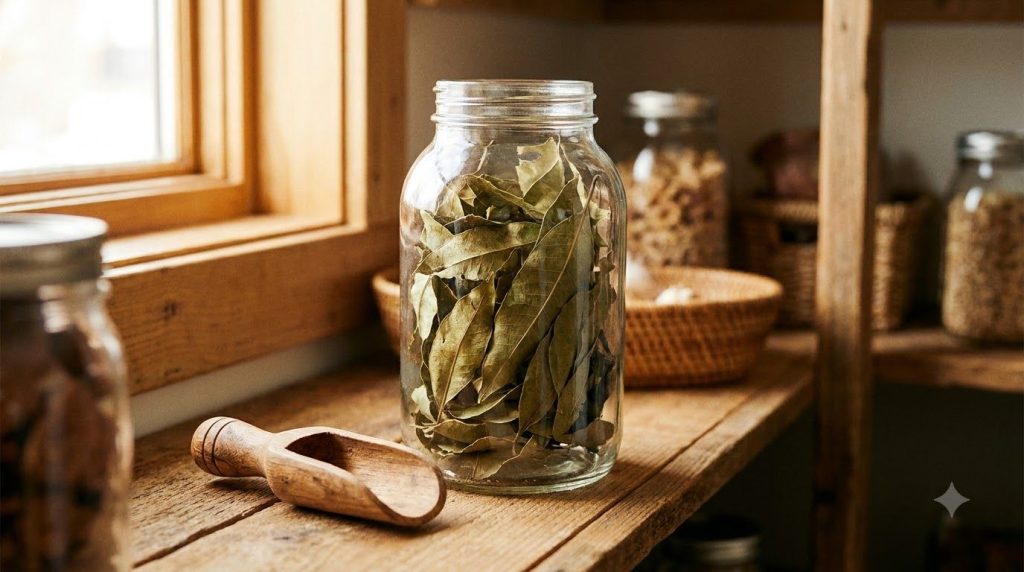
| Dried leaves | Stored tea supply | 1 teaspoon | Up to 6 months in an airtight jar |
| Tea vs rinse | Tea is drunk, rinse is applied externally | Tea: 1 cup; rinse: 1 cup | Make fresh each day |
Storage
Dry fresh leaves completely in a single layer on a clean rack, away from direct sun, until they crackle when bent. Store them in a dry, airtight glass jar in a cool, dark cabinet. Keep fresh leaves in a paper towel inside a loose bag in the refrigerator for no more than a few days. Brewed tea should be refrigerated and used within 24 hours.
Practical Tips
- Use young, tender leaves for tea. Older leaves can be tougher and more bitter.
- Dry leaves in a shaded, airy place to keep their color.
- Label your jars with the harvest date.
- Make small batches so nothing sits in the fridge for long.
Common Mistakes
- Using damaged or moldy leaves: Discard anything with spots, holes, or a musty smell.
- Boiling too long: A hard boil for 20 minutes makes the tea bitter. Simmer gently instead.
- Storing in damp jars: Moisture causes mold within days.
- Skipping the drying step: Wet leaves spoil quickly.
- Using sprayed plants: Only use leaves you know are chemical-free.
- Overusing: More is not better. Stick to the recommended amount.
Cautions and Who Should Avoid It
Mango leaf preparations are not suitable for everyone. Speak with a healthcare professional before using them if you are pregnant or breastfeeding, if you have diabetes or take blood sugar medication, if you take blood thinners, or if you have a known allergy to mango or plants in the Anacardiaceae family, which includes cashew and poison ivy. Do not give mango leaf tea to children without medical advice. Stop use and seek care if you notice swelling, rash, breathing difficulty, or persistent stomach upset.
Quick Summary
- Best preparation: A gentle tea from fresh or dried young leaves.
- Best use case: A simple, short-term home ritual or a warm rinse.
- Storage: Dry completely and keep in an airtight glass jar; refrigerate fresh leaves briefly.
- When to use: Once daily, for a short period, with a break afterward.
- What to avoid: Moldy leaves, sprayed plants, hard boiling, and use without checking cautions.
FAQ
Can I use fresh or dried mango leaves?
Yes. Fresh leaves give a lighter flavor, while dried leaves are more convenient for storage. Use about 3 fresh leaves or 1 teaspoon dried per cup.
How long do dried leaves last?
When fully dried and kept in an airtight jar away from light and moisture, they usually stay good for about 6 months. Check for smell and color before each use.
Can I refrigerate the tea?
Yes. Store strained tea in a sealed glass container in the refrigerator and use it within 24 hours.
Can I freeze mango leaves?
You can freeze clean, dry leaves in a sealed bag, but drying and jarring them is usually better for flavor and texture.
Can I reuse the leaves?
It is best to use fresh leaves for each batch. Reused leaves lose flavor and can develop bacteria if left wet.
Which part of the leaf is best?
Young, tender, fully green or lightly reddish leaves are usually preferred. Avoid old, yellowing, or damaged leaves.
When should I avoid it?
Avoid it during pregnancy or breastfeeding without medical advice, if you have a mango or cashew allergy, or if you take medication that affects blood sugar or blood clotting.
Final Thoughts
Mango leaves are an easy, low-cost addition to a home herbal routine when you prepare them carefully. Keep your batches small, store them dry, and stay realistic about what a simple home preparation can do. If you have a health concern, talk with a qualified professional first.
Read more: Simple DIY herbal tea storage tips
You may also like: Choosing safe herbs for home remedies
See the full guide: Natural remedy preparation basics