Cinnamon rolls are one of the most comforting baked goods you can make at home, and fall is the perfect time to try them. Soft, swirled dough wrapped around a sweet, spiced filling makes a warm treat for weekend breakfasts, holiday mornings, or an afternoon snack with coffee.
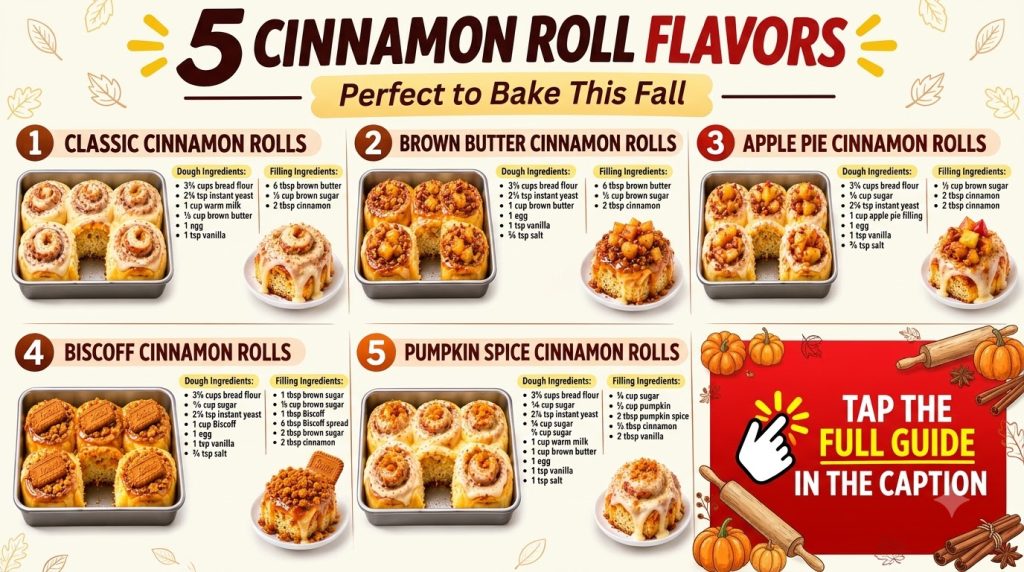
This guide covers five cinnamon roll flavors that are worth baking this season: Classic, Brown Butter, Apple Pie, Biscoff, and Pumpkin Spice. Each one starts with the same basic dough and changes the filling and glaze, so you can choose one or try them all.
Why Try Different Cinnamon Roll Flavors?
- The base dough stays the same, so once you learn one method you can apply it to every flavor.
- Each filling highlights a different seasonal ingredient, from brown butter to apple and pumpkin.
- You can bake one pan for a crowd and vary the flavors to suit different tastes.
- The rolls are easy to customize with simple glazes, nuts, or toppings.
The Five Cinnamon Roll Flavors
1. Classic Cinnamon Roll
The classic version uses softened butter, brown sugar, and ground cinnamon as the filling. A simple cream cheese or powdered sugar glaze finishes the rolls. This is the best starting point if you are new to making cinnamon rolls.
2. Brown Butter Cinnamon Roll
Browning butter over medium heat until it turns golden and smells nutty adds depth to the filling. Mix the cooled brown butter with brown sugar and cinnamon. The result tastes richer than the classic version without becoming heavy.
3. Apple Pie Cinnamon Roll
Finely diced apples cooked briefly with butter, brown sugar, and cinnamon make a filling that tastes like apple pie. Cook the apples until they soften but still hold their shape, then cool them before spreading them over the dough so the filling stays in place.
4. Biscoff Cinnamon Roll
Biscoff cookie spread, sometimes called cookie butter, works well as a filling. Spread it over the dough in an even layer, then sprinkle with a small amount of crushed Biscoff cookies for crunch. The rolls have a caramel-like flavor and a sweet, spiced finish.
5. Pumpkin Spice Cinnamon Roll
Mix pumpkin purée with brown sugar and pumpkin pie spice for a filling that fits the season. Use thick, canned pumpkin purée rather than pumpkin pie filling, since the sugar and spices in pie filling change the balance. Spread the filling thinly so the rolls do not become soggy.
How to Make Cinnamon Rolls at Home
- Make the dough by warming milk until it feels lukewarm, then stir in yeast and a little sugar. Let it sit until foamy, which usually takes about 5 to 10 minutes.
- Add the flour, sugar, egg, softened butter, and salt. Knead by hand or with a stand mixer until the dough is smooth and springy, usually about 5 to 8 minutes.
- Place the dough in a lightly oiled bowl, cover it, and let it rise in a warm spot until doubled in size. Rising time varies with the kitchen temperature, so plan for roughly 1 to 2 hours.
- Roll the dough into a rectangle about 1/4 inch thick. Spread the filling of your choice evenly, leaving a small border along one long edge.
- Roll the dough tightly from the opposite long edge, then cut it into 9 to 12 equal slices using dental floss or a sharp knife.
- Arrange the slices in a greased baking pan, cover them, and let them rise again until puffy, usually 30 to 60 minutes.
- Bake in a preheated oven at about 350 degrees F (175 degrees C) until the tops are golden and the centers are cooked through. This often takes 20 to 30 minutes, but check your rolls near the end of that range.
- Cool the rolls for a few minutes, then spread on your glaze while they are still warm.
Pro Tips for Better Cinnamon Rolls
- Use a thermometer or the windowpane test to check the dough. It should stretch thin without tearing.
- Keep the filling spread thin and even so each roll bakes at the same rate.
- Cool fruit fillings like apple before spreading them to avoid a soggy dough.
- Cut rolls with floss to keep their shape and prevent the layers from squishing.
- Let the glaze sit until it is only slightly warm, so it sets without running off completely.
Common Mistakes to Avoid
Rolls that come out dense often had dough that did not rise enough, so give the dough time to double. Filling that leaks out during baking usually means the dough was rolled too loosely or the filling was spread too thickly. Rolls that look pale on top may need a few more minutes in the oven, while dark bottoms can mean the pan is too close to the heating element.
Storage and Reheating
Store leftover cinnamon rolls in an airtight container at room temperature for up to 2 days. For longer storage, refrigerate them and reheat individual rolls gently in the microwave for about 15 to 20 seconds. Cream cheese glazes should be refrigerated. Baked rolls can also be frozen, but the texture is best when they are eaten within about a month.
Frequently Asked Questions
Can I make the dough ahead of time?
Yes. After kneading, you can refrigerate the dough overnight so it rises slowly. Let it sit at room temperature for a short time before rolling so it becomes easier to shape.
Which flavor should I bake first?
Start with the Classic version to learn the dough and rolling method. Once you are comfortable, try Brown Butter or Apple Pie for a seasonal twist.
Can I use a different glaze?
Yes. A simple powdered sugar glaze with milk or a cream cheese glaze both work well with every flavor in this guide.
Which flavor are you baking first? Tell us in the comments below, and check the full recipe guide linked in the original post for complete ingredient lists.