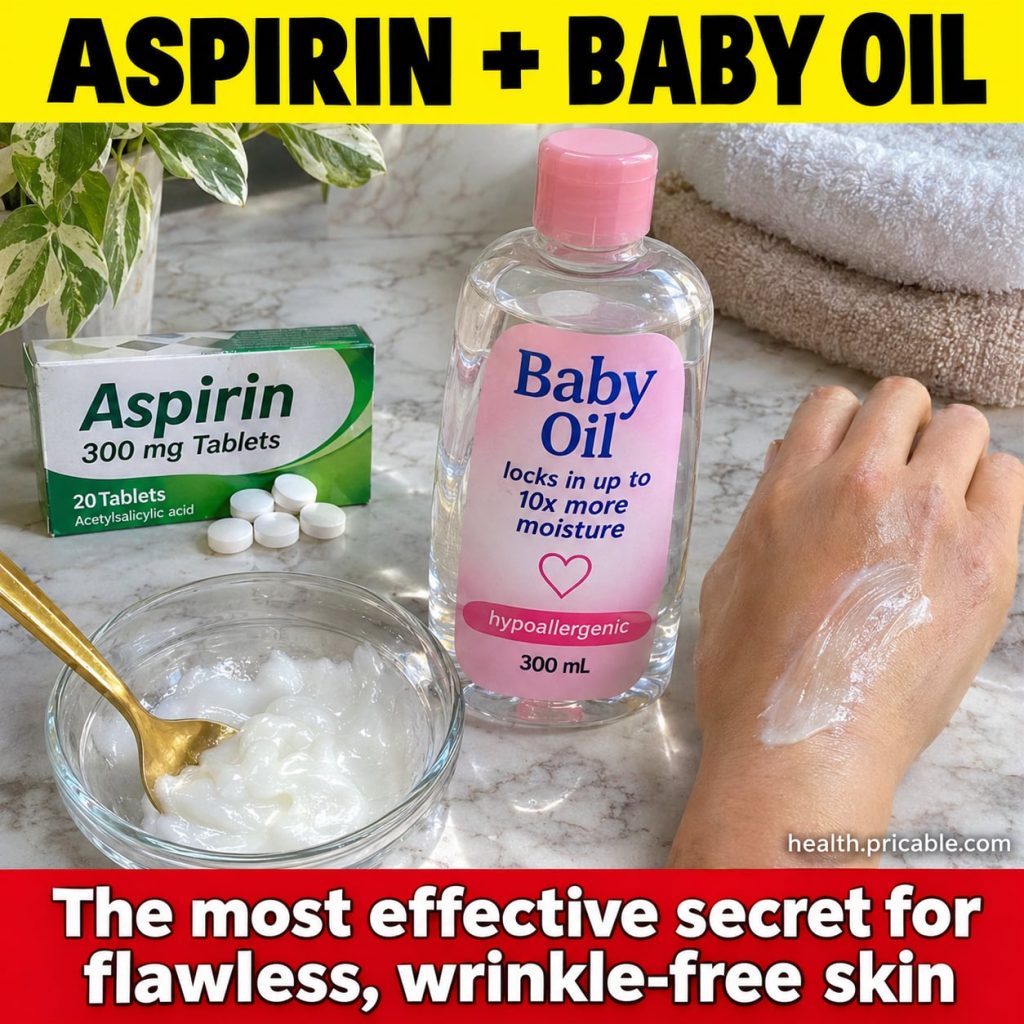
This simple DIY face mask blends crushed uncoated aspirin with baby oil to create a smooth, slightly exfoliating paste that many people use to help skin look fresher and more even. Use it once a week, follow the patch test below, and keep it away from your eyes and lips.
Quick Recipe
Prep time: About 5 minutes
Best for: Dull-looking, uneven, or rough-feeling skin
Use type: Paste mask
Main ingredients:
- 1 uncoated low-dose aspirin tablet (81 mg)
- 1 teaspoon baby oil
- 1 to 2 drops of water
Ingredients
- 1 uncoated low-dose aspirin tablet (81 mg), crushed into a fine powder
- 1 teaspoon baby oil
- 1 to 2 drops of lukewarm water, only if needed to smooth the paste
- A clean small glass or ceramic bowl and a spoon
How to Make It
- Place the aspirin tablet between two spoons or in a clean small bowl and crush it into a very fine powder. Coated or extended-release tablets should not be used.
- Add the baby oil to the powder and stir slowly until you get a smooth, even paste.
- If the mixture is too thick, add one or two drops of water. Mix only what you need for one use, because the paste is best made fresh.
How to Use It
- Cleanse your face with a gentle cleanser, rinse, and pat dry so the skin is clean but not irritated.
- Apply a thin layer of the paste to the cheeks, forehead, and chin. Avoid the eyes, eyelids, lips, nostrils, and any cuts or broken skin.
- Leave it on for no more than 5 to 10 minutes, then rinse with lukewarm water, pat dry, and follow with your usual moisturizer.
How Often to Use It
Use this mask no more than once a week. Skip it if your skin feels tight, stings, or looks red afterward. Give your skin a few days to recover before using it again.
Why These Ingredients Are Used
Uncoated Aspirin
Aspirin contains acetylsalicylic acid, a compound related to salicylic acid. In home beauty routines, it is traditionally used as a gentle powder that may help loosen dead surface skin and leave the complexion looking more even.
Baby Oil
Baby oil is a light mineral oil that helps the paste spread smoothly and can leave the skin feeling softer and less dry after rinsing. It also helps create a barrier that keeps the powder from feeling harsh.
What Results to Expect
Many people notice skin that feels smoother and looks a little fresher after one use. The effect is usually subtle and temporary. This mask is not a treatment for wrinkles, dark spots, or other medical skin concerns, and it will not provide lasting or dramatic changes.

Safety Notes
- Patch test first for topical remedies. Apply a small amount to the inner forearm or behind the ear and wait 48 hours before using it on your face.
- Use gently and never rub the paste hard into the skin.
- Avoid irritated, sunburned, or broken skin, and do not use near the eyes or lips.
- Stop using it if stinging, burning, redness, swelling, or itching occurs, and rinse your face with cool water.
- Do not use aspirin topically if you are allergic to aspirin or salicylates, or if you have a bleeding disorder.
- Check with a doctor or pharmacist before use if you take blood thinners, are pregnant or breastfeeding, have sensitive skin conditions, or are using prescription acne or retinoid products.
- Keep aspirin and baby oil out of reach of children, and never swallow the mixture.
FAQ
Can I use this mask every day?
No. Once a week is a safer starting point. Daily use can irritate the skin, especially if you have dry or sensitive skin.
Can I leave the paste on overnight?
No. Keep the contact time short, around 5 to 10 minutes, to reduce the risk of irritation.
What if my skin feels tingly?
A mild tingle can happen with exfoliating products, but strong stinging, burning, or redness means you should rinse off right away and avoid using the mask again until your skin has fully calmed down.
Final Thoughts
This aspirin and baby oil mask is a simple, budget-friendly DIY option for a smoother-looking complexion when used carefully. Start with a patch test, keep the mask gentle, and share your results in the comments below. For more easy home beauty ideas, explore our other DIY skincare guides on this site.