Tired of stubborn grease and baked-on stains inside your oven? You are not alone. Oven interiors collect splatters from roasted vegetables, bubbling cheese, and sticky sauces, and over time that buildup can become hard to scrub away. This simple homemade paste uses ingredients you likely already have in your kitchen, so you can tackle tough grime without buying a specialty product.
In this guide, you will learn what you need, how to make a grease-cutting paste, and how to apply it safely so your oven looks fresher with less scrubbing. Whether you clean once a season or want to stay on top of everyday splatters, this method is beginner-friendly and budget-friendly.
Quick Summary
- Preparation time: About 5 minutes
- Dwell time: 12 hours or overnight
- Cleaning time: About 20 to 30 minutes
- Difficulty level: Easy
- Best uses: Greasy oven walls, door glass, and baked-on spots
- Suitable surfaces: Enamel and stainless steel interiors, oven glass (test first)
- Storage time: Make fresh each time for best results
Why You’ll Love This DIY Solution
- Uses common household ingredients
- Budget-friendly compared with many store-bought oven cleaners
- Simple to mix with no special tools
- Works on everyday grease and baked-on stains
- Beginner-friendly with clear steps
- Lets you skip harsh fumes in a closed kitchen
Ingredients and Materials
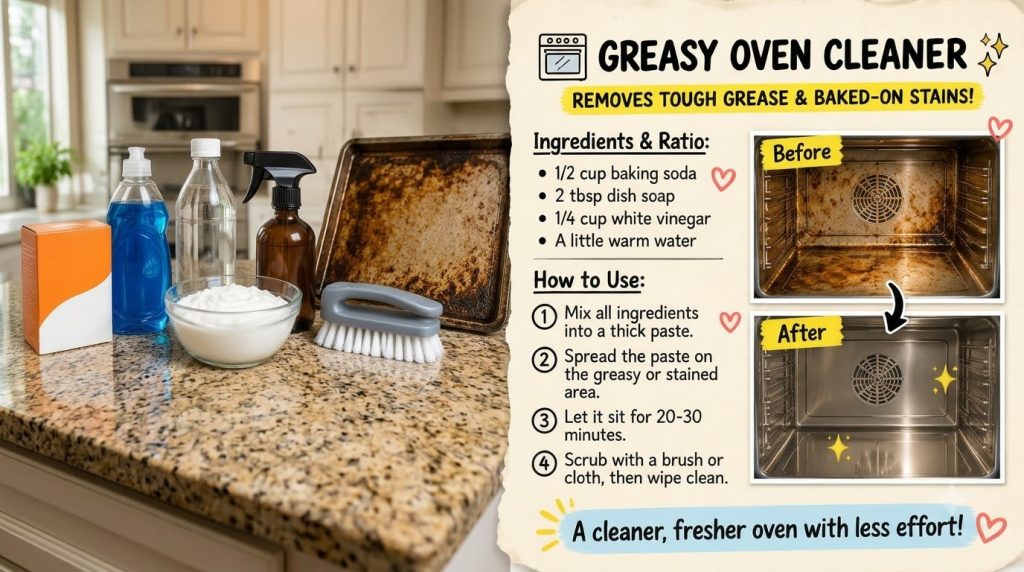
- 1/2 cup baking soda
- 2 tablespoons grease-cutting dish soap
- 1/4 cup white vinegar
- 1 to 2 tablespoons warm water, added a little at a time
Substitution tip: Any basic dish soap that cuts grease will work. Avoid soaps with added lotions or moisturizers, since they can leave residue.
Equipment Needed
- Small mixing bowl
- Spoon or small spatula
- Spray bottle filled with white vinegar
- Non-scratch scrub sponge or soft brush
- Damp microfiber cloth
- Dry towel
- Rubber gloves
Step-by-Step Instructions
-
Prepare the oven. Make sure the oven is completely cool and unplugged or turned off at the switch. Remove the racks and soak them separately in warm, soapy water. Remove any loose crumbs with a dry cloth. (About 10 minutes)
-
Mix the paste. In a small bowl, combine 1/2 cup baking soda and 2 tablespoons dish soap. Add warm water a little at a time, stirring until the mixture forms a thick, spreadable paste. It should cling to a spoon, not run off. (About 3 minutes)
-
Spread the paste. Using a spoon or spatula, coat the greasiest areas of the oven walls, floor, and door glass. Avoid heating elements and any exposed wiring. Heavier buildup benefits from a thicker layer. (About 5 minutes)
-
Let it sit. Leave the paste on for at least 12 hours or overnight. This gives it time to loosen the grease. Keep the kitchen ventilated, and keep children and pets out of the room.
-
Add the vinegar. Lightly spray white vinegar over the dried paste. It will fizz as it reacts with the baking soda, which helps lift stubborn residue. Let it fizz for a few minutes, then wipe away the loosened mixture with a damp cloth. (About 5 minutes)
-
Scrub stubborn spots. For remaining baked-on stains, use a non-scratch sponge or soft brush with gentle circular motions. Re-spray with vinegar if needed. Avoid steel wool on enamel or glass. (About 10 minutes)
-
Rinse and dry. Wipe the interior with a clean damp microfiber cloth until no residue remains. Dry thoroughly with a towel, then leave the oven door open for a few minutes to air out. Clean the racks, rinse them well, and return them to the oven.
Best Uses
This paste works well on oven walls, the floor, and the inside of the door glass where grease tends to collect. It can also help with light baked-on spots on racks. Use it on enamel and stainless steel interiors. Avoid using it on exposed heating elements, and do not use it on any aluminum parts that may discolor. Always check your oven’s manual before using any homemade cleaner.
Safety Notes
- Never clean a hot oven. Wait until it is fully cool.
- Wear rubber gloves to protect your skin from the paste and vinegar.
- Test on a small hidden area first.
- Never mix this solution with bleach, ammonia, or other commercial cleaners. Dangerous fumes can form.
- Keep the kitchen well ventilated while cleaning.
- Keep children and pets away from the oven while the paste is drying.
- Do not seal vinegar and baking soda together in a closed container, since the reaction can build pressure.
Expert Tips
- Clean your oven after heavy cooking sessions to prevent buildup.
- Place a sheet of foil on the lower rack to catch drips, but never cover the oven floor or vents.
- Use a plastic scraper for thick, cooled residue before applying paste.
- Apply vinegar lightly and wait for the fizz to settle before wiping.
- Avoid excess water, which can make the paste runny and less effective.
- Rinse thoroughly so no residue is left behind on food surfaces.
- For lighter maintenance, wipe small spills as soon as the oven cools.
Storage Instructions
This paste is best made fresh each time you clean. If you have leftovers, store them in a small airtight glass jar in a cool, dry cabinet away from children. Discard the paste if it develops an odd smell, changes color, or becomes hard and dry. Keep vinegar in its original bottle or a clearly labeled spray bottle.
Frequently Asked Questions
Can I store this paste?
It is best used right after mixing. If you must store it, keep it in an airtight jar for no more than a day or two and stir in a little warm water before using.
How long does it last?
Freshly mixed paste works best right away. Over time it can lose its effectiveness and may separate.
Can I use this on oven glass?
Yes, many people clean oven door glass with this method. Test on a small hidden spot first, and avoid abrasive scrubbers that can scratch the glass.
Can I replace an ingredient?
You can switch dish soap brands, but stick with a grease-cutting formula. Do not replace baking soda with harsh chemicals.
Is this safe around pets?
Keep pets out of the kitchen while the paste is on the oven and while you are rinsing. Make sure all residue is wiped away before the oven is used again.
Can I use this on a self-cleaning oven?
Check your manufacturer’s instructions first. Some self-cleaning ovens have specific guidance about cleaners, and using the wrong product can damage the interior finish.
Why do I need to wait 12 hours?
A long dwell time gives the paste more time to loosen grease and baked-on residue, which means less scrubbing later.
Conclusion
A cleaner oven does not have to mean an expensive cleaner or hours of hard scrubbing. With baking soda, grease-cutting dish soap, white vinegar, and a little warm water, you can tackle stubborn grease and baked-on stains with a simple routine. Work safely, test first, and enjoy a fresher kitchen. Give this method a try, and happy cleaning!