Craving takeout noodles but short on time? Lo mein is one of the easiest ways to get a satisfying dinner on the table in about 30 minutes. The noodles are soft and chewy, the sauce clings to every strand, and you can change the protein or vegetables to suit whatever you have on hand.
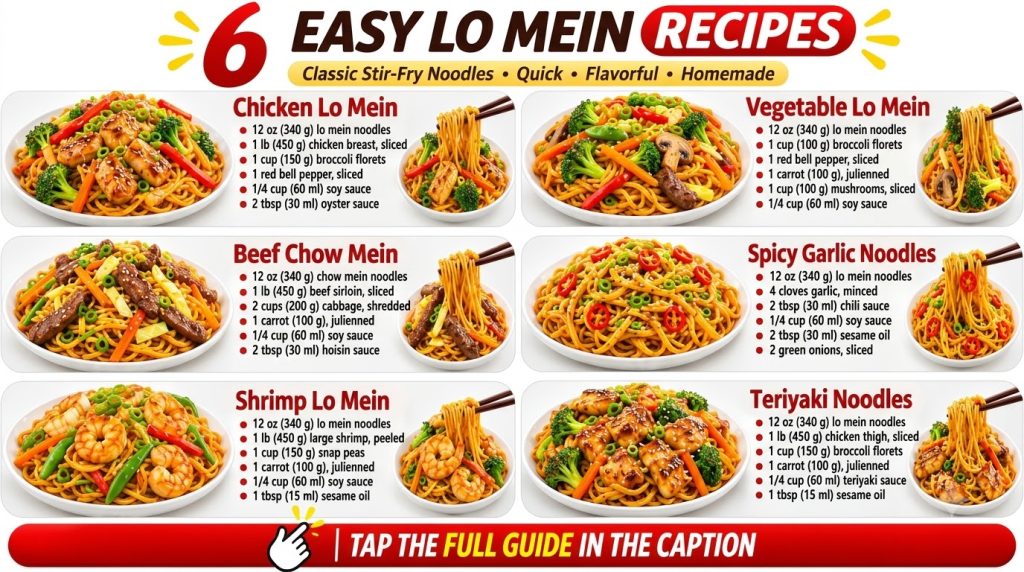
Why You Will Love These Lo Mein Recipes
- They come together in roughly 30 minutes, which makes them practical for weeknights.
- Most use pantry staples like soy sauce, garlic, and sesame oil.
- Each version uses a different protein or vegetable, so you can rotate them all week.
- One basic sauce works for every recipe below, so you only need to memorize it once.
The Basic Lo Mein Sauce
Mix about 3 tablespoons soy sauce, 1 tablespoon oyster sauce, 1 teaspoon sesame oil, 1 teaspoon sugar, and 2 tablespoons water in a small bowl. Stir until the sugar dissolves. Adjust the balance to taste. Add more soy sauce for saltiness and a little more sugar if you prefer a rounder flavor.
1. Chicken Lo Mein
Slice 1 pound of boneless chicken thighs or breasts into thin strips. Season with salt, pepper, and a teaspoon of cornstarch. Heat 1 tablespoon of oil in a large skillet or wok over medium-high heat and cook the chicken for about 4 to 6 minutes, until no pink remains in the center and the edges are lightly browned. Set it aside. Cook 8 ounces of cooked lo mein noodles in the same pan with a splash of oil for 1 to 2 minutes, then add the chicken back in with the sauce and toss until everything is coated.
2. Beef Lo Mein
Thinly slice 1 pound of flank or sirloin steak against the grain. Toss with a teaspoon of soy sauce and a pinch of cornstarch. Sear the beef in a hot pan in small batches for about 1 to 2 minutes per batch so it browns rather than steams. Return all the beef to the pan with the noodles, sliced green onions, and sauce, then toss for another minute.
3. Shrimp Lo Mein
Pat 1 pound of peeled and deveined shrimp dry and season lightly with salt and pepper. Cook in a hot skillet for about 1 to 2 minutes per side, until pink and opaque. Remove the shrimp, then stir-fry the noodles and sauce. Add the shrimp back in during the last minute so they stay tender.
4. Vegetable Lo Mein
Use a mix of thinly sliced carrots, bell pepper, cabbage, and snap peas. Stir-fry the harder vegetables first for 2 to 3 minutes, then add softer ones for about 1 minute more. Keep them crisp-tender. Toss with the noodles and sauce for a colorful meatless dinner.
5. Pork Lo Mein
Slice boneless pork loin or tenderloin into thin strips and season with salt, pepper, and a little soy sauce. Cook in a hot pan until browned and cooked through, then add the noodles, sauce, and a handful of chopped scallions. Pork pairs especially well with cabbage and carrots.
6. Tofu Lo Mein
Press extra-firm tofu for about 15 minutes to remove excess water, then cut it into cubes. Pan-fry until golden on most sides, about 5 to 7 minutes. Remove the tofu, stir-fry your favorite vegetables and noodles, then add the tofu and sauce at the end so the cubes stay crisp on the outside.
Pro Tips for Better Lo Mein
- Cook the noodles until just tender, then rinse them with cold water and drain well so they do not clump.
- Use a large pan or wok so the noodles have room to move and do not steam.
- Keep the heat high and cook in batches if needed to get a light sear on the protein.
- Add sauce near the end and toss quickly so the noodles stay silky rather than soggy.
Common Mistakes to Avoid
The most common problem is overcrowding the pan, which leaves the protein gray and the noodles soft. Another is adding too much sauce at once, which makes the dish salty and wet. Taste as you go and add a splash of water or sauce only when needed.
Serving Suggestions
Lo mein is a complete meal on its own, but it also pairs well with a simple cucumber salad, steamed greens, or egg drop soup. Top with extra sliced green onions, toasted sesame seeds, or a drizzle of chili oil if you like heat.
Storage and Reheating
Store leftover lo mein in an airtight container in the refrigerator and eat it within 3 to 4 days. To reheat, add a small splash of water to a skillet over medium heat and stir until warmed through. Noodles can dry out in the microwave, so cover them loosely if you use that method.
Frequently Asked Questions
Can I make lo mein ahead of time?
You can prep the sauce and slice the protein and vegetables ahead of time. Cook the noodles fresh for the best texture.
Can I freeze lo mein?
Freezing is not ideal because the noodles tend to become mushy when thawed. It is better to refrigerate leftovers and eat them within a few days.
What noodles work best?
Fresh Chinese egg noodles give the most authentic texture. Dried spaghetti or linguine can work in a pinch, though the flavor and chew will be a little different.
Why did my lo mein turn out soggy?
This usually happens when the pan is overcrowded or the noodles are overcooked. Cook in smaller batches and drain the noodles well before adding them to the pan.
Can I make these recipes gluten-free?
Yes. Use gluten-free noodles and tamari or a gluten-free soy sauce. Check the labels on oyster sauce and other condiments, since many contain wheat.