Tired of stubborn soap scum building up on your shower glass, tiles, and fixtures? You are not alone. Soap scum is a sticky film that forms when soap residue mixes with minerals in water, and it can make even a clean-looking bathroom appear dull and cloudy. The good news is that you can tackle everyday buildup with a simple homemade spray made from ingredients you probably already have.
This guide walks you through a quick DIY bathroom cleaner that uses warm water, 3% hydrogen peroxide, dish soap, and fabric softener. It is designed for a light, regular clean rather than heavy restoration work. If you want a fresher shower with less scrubbing, this one is worth trying.
This article is for beginners and busy homeowners who want an easy routine. You will learn what goes into the spray, which tools you need, how to apply it step by step, which surfaces are suitable, how to store leftovers, and which safety precautions to follow.
Quick Summary
- Preparation Time: About 5 minutes
- Application Time: Spray, let sit for a few minutes, then scrub and rinse
- Difficulty Level: Easy
- Best Uses: Shower glass, tiles, and fixtures with light to moderate soap scum
- Suitable Surfaces: Glass, sealed tile, and metal fixtures (test first)
- Storage Time: Use within a short period and store as described below
Why You Will Like This DIY Solution
- Uses common household ingredients
- Simple to mix in a few minutes
- Budget-friendly compared with many commercial sprays
- Beginner-friendly with no special skills needed
- Works on several bathroom surfaces when used with care
- Quick to apply as part of a regular cleaning routine
Ingredients and Materials
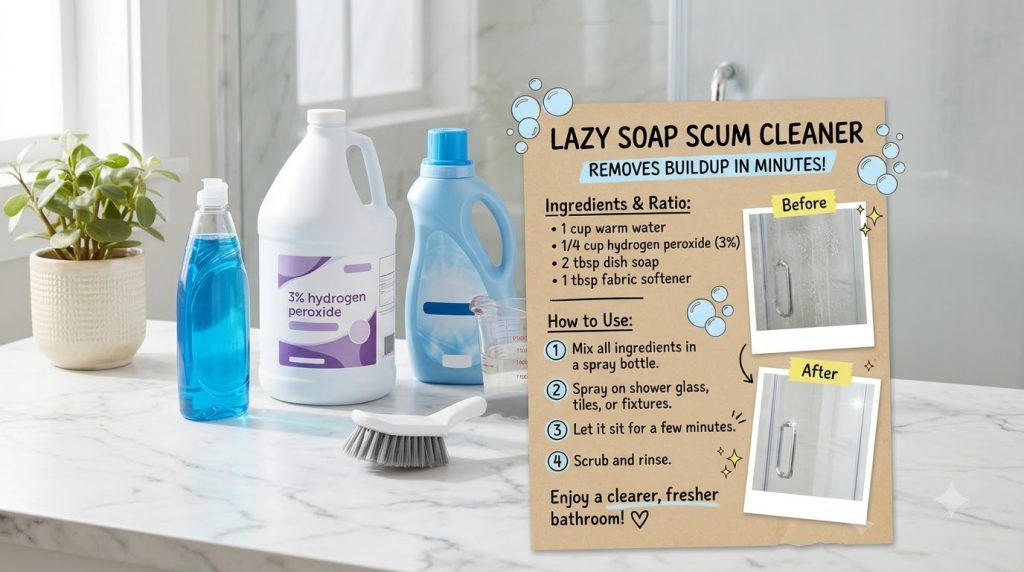
- 1 cup warm water
- 1/4 cup hydrogen peroxide (3%)
- 2 tablespoons dish soap
- 1 tablespoon fabric softener
Use the amounts exactly as listed. If your dish soap bottle suggests a different strength, check the label before mixing and keep the rest of the ratio the same.
Equipment Needed
- Clean spray bottle with a secure lid
- Glass measuring cup
- Measuring spoons
- Funnel (optional, helpful for filling the bottle)
- Non-scratch scrub brush
- Microfiber cloths
- Rubber gloves
Step-by-Step Instructions
Step 1: Measure the Ingredients
Pour 1 cup of warm water into the glass measuring cup. Add 1/4 cup of 3% hydrogen peroxide, 2 tablespoons of dish soap, and 1 tablespoon of fabric softener. Warm water helps the ingredients blend more easily. This step takes about 2 minutes.
Step 2: Mix Gently
Pour the mixture into a clean spray bottle using a funnel if you have one. Close the lid and swirl the bottle gently rather than shaking it hard, so the mixture stays mixed without too much foam. Expect a smooth, lightly sudsy liquid. This takes about 1 minute.
Step 3: Test a Small Hidden Area
Before using the spray on your full shower, test a small hidden spot, such as the back of a glass panel or an inside corner of a tile border. Wait a few minutes and check for any dulling, discoloration, or residue. This takes a few minutes.
Step 4: Spray the Surfaces
Spray the shower glass, tiles, and fixtures lightly and evenly, working from top to bottom so the solution runs over the grime. Do not oversaturate grout or unsealed surfaces. This takes about 2 minutes.
Step 5: Let It Sit
Allow the spray to sit for a few minutes so it can loosen the film on the surface. Do not let it dry completely on the surface, and avoid letting it sit for long periods. This usually takes 3 to 5 minutes.
Step 6: Scrub Gently
Use a non-scratch scrub brush or a soft cloth to work the surface in small circles. Focus on areas with visible buildup, such as the lower glass edges and tile corners. This takes about 3 to 5 minutes.
Step 7: Rinse and Dry
Rinse the surfaces with warm water and wipe them dry with a clean microfiber cloth to reduce streaks and water spots. The result should be a clearer, fresher shower area, though results will vary depending on how much buildup you have. This takes about 3 minutes.
Best Uses
This spray works best for shower glass, tiles, and fixtures that have light to moderate soap scum. It can also be used on bathroom sink basins and faucets when you test a small area first. Avoid using it on natural stone such as marble or granite unless you have checked with the manufacturer, and do not use it on unsealed grout, wood, or delicate finishes. Always read your product care instructions before cleaning a new surface.
Safety Notes
- Wear rubber gloves to protect your skin and keep your hands comfortable.
- Test on a small hidden area first to check for any dulling or discoloration.
- Keep the spray away from children and pets, and store it out of their reach.
- Never mix this solution with vinegar, bleach, or ammonia. Mixing cleaning products can create harmful fumes.
- Rinse the surface well after use and open a window or run a bathroom fan for good ventilation.
- Label your spray bottle clearly so no one mistakes it for a drink.
Expert Tips
- Use a standard liquid dish soap for the most predictable results.
- Clean your shower regularly so buildup does not have time to harden.
- Scrub lightly on delicate finishes and let the spray do most of the work.
- Wipe surfaces dry after each use to reduce water spots and soap film.
- Keep the bottle capped when not in use to limit evaporation and contamination.
- Mix only the amount you expect to use within a short time to keep the solution fresh.
- Pay extra attention to corners, door tracks, and the bottom of glass panels, where soap scum gathers most.
Storage Instructions
Store any leftover spray in a clean, labeled spray bottle with a tight lid. Keep it in a cool, dry cabinet away from direct sunlight and away from other cleaning products. Because hydrogen peroxide can lose strength over time, it is best to mix only what you need and use it within a short period.
Discard the solution if it changes color, develops a strong or unusual smell, becomes cloudy in an unexpected way, or if the bottle leaks or looks damaged. When in doubt, make a fresh batch.
Frequently Asked Questions
Can I store this solution?
You can store a small amount in a labeled, sealed spray bottle for a short time, but it is best to make fresh batches as needed for the most consistent results.
How long does it last?
There is no fixed shelf life guaranteed here. Use it within a short period and discard it if you notice any change in color, smell, or texture.
Can I use it on marble?
Marble is a natural stone that can be sensitive to acidic and certain chemical cleaners. Check with the stone manufacturer before using this spray, and always test a hidden area first.
Can I replace an ingredient?
It is safest to follow the recipe as written. Changing ingredients can change how the spray behaves on surfaces, so test any substitution on a small hidden area before using it more widely.
Is it safe around pets?
Keep the spray out of reach of pets and children, and keep pets out of the room while you clean. Let the area dry and ventilate well before letting pets back in.
Can I use this on my shower curtain or bath mat?
This spray is designed for hard bathroom surfaces. Fabric items may react differently, so check the care label and test a hidden spot before using it on textiles.
Do I need to rinse after spraying?
Yes, rinsing with warm water and wiping dry helps remove residue and reduces streaks and film.
Conclusion
A lazy soap scum cleaner can be a simple way to keep your shower looking fresher between deeper cleans. With a few common ingredients, a clean spray bottle, and a gentle scrub, you can tackle light buildup without a complicated routine. Remember to test first, protect your skin, keep the spray away from children and pets, and never mix it with other cleaning products. Give it a try with care, and enjoy a clearer, fresher bathroom.